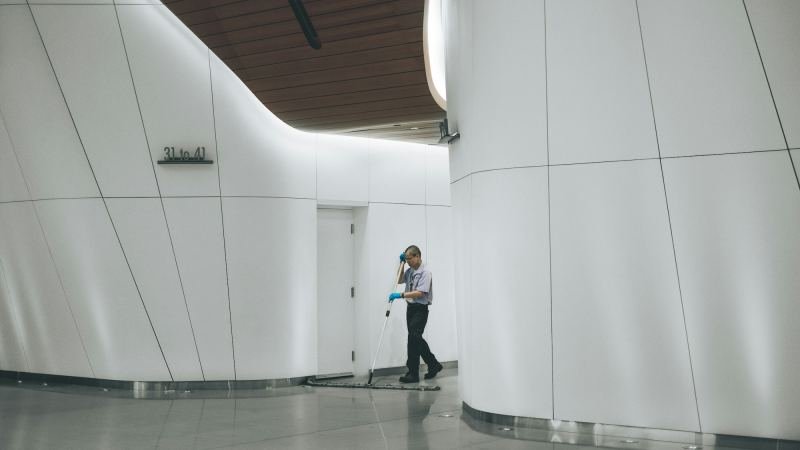
Front of House Cleaning: Entrance, Lobby and Reception Standards
How to clean and maintain the front of house — entrances, lobbies and reception — to the higher standard visitors judge, with a task list and inspection points.
Every visitor forms an opinion of a building in the first thirty seconds, and that opinion is formed almost entirely from the front of house. It is also the only part of the building that most decision makers ever see.
That makes front of house cleaning disproportionately important. It usually justifies the highest target level in the building, and it is the area where a small miss is most visible.
Key takeaways
- Front of house carries the highest target level in most buildings — usually Level 1-2.
- The entrance needs the highest frequency, not just the highest standard. Soil arrives continuously.
- Glass and metal show every mark under architectural lighting, so they need dedicated attention.
- Entrance matting is the highest-return floor care investment in the building.
- Inspect at the time visitors are present, not only before opening.
Why front of house is different
Three things make it a distinct cleaning problem:
- Visibility. Everything is seen, constantly, by people who do not work there.
- Traffic. An entrance serving hundreds of people a day receives more soil per square foot than any other part of the building.
- Materials. Polished stone, glass, brushed metal, feature joinery and light-coloured upholstery — surfaces that show everything and tolerate few chemicals.
The consequence: the front of house needs both a higher standard and a higher frequency than the rest of the building. Treating it as just another area is the most common front of house failure.
The target level
Front of house is usually the one place in a building that warrants Level 1 or Level 2 on the APPA cleanliness levels, particularly lobbies the client tours.
- Level 1 for showcase lobbies, executive entrances and anywhere used for client events or photography.
- Level 2 for general reception areas and secondary entrances — clean at normal viewing height with light traffic marks acceptable.
Agree this in writing, because the cost difference between maintaining Level 1 and Level 2 across a busy lobby is substantial, and it is a frequent source of disappointment.
Daily task list: entrance
The entrance is where you win or lose the building.
- Sweep or vacuum matting and entrance flooring — critical, grit abrades finish
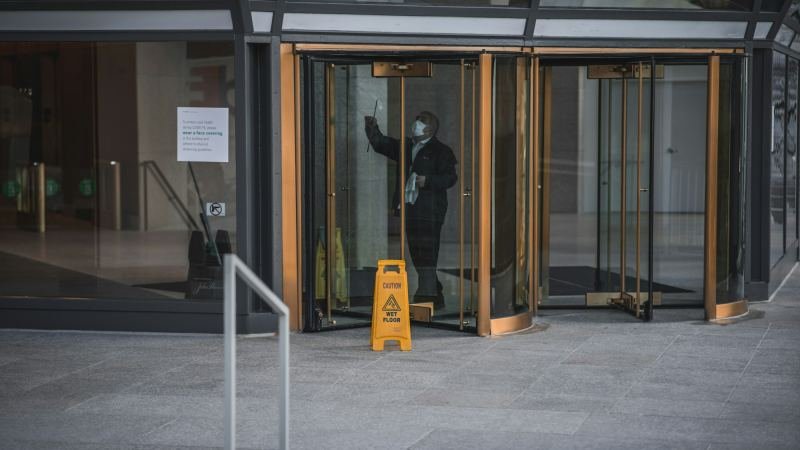
- Clean entrance glass, doors and door frames — critical
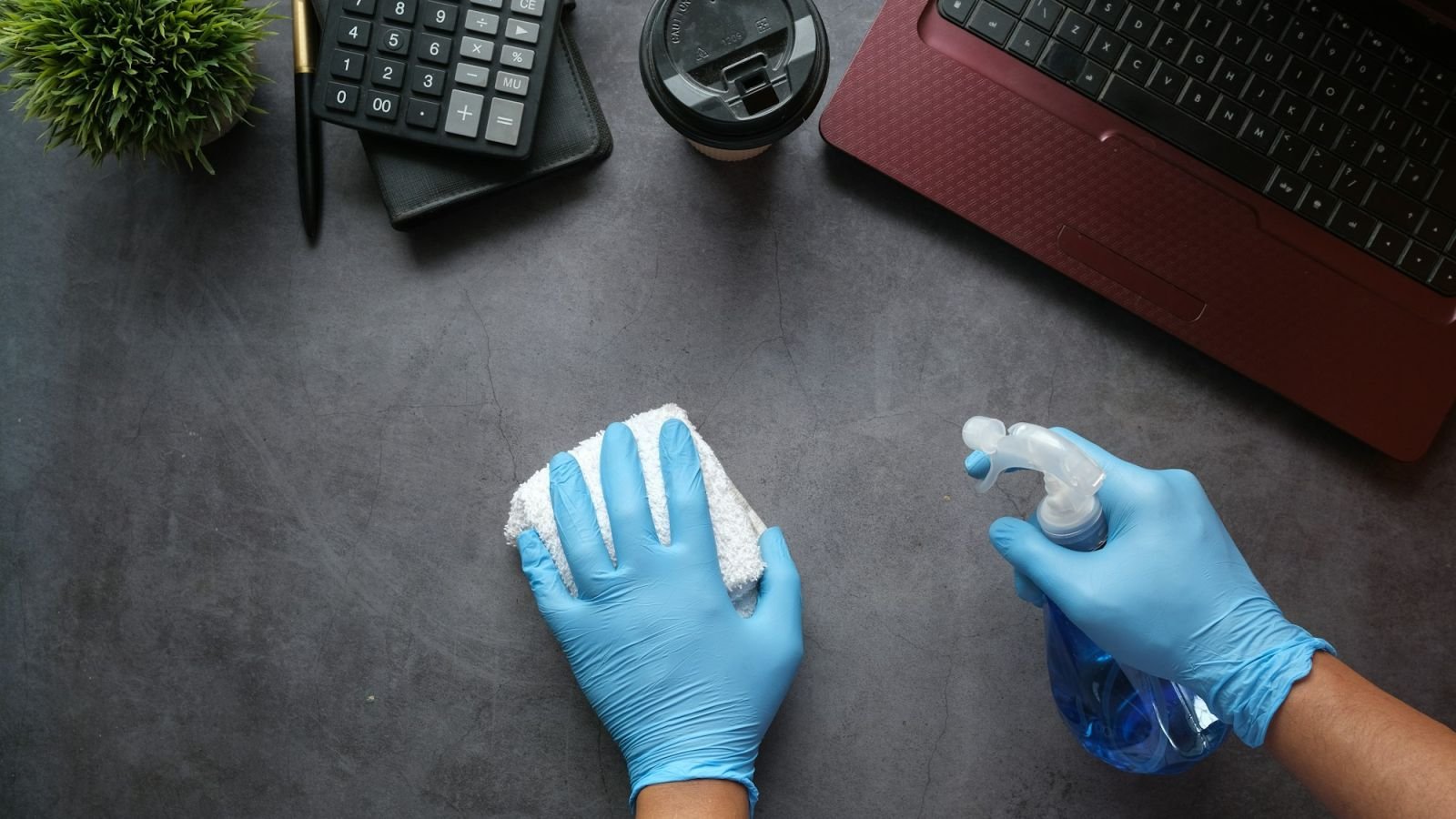
- Wipe door handles, push plates, intercoms and call buttons — critical (highest-touch items in the building)
- Mop or auto-scrub hard flooring, working from the door inward
- Spot clean sticky marks, gum and scuffs
- Empty and wipe cigarette bins and external waste
- Remove litter from the immediate exterior and approach
- Straighten matting; check for curled edges — critical (trip hazard)
- Wipe external signage, bollards and handrails where accessible
- Check lighting at the entrance — critical
Daily task list: lobby and reception
- Vacuum or mop all flooring, including under seating and behind planters
- Clean and polish reception desk and counters
- Dust all horizontal surfaces at reachable height
- Clean glass, partitions and display cases
- Wipe seating, arms, tables and side tables — critical
- Clean and disinfect high-touch items: kiosks, terminals, turnstiles, lift call buttons — critical
- Empty and wipe waste and recycling bins; check for odour
- Clean directory boards, frames and signage
- Wipe plants and planters; remove litter from soil
- Straighten furniture, magazines and promotional material
- Check feature lighting and report failures
Weekly and periodic tasks
- Deep clean entrance matting (or rotate mats)
- Machine scrub lobby hard floors
- Burnish or polish stone and finished floors
- Deep clean upholstery and seating
- Interior glass and partitions, including at height
- High dusting: ledges, light fittings, ceiling features, planters
- Wipe walls, columns and door surrounds
- Clean and polish metal finishes with appropriate products
- Clean vents and grilles
- Exterior approach: pressure wash or sweep as appropriate
For the wider cycle, see the floor care guide and the cleaning frequency chart.
Material care: getting the chemistry right
Front of house materials are expensive and unforgiving. Using the wrong product damages them permanently and often invisibly at first.
| Surface | Approach |
|---|---|
| Polished stone (marble, granite, terrazzo) | pH-neutral cleaner only; never acid; dry promptly to avoid etching |
| Glass and mirrors | Dedicated glass cleaner; lint-free cloth; work in shade if possible |
| Brushed or satin metal | Follow the grain; avoid abrasive pads; use a metal-appropriate product |
| Polished metal (brass, chrome) | Proprietary polish; avoid over-application which attracts dust |
| Feature timber | Damp wipe only; avoid saturating; use timber-appropriate products |
| Upholstery | Follow the manufacturer's cleaning code; test in an inconspicuous area |
| Light-coloured tile and grout | Regular cleaning; avoid acidic products; address grout early |
Two rules that prevent most damage: test in an inconspicuous area, and never let a strong product dwell on an unknown surface. Where a material is unclear, ask the client rather than guessing.
The entrance matting rule
Matting deserves its own section because it determines how much soil ever reaches the rest of the building.
- Length matters more than quality. A useful rule is enough matting to take several footfalls, so grit is removed before the hard floor.
- Use the right type. Coarse scraper matting outside, absorbent wiper matting inside.
- Clean mats on a schedule, not when they look bad. A saturated mat redistributes soil and becomes a slip risk.
- Winter requires a different regime entirely: more frequent cleaning, extra matting, and prompt removal of salt and slush.
- Replace worn matting. Curled edges are a genuine trip hazard, which makes this a safety issue as well as an appearance one. The CCOHS guidance on slips, trips and falls is a useful reference.
Cleaning around visitors
Front of house is usually cleaned while people are present, which changes how you work.
- Work invisibly where possible. Clean the entrance before peak arrival, and the lobby during quiet periods.
- Use discreet equipment and keep cables out of walkways — critical.
- Sign wet floors and remove signage promptly once dry.
- Avoid strong odours in enclosed lobbies; ventilate and use appropriate products.
- Never block the entrance or the reception sightline during cleaning.
- Coordinate with reception on events, tours and deliveries.
Inspecting front of house
Inspect at the time visitors are present, and score it against its target — which will be higher than the rest of the building.
Critical items every inspection:
- Entrance glass and doors free of smudges and fingerprints
- Door handles and push plates clean
- Floors clean, dry and free of grit, with edges and corners included
- Matting clean, flat and not curled
- Seating clean and undamaged
- Waste empty, clean and odorous-free
- Reception counter clean and uncluttered
- No litter or debris in the approach
Because front of house is what decision makers see, it is worth inspecting more often than the rest of the building. Our guide to how often to inspect covers frequency by area.
Frequently asked questions
What is front of house cleaning?
Cleaning of the visitor-facing parts of a building — entrances, lobbies, reception, corridors and public areas — held to a higher standard and higher frequency than back-of-house areas because visitors and decision makers judge the building by them.
What standard should a lobby be cleaned to?
Usually APPA Level 1 for showcase lobbies and executive entrances, and Level 2 for general reception areas. Both are higher than typical office space, and the target should be agreed in writing because the cost difference is significant.
How often should a building entrance be cleaned?
At minimum daily, and often several times a day in busy buildings. Entrances receive more soil per square foot than any other area, so frequency matters as much as the standard.
How do you keep entrance glass free of fingerprints?
Clean glass and door hardware on a frequent schedule rather than only daily, use a dedicated glass cleaner with lint-free cloths, and prioritise door handles and push plates, which are touched by nearly everyone who enters.
What is the most important front of house cleaning task?
Entrance floor and matting care, because soil tracked in at the door spreads through the whole building and abrades floor finish. Adequate matting cleaned frequently is the highest-return measure available.
Prove the standard visitors see
Front of house is where clients decide whether the contract is being delivered, so it is the area where documented evidence matters most.
NeatScore lets you score the lobby and entrance against their own higher target, with photos attached, and show the client a trend rather than an assurance. Try it free for 7 days, or see pricing.