Floor Care Guide: Stripping, Sealing, Burnishing and Deep Cleaning
A commercial floor care guide covering hard floor finish, stripping and sealing cycles, burnishing, and carpet extraction, with the frequency most buildings actually need.
Floors are the most visible surface in any building and the most expensive to get wrong. Daily mopping is the easy part. The decisions that actually matter are when to burnish, when to strip and reseal, and when to extract carpet — and most buildings do all three at the wrong intervals.
This guide covers commercial floor care as a cycle rather than a task list.
Key takeaways
- A finish is a wear layer. It protects the floor and it is designed to be replaced.
- Burnishing restores gloss cheaply; stripping and sealing is a full reset and should be rare.
- Reseal or scrub-and-recoat to extend cycles; stripping every year is usually unnecessary.
- Carpet needs extraction, not just vacuuming. Soil below the surface causes the grey look.
- Spring and winter are the floor care seasons, because weather damage is worst then.
How a hard floor system works
Understanding the layers stops you selling work the floor does not need.
| Layer | What it does |
|---|---|
| Substrate | The actual floor: vinyl, VCT, terrazzo, stone, concrete |
| Sealer | Bonds to the floor, provides the base for finish |
| Finish | The sacrificial wear layer that takes the traffic and the shine |
| Daily care | Removes soil before it abrades the finish |
The finish is sacrificial by design. It is supposed to wear so the floor does not. For the day-to-day methods, see hard floor cleaning methods. Once you accept that, the maintenance question becomes: how do we manage the finish's life rather than how do we avoid replacing it.
The floor care cycle
| Task | Purpose | Typical frequency |
|---|---|---|
| Dust mop / sweep | Remove grit before it scratches | Daily, or more in entrances |
| Damp mop | Remove soil and spills | Daily |
| Auto-scrub | Deep clean large areas mechanically | Weekly to monthly |
| Burnish | Restore gloss by heat-fusing finish | Weekly to monthly |
| Scrub and recoat | Add finish over cleaned existing layers | 2-4 times a year |
| Strip and seal | Remove all finish, start again | Annually or less |
| Seal or finish new floor | Full system build | As needed |
Most buildings need the top four constantly and the bottom three rarely. If a contractor proposes stripping every quarter, the daily and recoat programme is probably failing.
Stripping and sealing: when it is genuinely needed
Stripping is expensive, disruptive and hard on floors. It should be a last resort.
Signs it is time:
- Finish has worn through to the substrate in traffic lanes
- Finish has yellowed or discoloured
- There are more recoats than the finish can carry, and gloss no longer responds
- Heavy soiling is trapped beneath the finish
- The floor has been damaged or contaminated and needs a full reset
Signs it is not needed yet:
- Gloss is dull but the finish is intact — burnish or recoat
- Scuff marks respond to cleaning — spot treat
- Traffic lanes look worn but the rest is sound — consider a partial strip
Doing it properly:
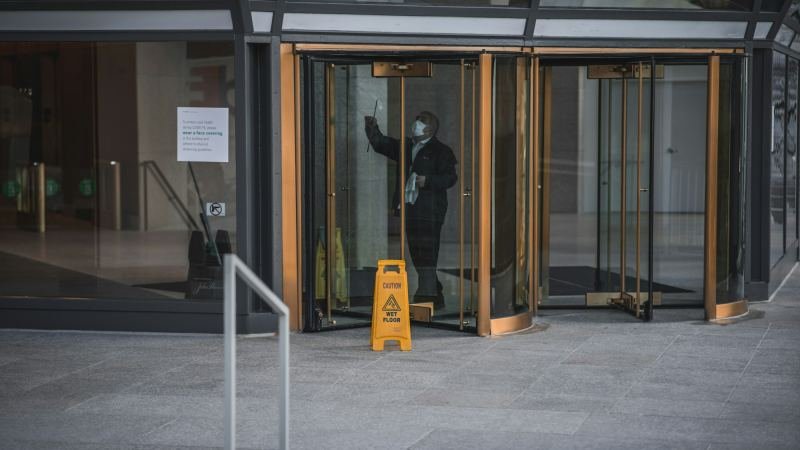
- Protect adjacent areas and post wet floor signage — the CCOHS guidance on slips, trips and falls covers why this is not optional.
- Remove furniture or work around it deliberately.
- Apply stripper and allow full dwell time. Rushing leaves finish behind.
- Agitate, then extract the slurry completely. Residue ruins the new finish.
- Neutralise and rinse thoroughly.
- Allow to dry fully before sealing — usually overnight.
- Apply sealer, then the first coats of finish, with drying time between coats.
- Keep traffic off until cured, and schedule it out of operating hours.
Burnishing and recoat: the cheap wins
This is where most floor care budget should go, because it is fast, low-cost and low-risk.
- Burnishing uses a high-speed machine to heat and fuse the finish, restoring gloss. It does not add protection, so it must be paired with recoating.
- Scrub and recoat cleans the existing finish and adds one or two new coats. It extends the cycle significantly and is done out of hours in most buildings.
- Frequency depends on traffic. An entrance lobby may need burnishing weekly; a back-office corridor may need it monthly.
- Do not burnish dirty floors. You will grind soil into the finish and dull it permanently.
A well-run recoat programme can push stripping out to 18 months or beyond. That is real money saved for the client, and a strong argument in a tender.
Matting: the overlooked half of floor care
Most soil enters a building through the entrance. Matting is the cheapest floor care measure available and is routinely under-specified.
- Use enough matting length — a short mat captures almost nothing. A useful rule is several steps' worth of matting so grit is removed before the hard floor.
- Use the right type: scraper matting outside, wiper matting inside.
- Clean mats on a schedule. A saturated mat redistributes soil rather than capturing it.
- Sweep or vacuum entrance areas frequently during wet weather.
- Replace worn matting; curled edges are also a trip hazard.
Our cleaning frequency chart covers entrance area frequencies in more detail.
Carpet and soft flooring
Carpet fails in a different way from hard floor: it does not wear out so much as fill up.
- Daily vacuuming removes surface soil and is the single biggest factor in carpet life.
- Spot treatment for spills, immediately. Most permanent stains were removable on day one.
- Interim encapsulation or bonnet cleaning every few months in high-traffic areas.
- Hot water extraction two to four times a year depending on traffic. This is what removes the deep soil causing the grey, flattened appearance.
- Entrance and walkway lanes first. These are where extraction frequency should be highest.
- Dry times matter. Carpets returned to service damp will wick soil and smell.
Carpet extraction is also a genuine indoor air quality measure, not just cosmetic - commercial carpet cleaning covers the methods in detail.
Seasonal floor care
Floor care is not evenly distributed across the year.
- Winter: salt, grit and moisture. Increase entrance cleaning, mop frequency and mat cleaning substantially. Salt damage to finish is significant and largely preventable.
- Spring: the recovery season. Strip, seal and extract after winter damage.
- Summer: relatively light. A good window for recoat and burnish programmes, and for carpet extraction in air-conditioned buildings.
- Autumn: prepare. Matting checked, entrance protocols ready, extraction scheduled before the wet season.
Planning periodic work seasonally rather than randomly also makes scheduling and staffing far easier.
What to put in the contract
Floor care is a common source of disputes, because "floor care" can mean anything.
- Specify each task and frequency: damp mopping, auto-scrubbing, burnishing, recoating, stripping, extraction.
- Specify square footage or areas covered by each periodic task.
- State the finishing product and how many coats are applied per recoat.
- State who pays for materials — finish is a significant cost.
- Define the standard. A floor should be scored like any other surface. Under the APPA cleanliness levels, dulling from worn finish is Level 2, while embedded soil and scuffing is Level 3.
- Separate periodic work from routine in pricing, because they are delivered differently.
For how periodic and routine work should sit in a wider schedule, see the cleaning schedule template.
Inspecting floors
Floors are the surface clients judge first, so score them every inspection.
- Hard floor: visible soil, scuffing, dulling, edge and corner cleanliness, wet patches
- Carpet: visible soil, traffic lane darkening, spots, pile crush, odour
- Entrance: grit, salt residue, mat saturation, curled mat edges (trip hazard — critical)
- Wet floors during and after cleaning: signed (critical)
- Drains and thresholds: clear, dry, undamaged
Because dulling and wear develop slowly, the trend matters more than any single inspection. Our guide to measuring cleaning quality explains how to track it usefully.
Frequently asked questions
How often should commercial floors be stripped and sealed?
Typically once a year or less. With a proper programme of daily cleaning, regular burnishing and scrub-and-recoat every two to four months, stripping can often be extended to 18 months or longer.
What is the difference between burnishing and stripping a floor?
Burnishing uses a high-speed machine to heat and fuse the existing finish, restoring gloss without adding protection. Stripping removes all the finish and sealer down to the substrate, then rebuilds the system — far more expensive and disruptive.
How often should carpets be professionally extracted?
Two to four times a year depending on traffic, with quarterly extraction for high-traffic entrances, food areas, and buildings with children or pets. Vacuuming daily is essential between extractions.
How do you protect floors in winter?
Use adequate matting, clean mats frequently, increase entrance mopping and sweeping frequency, and remove salt residue promptly. Winter grit is one of the main causes of premature finish wear.
Can you burnish a dirty floor?
No. Burnishing soil grinds it into the finish and dulls it permanently. Clean or scrub the floor before burnishing, and pair burnishing with regular recoating since it restores appearance but adds no protection.
Manage the cycle, not the task
Floor care is a programme with a rhythm, and buildings that run it well spend far less on stripping over the life of the floor.
NeatScore lets you record floor condition by area over time, so you can see wear developing and schedule recoats and extraction when the floor needs them rather than on a fixed calendar. Try it free for 7 days, or see pricing.