Night Cleaning Verification: Proving Work You Never See
How to verify night cleaning when nobody watches: time-stamped evidence, washroom recovery checks, consumable counts and photos that hold up in a dispute.
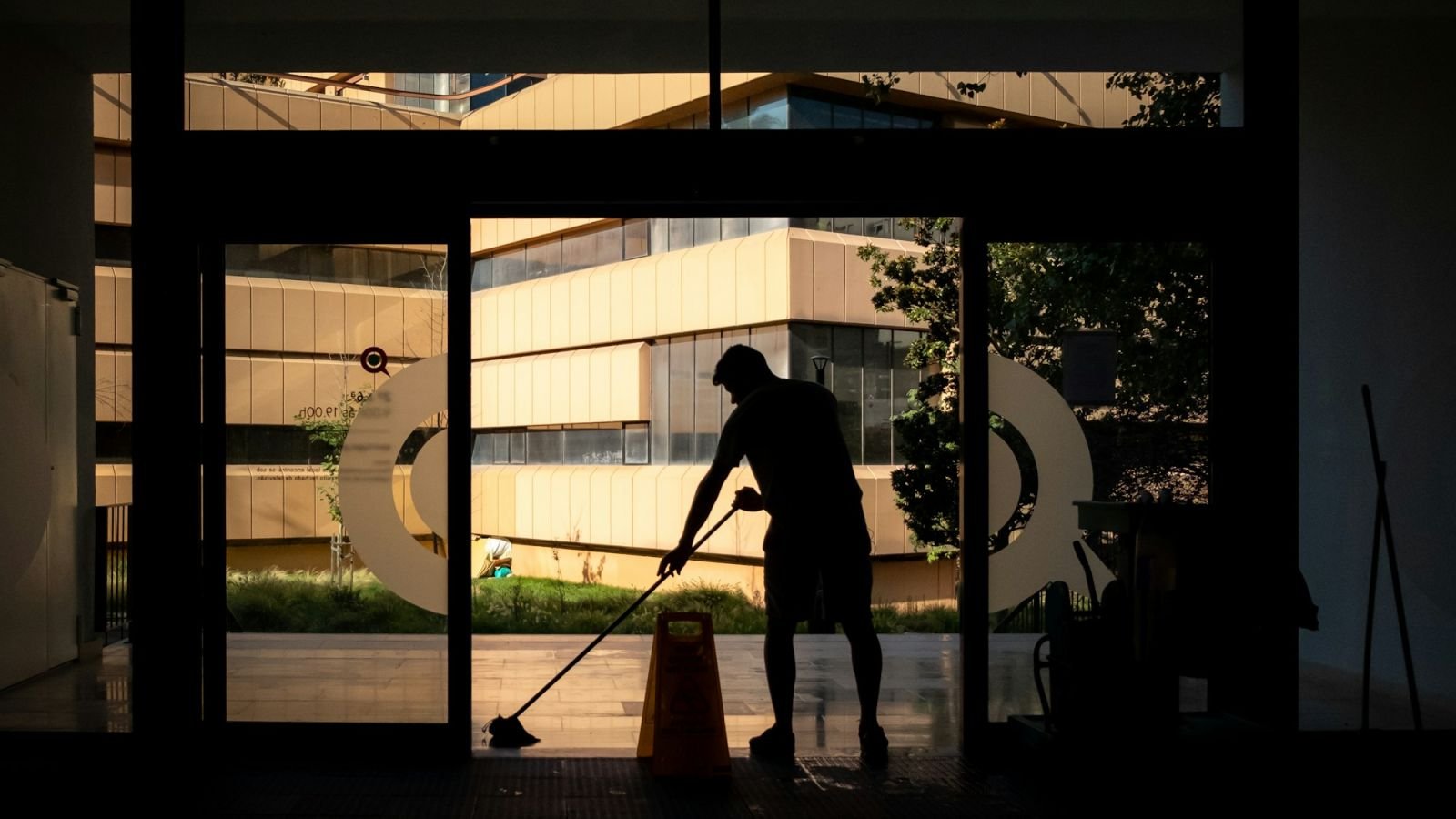
The cleaning you are paying for most often happens when the building is empty and nobody from your side is in it. Floors are mopped at 23:00. Washrooms are serviced at 01:30. Waste leaves through the dock at 04:00. You arrive at 08:00 and see the result, not the work — and the result is exactly what a crew that skipped two areas an hour ago would also produce.
That gap is the whole problem. Night service is the largest line in most janitorial contracts and the least observed. Night cleaning verification is the practice of building evidence you can rely on without standing over the crew — so that "the contractor says it was done" stops being the only account you have.
This is written for the property or facilities manager holding the contract — the same reader the rest of cleaning contractor management is built for. The goal is not to catch people; it is to know, in the same week rather than at renewal, whether the night shift is delivering the scope you signed.
Key takeaways
- Verify condition before the building opens; after 08:00, early traffic destroys the evidence you came for.
- Combine three signals — condition, consumables, and the contractor's own records — because each one alone can be faked or misread.
- Rotate unannounced night visits across areas; a predictable inspection schedule gets cleaned for.
- Record what you saw with a photo and a timestamp per item, not a paragraph written from memory at 10:00.
- Treat night safety findings as reportable, not correctable: lone working, chemical storage, and blocked exits are the contractor's to fix and yours to log.
Why night cleaning is the hardest service to verify
Day cleaning leaves witnesses. Night cleaning leaves a building that looks acceptable by morning because someone pushed a mop across the lobby at some point.
Three factors make night work hard to check. The evidence window is short: a washroom serviced at 01:00 and used from 08:00 cannot be judged at 14:00. The work is spread across many small areas, so a visit samples a fraction of the scope. And the best-placed observer, the contractor's supervisor, is paid by the contractor.
So verification has to draw on more than one source.
What evidence actually proves night work was done?
Each evidence type is useful on its own and unreliable alone. The strength is in the combination.
| Evidence | What it supports | Where it fails |
|---|---|---|
| Condition at opening | The end state of the shift | Shows only the areas you walked |
| Consumable levels | Whether washrooms were serviced | Depends on daytime use and starting stock |
| Waste and recycling volumes | Whether rounds happened | Weather, tenants, and events change volume |
| Access or alarm logs | Entry and exit times | Proves presence, not output |
| Contractor task sheets | Claimed scope completion | Self-reported; quality unknown |
| Time-stamped photos | Condition at a moment | Needs per-item discipline to be useful |
Use condition as your primary evidence, consumables and waste as corroboration, and the contractor's records as the version you are testing.
How do you design a night inspection that fits the shift?
Go at night, unannounced, for 20 to 30 minutes, with a short checklist of 12 to 20 items and a phone. That is enough to read a floor when the items are chosen for signal rather than completeness.
A workable routine:
- Enter through the loading or service door where the crew works, not the lobby. Dock condition at 23:30 tells you more than the lobby does.
- Walk the highest-risk areas first — washrooms, kitchen or lunchroom, waste room, main entry. If the shift is behind, those areas show it.
- Use the 5-metre rule. Stand at the entrance of each area and read it before walking it. Most failures — soiled floor, unemptied bin, streaked glass — are visible from the doorway.
- Photograph three to five items per area, one wide and one close, and note the time. Photos taken at 23:40 on a Tuesday are proof; a paragraph written from memory is not.
- Check the tasks that fail quietly — high dusting once weekly, floor drains, sanitary bins, elevator tracks, stairwell corners, the underside of handrails.
If you cannot attend at night, verify before 07:30. A washroom checked at 06:45 still shows whether the night shift serviced it; the same washroom checked at 10:00 shows only how it has been used since.
Any night inspection has to respect building rules: announce yourself to security, never work alone on a vacant floor without a check-in plan, and stay out of plant rooms, electrical spaces, and confined areas — outside your remit and outside the cleaning scope. CCOHS publishes guidance on working alone that applies to your visits and to the crew.
What should you check first when you arrive at 06:00?
Read the building's recovery — the condition of the highest-traffic areas — before it opens. Recovery tells you whether the shift finished rather than merely started.
| Check | What failure looks like | What it usually means |
|---|---|---|
| Washroom consumables and dry floors | Dry traps, empty dispensers, full sanitary bins | Washroom round skipped or cut short |
| Entry glass and matting | Fingerprints, tracked soil beyond the mat | Entry not cleaned, or matting undersized |
| Waste room and dock | Overflowing bins at 07:00 | Collection or rounds missed |
| Kitchen or lunchroom | Sticky tables, full bins, unmopped floor | High-use area deprioritised |
| Stairwells and corridors | Dust lines at edges, debris in corners | Perimeter work skipped |
| Elevator cab and tracks | Dull stainless, debris in door tracks | Detail work not done |
Three or more failures on one morning and one route is a supervision problem; a single failure in an otherwise clean area is a task that was missed and can be fixed in a day.
What should the contractor record during the shift?
Ask for a nightly record that shows area, time in, time out, and initials for the person who did the work. Not a single tick for the whole property, and not a schedule promise.
Records worth having:
- Area sign-off with time in and time out, so you can compare claimed times to what you observed.
- Consumable refill log with product and quantity, which catches the "we service it weekly" claim when a dispensers run dry mid-week.
- Incident and near-miss notes — a spill, a broken fixture, a lift out of service — that explain condition you would otherwise read as poor cleaning.
- Supervisor floor checks, ideally two per shift, with a short scored checklist.
If the contractor's records and your observation disagree, do not argue the point in the moment. Photograph what you see, note the time, and raise it in the weekly review with both records side by side. That conversation is much shorter when both parties have documents, which is what client-visible cleaning records are for.
Can access logs or cameras replace an inspection?
No. Access logs prove someone entered; cameras prove someone walked past. Neither scores condition against a standard. Use both as corroboration, and check the legal ground before you rely on footage — privacy obligations vary by province, and cameras in washroom areas or change rooms are not acceptable at all.
Cameras do one thing well: they resolve a disputed sequence. Keep the camera record for disputes, not for daily quality management.
What goes wrong when the night crew changes?
The most common night-service failure is not laziness. It is a changing crew, a shorter shift, or a subcontractor covering the route — and the failure shows up as inconsistent quality with no obvious cause.
What to look for:
- Condition varies by weekday in a predictable pattern, which usually means the understaffed shift covers fewer areas.
- The same areas pass one week and fail the next, while low-visibility areas fail consistently.
- Consumables run out on the days the regular supervisor is off, or new faces appear at the dock weekly — the signature of a subcontracted route.
Ask how the shift is staffed and who supervises it. Night work depends on a check-in and a floor check, not goodwill — and a contractor with no night supervisor cannot know what happened either.
How do you escalate a night failure?
Send one notice per finding, with the area, the time you observed it, and the standard it failed. Add a re-clean request where the condition is hygiene-critical, and put a date on it.
For repeated failures on the same route, move up a level: a written improvement plan naming the areas and a re-audit date. Apply any re-clean or credit clause consistently rather than only when someone complains; inconsistent enforcement is what makes a contract unmanageable in year two.
Photographs per item are the difference between a notice that gets corrected and one that gets negotiated. Inspecting with the same checklist each time makes the comparison fair, and mobile inspections and offline records matter here because basements and parkades rarely have signal when you are walking them at 23:00. The same discipline applies to how the photos are taken — one wide frame and one close frame per finding, inspection evidence and photo standards sets out what survives a dispute.
Frequently asked questions
Do I need to inspect at night, or is the morning enough?
Morning is enough for condition, and condition is most of the evidence. Inspect before 07:30 and you read the end state of the shift. Night visits add two things morning cannot: how the crew actually works, and areas that daytime traffic has already changed.
How often should night cleaning be verified?
Monthly unannounced visits plus a weekly morning check is a workable minimum for one building. Rotate night visits across weekdays so the pattern stays unpredictable. Washroom-heavy, foodservice, or public buildings should verify weekly on the highest-risk route.
What if the contractor refuses to give us access at night?
That is a contract problem, not an inspection problem. Your services agreement should confirm the right to inspect during work hours, and the contractor should have a visitor induction and a documented site access and key control process. A refusal is worth escalating in writing.
Can I just ask the cleaner to photograph each task?
Yes, but treat it as the contractor's evidence, not yours. Their photos show what they chose to photograph. Use them to shorten conversations, and use your own walk to test the claim — otherwise verification drifts back to trusting the party being verified.
What is the most common night cleaning failure?
Consumables and washroom recovery, then perimeter work such as stairwells, corridors, and elevator tracks. Those tasks are quiet: nobody reports a dry dispenser until it has been empty two days, and nobody walks a stairwell at 09:00. Inspect where tenants do not look.
Make the unseen shift visible
Night work becomes manageable when it leaves a trail. Walk the building once a month at night, check condition before opening each week, keep a photo and a time for every finding, and compare the contractor's records against what you saw. A quarter of that gives you a pattern, which is what lets you hold a contract to a standard.
NeatScore supports that routine: area-specific checklists with critical items flagged, APPA 1–5 scoring, photos per item, inspections that run offline in a parkade and sync later, and dated reports you can attach to a notice. Try it free for 14 days, or see pricing.