Retail Store Cleaning Checklist: Sales Floor, Fitting Rooms and Back of House
A retail store cleaning checklist covering the sales floor, fitting rooms, entrances, washrooms and stockroom, with the customer-facing details that drive complaints and returns.
Retail cleaning is unusual because the customer is present the entire time. There is no window to clean behind closed doors, so the work has to be done around shoppers, and anything missed is seen immediately by the people you most want to impress.
A retail store cleaning checklist therefore has three priorities: the entrance, the fitting rooms, and the floor the customer walks on. Get those right and the store feels cared for. Miss the fitting rooms and you will hear about it.
Key takeaways
- Fitting rooms are the most common source of retail cleaning complaints.
- The entrance is the first and last impression; it needs the highest frequency.
- Clean during trading hours with discreet equipment and good signage.
- Glass and mirrors show every mark under retail lighting, so they need frequent attention.
- Stockrooms and staff areas are inspected by head office auditors, not customers.
Daily tasks
Entrance and approach
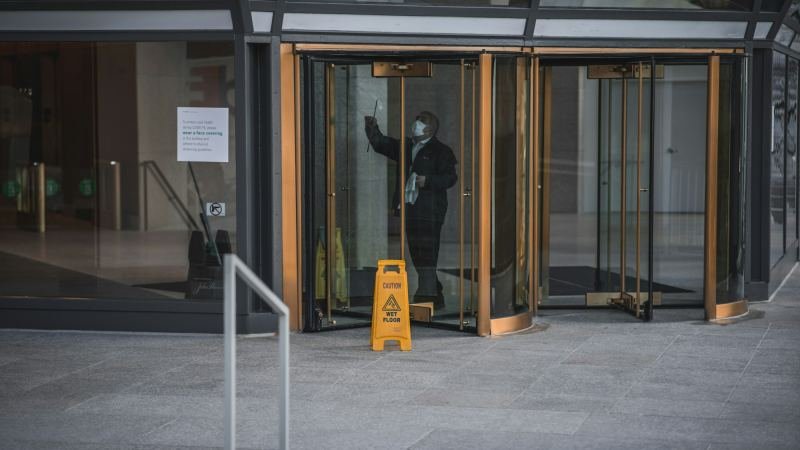
- Clean entrance glass, doors and door handles — critical (heavily touched)
- Sweep or mop entrance flooring; reposition or clean mats
- Empty and wipe cigarette bins and exterior waste
- Remove litter from the immediate exterior
- Check for and clean any sticky residue or gum
- Wipe trolley and basket handles where provided — critical
Sales floor
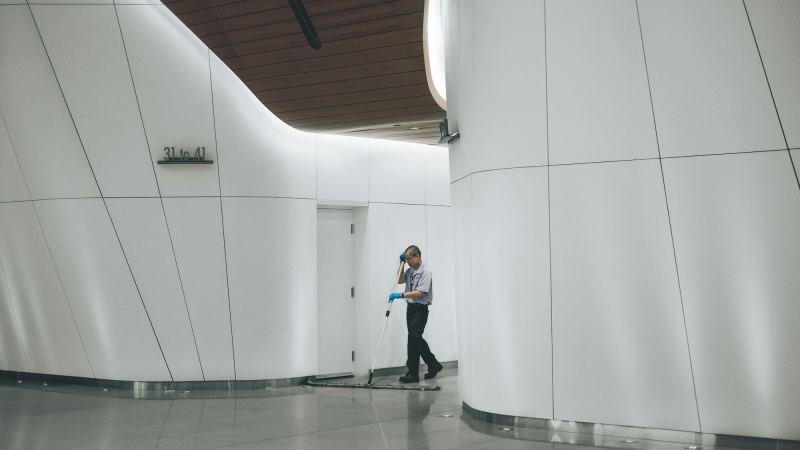
- Vacuum or mop all walkways, including under fixtures and around display units
- Spot clean spills immediately — critical (slip risk)
- Clean and dust display units, shelving and counters
- Clean mirrors and glass display cases
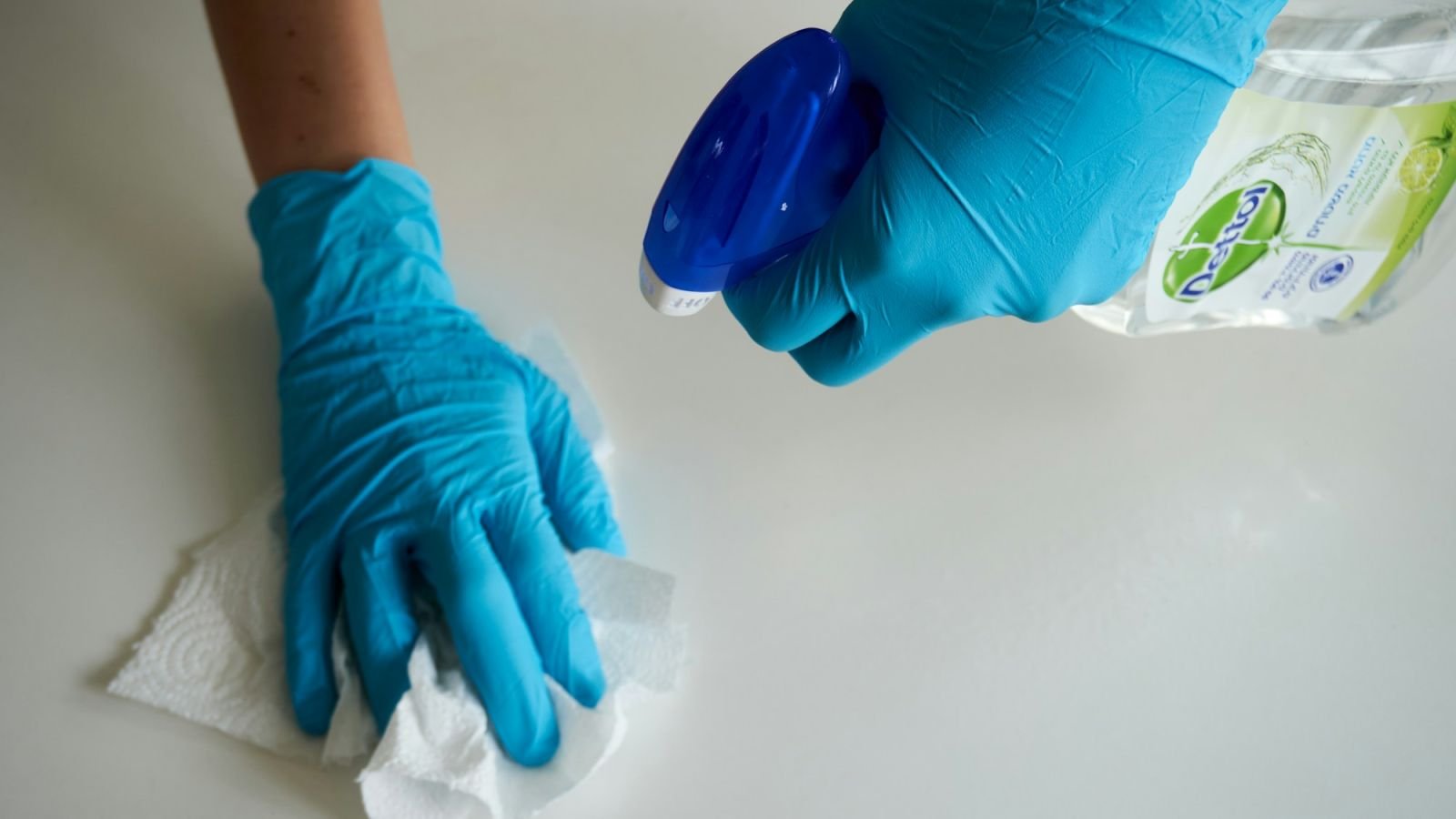
- Wipe all touchpoints: rails, handles, fitting room hooks, kiosks, terminals — critical
- Clean price ticket holders and signage as needed
- Empty and wipe bins; check for odour
- Clean checkout counters, including belts and card terminals — critical
Fitting rooms
- Sweep or vacuum each room, including corners — critical
- Clean and disinfect mirrors, benches, stools and hooks — critical
- Wipe walls and doors at hand height — critical
- Check for and remove left items, pins, tags and hangers
- Empty bins and replace liners
- Check the floor for pins and broken hangers and remove them — critical (injury risk)
- Confirm lighting works and report faults
Washrooms (if customer-facing)
- Clean and disinfect all fixtures — critical
- Restock soap, towel and toilet paper — critical
- Clean mirrors, partitions and doors
- Clean and dry floors — critical
- Empty and reline bins
- Check for odour and address
Back of house and stockroom
- Sweep floors and remove debris and packaging
- Keep walkways and exits clear — critical (fire safety)
- Empty bins and flatten cardboard
- Clean staff room surfaces and tables
- Clean and organise the chemical cupboard — critical
- Clean staff washroom
Weekly tasks
- Deep clean fitting rooms: walls, mirrors, floors, seats
- Machine clean hard floors; buff where finish has dulled
- Vacuum upholstery, seating and fitting room benches
- Deep clean entrance mats and exterior areas
- Clean vents, grilles and ceiling diffusers
- Clean high-level surfaces: shelf tops, signage, light fittings
- Deep clean washrooms including grout
- Clean behind and under fixtures and display units
- Wipe glass display cases inside where accessible
- Clean stockroom shelving and racking
Monthly and quarterly tasks
- Extract or deep clean carpets
- Strip and reseal hard floors
- Deep clean light fixtures and ceiling areas
- Move fixtures and deep clean behind them
- Deep clean all glass and window displays
- Service entrance matting or replace
- Review chemical storage and equipment condition
- Clean external signage and canopy if in scope
The five things customers actually notice
Retail complaints cluster tightly. These are worth inspecting separately from the general list.
- Fitting rooms. Mirrors with smears, floors with debris, and pins on the ground. The most complained-about area in retail cleaning.
- Entrance glass and doors. Smudged glass is the first thing a customer sees and reads as "unkempt".
- Floors in the walkway. Sticky spots, gum, and marks that have been there a while.
- Checkout area. Counter cleanliness and terminal screens.
- Customer washrooms. If you have them, they are judged far more harshly than any other space.
Cleaning while the store is trading
Retail cleaning happens in front of customers, which changes how you work.
- Use discreet equipment and avoid trailing cables in walkways — critical (trip hazard).
- Signage for wet floors is mandatory, and the CCOHS guidance on slips, trips and falls explains why marking is not optional.
- Work around shoppers, not through them. Start at the far end of an aisle and work toward the entrance.
- Avoid strong chemicals in occupied areas. Ventilate and use products appropriate for public space.
- Coordinate with staff on busy periods, deliveries and promotions so cleaning does not clash with peak trading.
- Check fitting rooms between uses during peak periods where staffing allows; it is the highest-return ten minutes of the day.
Inspecting a retail store
Inspect during trading hours, because that is the condition the customer sees. Score these as critical:
- Fitting rooms clean, floor free of pins and debris
- Entrance glass and doors clean
- Floors free of spills and sticky residue
- Touchpoints clean
- Washrooms clean and stocked
- Exits and walkways clear
- Chemical storage secure
Using a cleaning inspection with photos also protects you commercially: retail managers change frequently, and a documented history is the simplest way to demonstrate consistency to a new one.
Frequently asked questions
How often should a retail store be cleaned?
Floors, entrances and touchpoints daily, fitting rooms checked multiple times during trading hours, and deep cleaning such as carpet extraction and floor resealing monthly or quarterly.
What is the most important area to clean in a retail store?
Fitting rooms. They are the most common source of customer complaints in retail cleaning, closely followed by entrance glass and customer washrooms.
Can retail stores be cleaned during opening hours?
Yes, and usually they must be. Use discreet equipment, mark wet floors, avoid strong chemicals in occupied areas, and work around shoppers rather than closing sections.
How do you clean retail fitting rooms efficiently?
Work room by room on a fixed route, checking floors for pins, wiping mirrors and benches, and emptying bins. Build in a mid-shift pass during busy periods, because fitting room condition deteriorates fastest at peak.
What should a retail cleaning schedule include for a stockroom?
Daily floor sweeping and debris removal, keeping walkways and fire exits clear, flattening cardboard, cleaning staff areas, and weekly cleaning of racking and shelving. Stockrooms are usually checked by head office auditors.
Show the standard
Retail managers and head office auditors both want evidence. A scored inspection with photos answers both at once.
NeatScore includes retail templates with fitting room and entrance items flagged critical, photo evidence per item, and a branded report you can leave with the store manager. Try it free for 7 days, or see pricing.