Cleaning Equipment Maintenance: Keeping Machines Working and Staff Safe
A practical cleaning equipment maintenance guide covering daily checks, scheduled servicing, vacuum and floor machine care, and why equipment failure is a quality and retention issue.
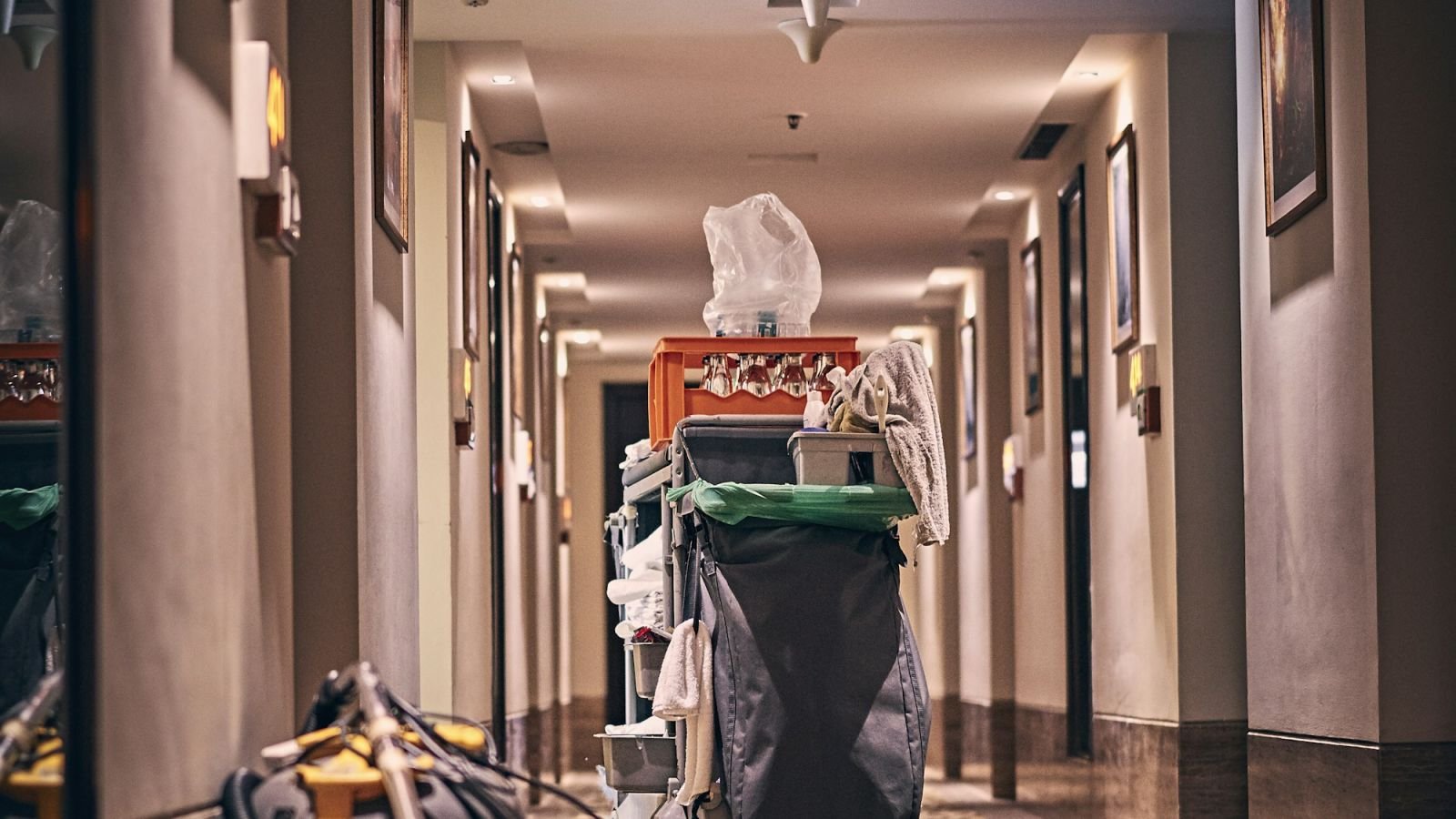
When a vacuum stops working, the response is usually "borrow one from another site". That is a quality failure, a safety risk and a morale problem at the same time — and it is almost always preventable with a maintenance routine that takes minutes a week.
Equipment condition determines whether the standard you have written down is achievable at all. You cannot reach Level 2 in a carpeted office with a vacuum that has lost suction.
Key takeaways
- Equipment failure shows up first as a drop in inspection scores, then as a complaint.
- Most failures are predictable and cheap to prevent: filters, bags, belts, blades, squeegees, cords.
- Daily checks take two minutes and catch most problems before a shift starts.
- Staff who report faults must see them fixed, or they stop reporting.
- A broken machine left in service damages surfaces, wastes labour and endangers staff.
Why maintenance is a quality issue, not admin
The link between equipment and the delivered standard is direct:
| Failure | Quality consequence |
|---|---|
| Vacuum loses suction | Carpet does not reach target; soil accumulates |
| Worn brush roll | Carpet pile damaged; poor soil removal |
| Clogged scrubber squeegee | Streaked floors; water left behind; slip risk |
| Worn scrubber brush | Uneven cleaning; visible lanes on the floor |
| Clogged mop or dirty water | Soil redistributed rather than removed |
| Blocked sprayer or nozzle | Uneven chemical application; wasted product |
| Broken equipment in use | Task skipped entirely; recorded as done anyway |
That last row is the dangerous one. When equipment fails mid-shift, the task is frequently skipped and still ticked off. That is how a documented quality system quietly becomes fiction.
Equipment reliability also drives staff turnover — nothing says "the company does not care" like arriving to a broken machine and no replacement.
Daily checks
Two minutes at the start of a shift, and it prevents most mid-shift failures.
Vacuums
- Bag or canister level — empty before it is full
- Filter condition — clogged filters are the most common cause of lost suction
- Brush roll — free of hair, string and debris; spins freely
- Belt — intact, not slipping
- Cord — no damage, no exposed wire, no taped repairs
- Hose and wand — no blockages, connections secure
Floor machines
- Squeegee blades — intact, not nicked, making contact
- Brush or pad — condition, correct type for the floor
- Solution and recovery tanks — clean, empty, no residue
- Filters and screens — clear
- Battery charge level, where battery powered
- Cord condition
- Water flow and spray function
Mops, buckets and carts
- Mop heads clean, not greying, not smelling
- Bucket clean; wringer working
- Cart wheels free; no wobble or drag
- Chemical bottles labelled and intact
Ladders and access equipment
- Feet intact and non-slip
- Rungs, spreaders and locking mechanisms sound
- No damage, no makeshift repairs — remove from service immediately
Cords and cabling
- Never tape a damaged cord and keep using it
- Remove from service any cord with exposed conductors, a damaged plug or a hot casing
- Coil properly for storage; do not wrap around the machine body
Our slips, trips and falls prevention guide explains why cable condition and cable routing are safety issues, not just equipment issues.
Scheduled maintenance
| Item | Frequency | What |
|---|---|---|
| Vacuum bags and filters | Daily to weekly | Empty, clean, replace — never let it clog |
| Vacuum brush rolls and belts | Weekly | Clear debris; replace worn belts |
| Vacuum full service | Annually, or by hours | Motor, wiring, bearings |
| Floor machine squeegees | Monthly, or when nicked | Replace — cheap and high impact |
| Floor machine brushes and pads | As worn | Replace; keep matched to floor type |
| Scrubber tanks and filters | Weekly | Deep clean; check for residue and odour |
| Battery watering/charging | Per manufacturer | Never leave batteries discharged |
| Mop heads | Wash or replace on a set cycle | A greying mop is not cleaning |
| Carts and castors | Monthly | Lubricate, tighten, replace wheels |
| Ladders | Before each use plus periodic inspection | Documented; remove damaged units |
| Safety equipment | Per requirement | Spill kits restocked, signage intact |
Set a specific cycle per item rather than "when needed". Nothing gets done when needed.
Repair versus replace
Decide this on cost and safety, not on sentiment.
Repair when: the fault is consumable (squeegee, belt, brush, filter, castor), the machine is otherwise sound, and parts are available.
Replace when: repair cost approaches a meaningful fraction of replacement, the machine is unreliable in ways that keep recurring, parts are obsolete, or the machine is inefficient on labour (an underpowered scrubber costs more in hours than it saves in capital).
Remove from service immediately when: the fault is electrical, the machine is unstable, a ladder is damaged, or there is any risk of injury. No exceptions, no "we will be careful".
The reporting loop
Equipment maintenance fails at the reporting stage far more often than at the repair stage.
- Make reporting easy. A cleaner who spots a fault at 6am should be able to report it in seconds, not fill in a form.
- Fix promptly and visibly. If reports go nowhere, people stop reporting. That is the whole failure mode.
- Tell the reporter it is fixed. This is what keeps the channel alive.
- Track repeat faults. The same machine failing three times is a replacement decision, not a fourth repair.
- Never blame the operator first. Investigate the machine before assuming misuse.
Equipment faults belong in the same system as everything else — a reported fault is a deficiency with an owner and a date.
Storage and transport
- Store dry. Damp storage corrodes machines and grows mould in mop heads.
- Store with tanks and bags empty where the machine allows it.
- Hang mops and cloths to dry rather than leaving them in a bucket.
- Secure equipment in vehicles so it does not shift or leak. Leaked chemical in a vehicle is a safety and a cost problem.
- Keep the janitor closet organised — it is also an inspection area in many buildings.
- Charge batteries in a ventilated, non-flammable location, and never leave charging batteries unattended overnight in an unventilated cupboard.
A minimal management routine
| Frequency | Task |
|---|---|
| Every shift | Daily checks; report faults |
| Weekly | Clean filters, brush rolls, tanks; check cords |
| Monthly | Inspect squeegees, brushes, cart wheels, ladders |
| Quarterly | Service schedule review; replace consumables |
| Annually | Full service for machines on hours; review replace-versus-repair |
Reliable equipment is a precondition for hitting the standard, and the wider system is in how to build a cleaning quality assurance programme.
Equipment and chemicals are managed together in practice, so see cleaning chemical inventory and dilution control for the store side.
Frequently asked questions
How often should cleaning equipment be serviced?
Consumables are checked daily and replaced weekly to monthly depending on wear, with a full service annually or by machine hours. Floor machine squeegees are often replaced monthly and make a disproportionate difference to floor quality.
Why does my vacuum lose suction?
Most commonly a full bag or a clogged filter, then a blockage in the hose or wand, then a worn or slipping belt. Check those four in that order before assuming the motor has failed.
When should cleaning equipment be replaced rather than repaired?
When repairs recur, when parts are obsolete, when repair cost approaches replacement, or when the machine is so inefficient it costs more in labour than a new machine would cost to buy. Anything electrically unsafe or structurally damaged should be removed from service immediately.
Should staff report broken equipment, and to whom?
Yes, through a channel that is quick to use, with prompt visible fixes and confirmation back to the reporter. If reports go unanswered, staff stop reporting and simply skip the task.
How do you keep mops and cloths hygienic?
Launder or replace mop heads on a set cycle, never leave them sitting in dirty water, hang them to dry rather than storing damp, and use colour coding so washroom equipment never reaches a food or clinical area.
Track the consequence, not just the fault
Equipment condition shows up in your inspection data before it shows up in a complaint — a carpet score sliding as suction drops, a floor streaking as a squeegee wears.
NeatScore lets you record equipment checks and faults as checklist items alongside quality scores, so a machine problem is visible as a quality problem with a date attached. Try it free for 7 days, or see pricing.