Slips, Trips and Falls in Cleaning: Prevention for Staff and Occupants
How to prevent slips, trips and falls in cleaning work, covering wet floor management, signage, footwear, ladder safety, and the occupant-facing controls that matter most.
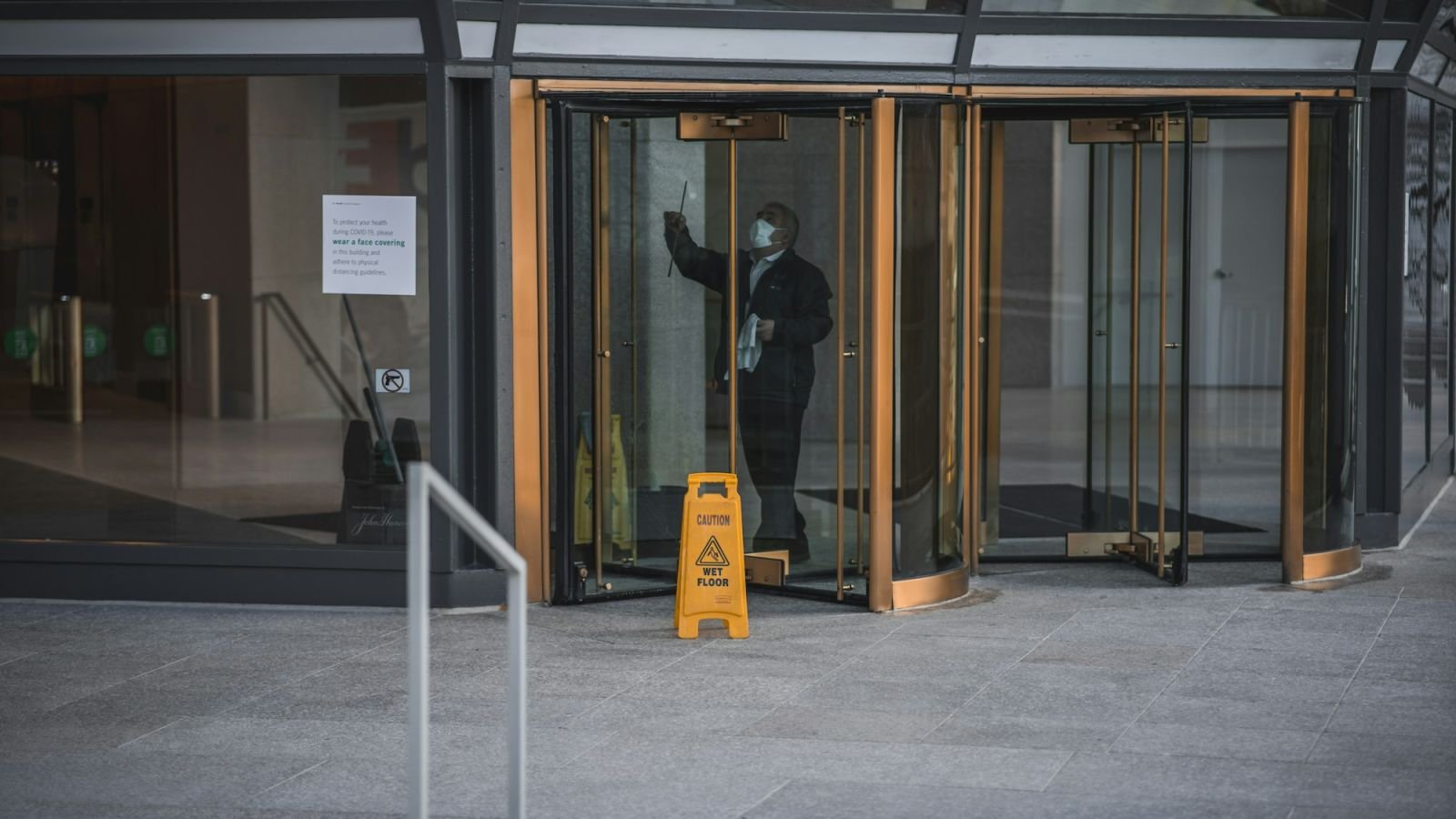
Slips, trips and falls are among the most common workplace injuries in Canada, and cleaning work sits squarely in the middle of the risk: wet floors, trailing cables, ladders, and working in spaces that other people are also using.
The awkward part is that cleaning creates the hazard other people then encounter. That makes prevention a two-sided problem: protecting the cleaner, and protecting the occupants of the building being cleaned.
Key takeaways
- Wet floor signage is mandatory, not a courtesy. Removing it too early is the common failure.
- The most effective control is drying the floor, not warning about it.
- Trailing cables are a trip hazard that cleaning teams create and can eliminate.
- Footwear is a genuine control, not a formality.
- Report floor defects — worn finishes, lifting tiles and loose nosings are building problems that cleaning cannot fix.
The two risks you are managing
| Risk | To whom | Primary controls |
|---|---|---|
| Wet or contaminated floors during cleaning | Occupants and visitors | Signage, barriers, drying, timing |
| The cleaner's own footing and movement | Cleaning staff | Footwear, technique, equipment, lighting |
| Trip hazards created by the work | Occupants | Cable management, equipment placement |
| Falls from height | Cleaning staff | Ladder discipline, training, alternatives |
| Existing floor defects | Everyone | Reporting, not cleaning harder |
For the practical method side, see hard floor cleaning methods, and for the wider programme, the health and safety guide for Canadian cleaners.
The CCOHS guidance on slips, trips and falls is the reference to build your own procedure around.
Wet floor management
This is the highest-visibility part of the job and the one most often done carelessly.
Do:
- Place signage before the floor becomes wet, not after.
- Use enough signs to cover all approaches, including side entrances and corners.
- Use physical barriers where available for larger areas — cones plus signs are better than signs alone.
- Work in sections so part of the route stays dry and passable.
- Dry the floor with a squeegee, mop or blower before removing signage.
- Remove signage the moment the floor is genuinely dry. Leaving signs out permanently trains people to ignore them, which defeats the purpose.
- Report if signage has gone missing or been damaged.
Do not:
- Use a single sign for an entire corridor.
- Leave a wet floor unattended, even briefly.
- Assume people will read the sign. In busy buildings, they often will not.
- Remove signage because the floor "looks dry" — check the edges and shaded areas.
- Clean during peak traffic where the schedule allows an alternative.
The best control is elimination. Where you can clean a floor when the space is empty, or use low-moisture methods, you remove the hazard rather than warning about it. Auto-scrubbers that vacuum the slurry in one pass leave the floor far drier than mopping.
Footwear
Footwear is a real engineering control and one of the cheapest available.
- Slip-resistant soles appropriate to the surface. Different soles perform differently on tile, vinyl, concrete and wet surfaces.
- Fit and condition matter — worn tread or a loose fit reduces the benefit substantially.
- Provide and require it. Footwear that is optional is footwear that is not worn.
- Consider a footwear allowance or provision. It is cheaper than an injury.
- Check condition periodically; soles wear out before the shoes look worn.
Cable and cord management
Cleaning teams create trip hazards with vacuums, polishers, scrubbers and chargers.
- Keep cords out of walkways and along walls, and never across doorways.
- Use cordless equipment where practical — this removes the hazard entirely.
- Route cords so they do not cross a wet area or a slope.
- Store equipment so cables are not left across a floor or corridor between shifts.
- Coil and store cables properly; damaged cords are both a trip and an electrical hazard.
- Never leave a cord across a stairwell or landing.
Ladder and working-at-height safety
High dusting, vents and windows require working above shoulder height, and this is where the most serious cleaning injuries occur.
- Use the right equipment. Many cleaning tasks that used to need a ladder now have extension-pole alternatives. Removing the height removes the risk.
- Inspect ladders before use — feet, rungs, spreaders and locking mechanisms.
- Three points of contact, always, and never overreach.
- Do not stand on chairs, desks, buckets or shelving. This is common and dangerous.
- Set up on level ground, away from doors that could open into the ladder.
- Do not work at height alone in areas where no one would find you.
- Training is required for anyone working at height; this is not intuitive.
- If a task genuinely needs fall protection, it may be outside your scope — escalate it.
Lighting and visibility
- Report failed lighting immediately. Poor lighting is a contributing factor in most fall incidents.
- Ensure the areas you are cleaning are adequately lit, including stairwells and service corridors.
- Use task lighting where needed rather than working in poor visibility.
- Be aware of glare from wet floors and windows, which hides hazards.
Floor defects you cannot clean away
Some hazards are building conditions, and cleaning cannot fix them. Report them in writing.
- Worn or polished-smooth finishes in traffic lanes
- Lifting or curling vinyl, tiles or transitions
- Loose or missing stair nosings
- Damaged or uneven thresholds
- Failing entrance matting, which curls and slides
- Water tracked in from outside in wet weather
- Persistent leaks creating wet patches
- Uneven surfaces where flooring types meet
Reporting these is deficiency tracking applied to building condition. If a fall happens later, your written record that you flagged the hazard matters a great deal.
Winter and weather
Winter changes the risk profile substantially. Entrances become wet and contaminated with salt and slush, and the hazard moves from the cleaner to every person entering the building.
- Increase entrance cleaning frequency — see the cleaning frequency chart.
- Keep matting adequate, flat and clean; saturated matting is a slip hazard itself.
- Remove slush and salt promptly rather than letting it spread.
- Place signage where entrants will actually encounter it.
- Consider the transition zone where wet footwear meets hard flooring, which is where most winter slips occur.
- Report if entrance protection is inadequate for the traffic — that is a client conversation.
- Front of house cleaning covers the entrance regime in detail.
Training and supervision
Fall prevention is a trained behaviour, not common sense.
- Train on wet floor procedure, signage placement and removal, and drying technique.
- Train on ladder use and on recognising when a task needs equipment you do not have.
- Train on footwear and its condition.
- Train on reporting floor defects and near-misses.
- Record near-misses. A near-miss is free information about a hazard that will eventually cause an injury.
- Supervise new staff until the habits are established — see training and onboarding cleaning staff.
Inspecting for fall hazards
These belong on every inspection and should be scored as critical where they are safety items.
- Wet floor signage present during and after cleaning
- Floors dry before signage removal
- No trailing cables in walkways
- Entrance matting flat, clean and not curled
- Stair treads and landings clear and dry
- Handrails clean, secure and reachable
- Lighting functional throughout
- No standing water anywhere
- No loose nosings or lifting flooring
- Equipment stored so it does not obstruct routes
For the general method, see what a cleaning inspection is, and for the areas where falls concentrate, the elevator and stairwell cleaning checklist.
Frequently asked questions
How long should a wet floor sign stay out?
Until the floor is genuinely dry. Use a squeegee, mop or blower to dry it sooner rather than leaving the sign out longer. Leaving signage in place permanently trains people to ignore it, which is worse than no sign at all.
Is wet floor signage a legal requirement?
Employers have a general duty to protect workers and others from hazards, and wet floor warning is a standard control for a hazard the cleaning activity creates. Specific requirements vary by province, so confirm with your provincial regulator.
What is the best footwear for cleaning staff?
Slip-resistant footwear appropriate to the surfaces being cleaned, in good condition and properly fitted. Sole performance varies by surface type and by wear, so replace footwear before the tread is visibly worn down.
Should cleaners work at height?
Some tasks require it, but many can be done with extension poles instead. Where ladders are needed, use the correct type, inspect them, maintain three points of contact, and never work at height alone. Tasks requiring fall protection may be outside a cleaning contract's scope.
What should a cleaner do about a slippery floor they cannot fix?
Report it in writing with the location and a photo, and treat it as a deficiency. Worn finishes, lifting flooring and damaged nosings are building conditions, not cleaning failures, and the written record protects both the cleaner and the company.
Record the hazards you find
Fall hazards are often building conditions rather than cleaning failures, and the only way to prove you raised them is to have raised them in writing.
NeatScore lets you flag safety items as critical on every inspection, attach photos of floor defects and missing signage, and keep a dated record of what was reported and when. Try it free for 7 days, or see pricing.