Health and Safety for Commercial Cleaners in Canada: WHMIS, Chemicals and Slip Prevention
Janitorial health and safety guide for Canada: WHMIS labels and SDSs, cleaning chemical safety, PPE, and preventing slips, trips and falls.
Commercial cleaning is physical, fast-paced work with real hazards: concentrated chemicals, wet floors, heavy bins, sharp objects in the trash and long shifts on your feet. A strong janitorial health and safety program protects your team, keeps your clients' buildings safe and protects your business.
This guide covers the essentials for cleaning companies in Canada: WHMIS and safety data sheets, cleaning chemical safety, PPE, preventing slips, trips and falls, and the everyday habits that prevent injuries.
Key takeaways
- Label every decanted spray bottle, and keep an up-to-date SDS for every product on site.
- Never mix cleaning products, especially bleach with ammonia or acids.
- Put out wet floor signs before mopping and keep walkways clear.
- Check safety items during every quality inspection, not just once a year.
Note: This article is general information, not legal advice. Occupational health and safety rules are set provincially and territorially in Canada, so check the requirements of your regulator (for example WorkSafeBC, WSIB and the Ontario Ministry of Labour, or CNESST in Quebec).
WHMIS for cleaners: labels, SDSs and training
WHMIS (the Workplace Hazardous Materials Information System) is Canada's national standard for communicating chemical hazards. Since WHMIS 2015 it has been aligned with the international GHS system. Many everyday janitorial products, including disinfectants, degreasers, descalers and floor strippers, are hazardous products under WHMIS.
WHMIS has three main elements: labels, safety data sheets (SDSs) and worker education and training.
Supplier labels
Every hazardous product should arrive with a supplier label. According to the Canadian Centre for Occupational Health and Safety (CCOHS), a supplier label includes:
- Product identifier (the product name)
- Supplier identifier (the Canadian manufacturer or importer)
- Hazard pictograms
- A signal word: "Danger" or "Warning"
- Hazard statements
- Precautionary statements (safe handling, storage and first aid)
Supplier labels must be in English and French.
Workplace labels for decanted products
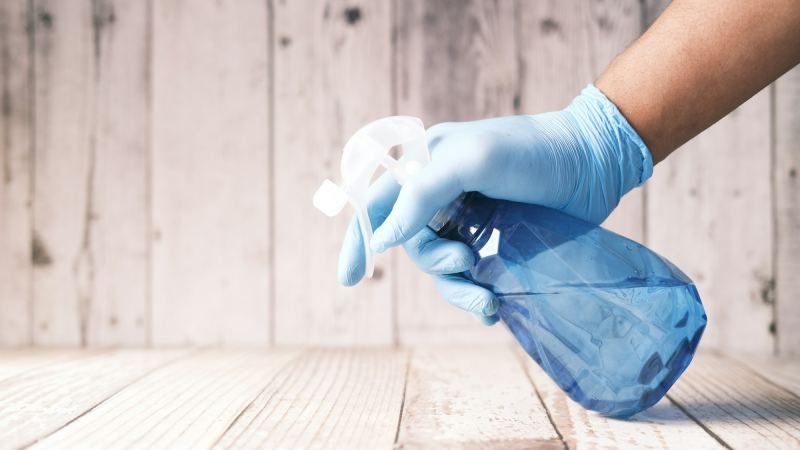
Cleaners often pour concentrate into spray bottles or buckets. CCOHS explains that a workplace label is needed when a product is decanted into another container, made at the workplace, or when the supplier label is lost or unreadable. A workplace label needs the product name, safe handling information and a reference to the SDS. Label every spray bottle, every time.
Safety data sheets (SDSs)
Every hazardous product needs an up-to-date SDS in a standard 16-section format, and SDSs must be available to workers at the work site. WorkSafeBC's WHMIS guidance is a clear summary. For cleaners, the most useful sections are:
- Section 2: Hazard identification
- Section 4: First-aid measures
- Section 7: Handling and storage
- Section 8: Exposure controls and personal protection (the PPE to wear)
Keep a binder or digital folder of SDSs for every product used at each site, and make sure cleaners know where it is.
Training
Employers must make sure workers are educated and trained on WHMIS and on the specific products they use. Training should cover reading labels and SDSs, safe dilution, what to do in a spill and first aid. Refresh it whenever you introduce a new product.
Cleaning chemical safety
Most chemical injuries in cleaning come from a few avoidable mistakes.
- Never mix products. Mixing bleach with ammonia releases toxic chloramine gases, and mixing bleach with acids (such as some toilet bowl cleaners and descalers) releases chlorine gas, as the Washington State Department of Health explains. Use one product, rinse, then use the next.
- Dilute correctly. Stronger is not better. Use the dilution rate on the label or a dispensing system, and add chemical to water, not water to chemical.
- Ventilate. Open doors or run exhaust fans in washrooms and small rooms, especially when stripping floors or descaling.
- Store safely. Keep chemicals in labelled, closed containers in a ventilated janitor closet, away from food, and separate products that react with each other.
- Know the first aid. Know where the eyewash station or water supply is and what Section 4 of the SDS says for each product.
PPE for janitorial work
The right personal protective equipment depends on the task and the product, so start with Section 8 of the SDS. Common janitorial PPE includes:
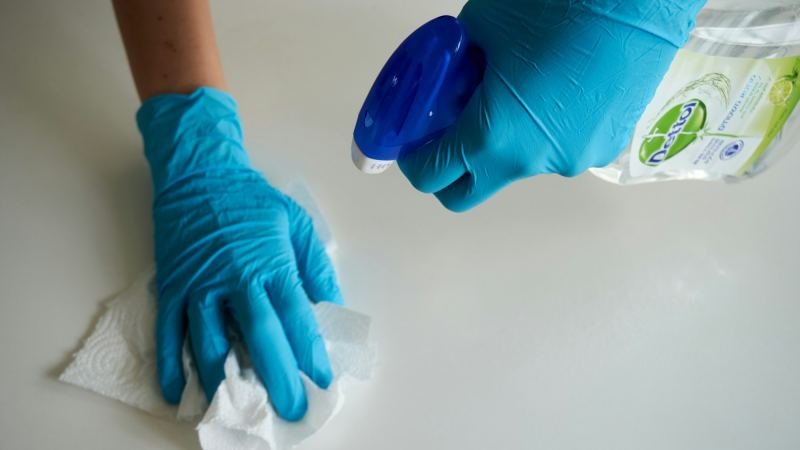
- Gloves suited to the chemical (nitrile is common for cleaning products), and puncture-resistant gloves for handling trash
- Eye protection (safety glasses or goggles) when pouring concentrate, spraying overhead or stripping floors
- Slip-resistant footwear with good support for long shifts on wet floors
- Masks or respirators only when the SDS or a hazard assessment calls for them, with proper fit and training
Replace damaged PPE immediately and make sure it is available at every site, not just the head office.
Preventing slips, trips and falls
Slips, trips and falls are among the most common workplace injuries, and cleaners face them twice: as workers on wet floors, and as the people responsible for making floors safe for everyone else. CCOHS calls good housekeeping the most fundamental level of fall prevention. Their guidance on preventing slips, trips and falls includes:
- Clean up spills immediately and mark spills and wet areas.
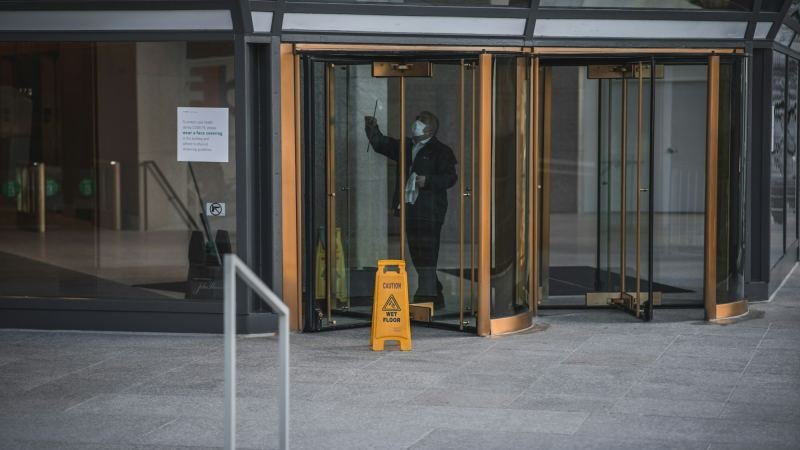
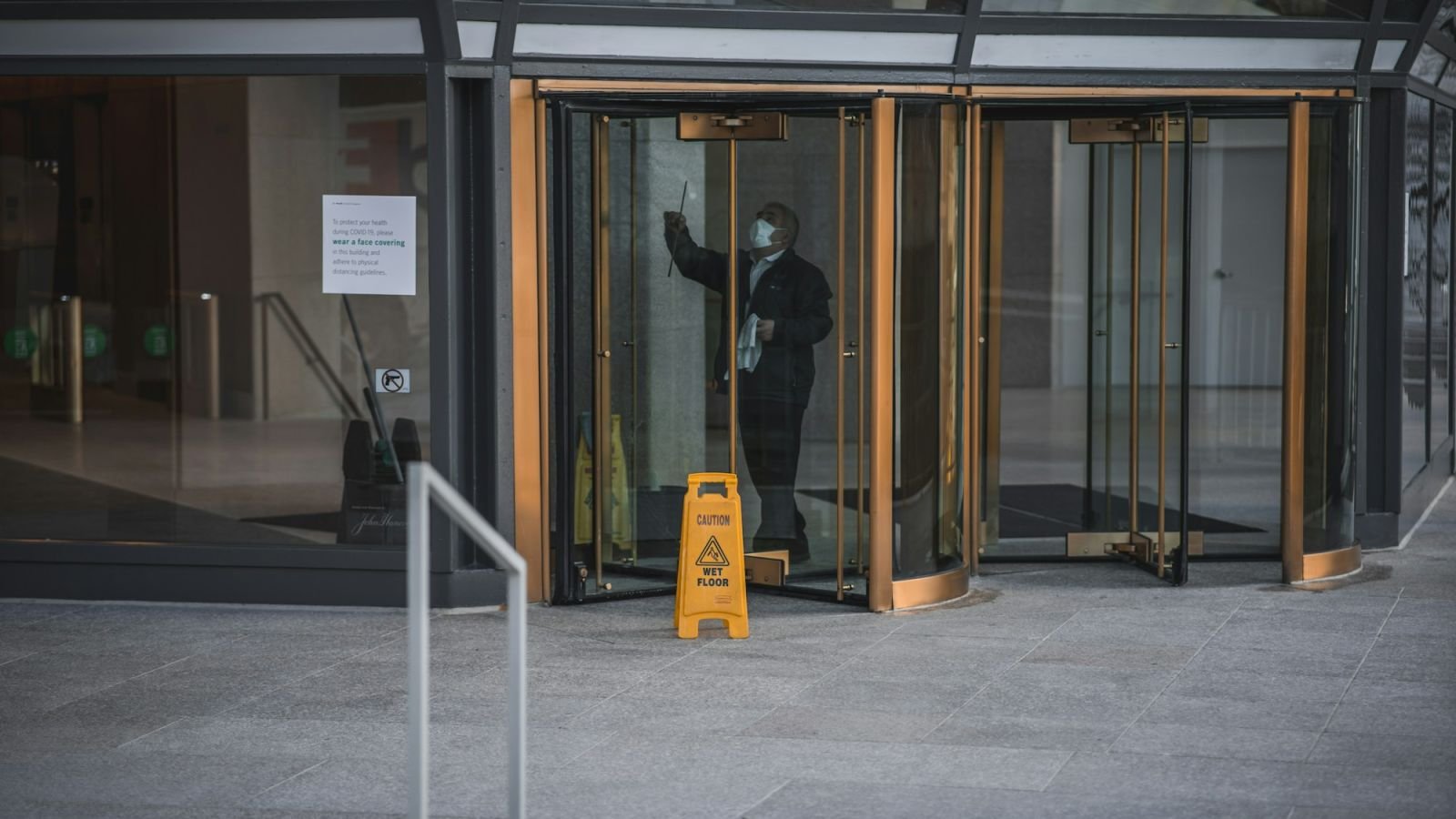
- Use wet floor signs before you start mopping and leave them until the floor is dry.
- Mop in sections so there is always a dry path, and clean high-traffic areas outside peak hours where possible.
- Keep walkways clear. Park carts and equipment out of the way and cover or route cords that cross walkways.
- Keep areas well lit and report burnt-out lights and damaged flooring.
- Wear slip-resistant footwear suited to wet and greasy floors.
Tip: Add "wet floor signage in use" and "walkways clear" to your janitorial inspection checklist so safety is scored alongside cleanliness.
Safe lifting and repetitive strain
Mopping, vacuuming, emptying bins and moving furniture put a lot of strain on the back, shoulders and wrists. To reduce musculoskeletal injuries:
- Use carts, dollies and wheeled bins instead of carrying heavy loads.
- Don't overfill trash bags; lift with the load close to your body and avoid twisting.
- Use tools with adjustable or long handles so cleaners can work upright.
- Rotate tasks during a shift to avoid repeating the same movement for hours.
- Report aches early, before they become injuries.
Sharps and biohazards
Needles, broken glass and bodily fluids turn up in washrooms, parking areas and trash more often than most people think.
- Never compress trash with your hands or feet, and hold bags away from your body.
- Use puncture-resistant gloves and tongs to pick up sharps, and put them in an approved sharps container.
- Follow your company's written procedure for blood and bodily fluid clean-up, including the right disinfectant and PPE.
- Report every needle-stick or exposure immediately so the worker can get medical advice quickly.
Working alone and after hours
Many cleaners work evenings and nights, often alone in large buildings. Several provinces have specific requirements for working alone. Good practice includes a check-in schedule, a way to call for help, knowing the building's emergency exits and first-aid kit, and clear instructions for what to do if something feels unsafe.
Build janitorial health and safety into every inspection
Safety programs work best when they are checked, not just written down. During each quality inspection, supervisors can confirm that:
- Chemicals are labelled, including decanted spray bottles
- SDSs are available on site
- Wet floor signs are in use and walkways are clear
- PPE is available and in good condition
- The janitor closet is clean, organized and ventilated
Scoring these items alongside cleanliness keeps safety visible to your team and your clients. It also gives you a record that inspections took place.
Frequently asked questions
Do cleaning products need WHMIS labels?
Hazardous cleaning products sold for workplace use need a WHMIS supplier label and an SDS. If a cleaner pours a product into another container, such as a spray bottle, that container needs a workplace label unless it is used immediately.
How many sections are in a safety data sheet?
A WHMIS 2015 safety data sheet has 16 sections in a set order, covering everything from hazard identification and first aid to handling, storage and personal protection.
What PPE do janitors need?
It depends on the product and task. Section 8 of each product's SDS lists the protection required. Most janitorial teams use chemical-resistant gloves, eye protection for pouring and spraying, and slip-resistant footwear.
How can cleaners prevent slips and falls?
Clean spills immediately, put out wet floor signs before mopping, mop in sections to leave a dry path, keep walkways clear of cords and equipment, keep areas well lit and wear slip-resistant footwear.
Keep your team safe and your clients confident
Janitorial health and safety and cleaning quality go together: a clean, well-labelled janitor closet, dry walkways and trained staff are signs of a well-run contract. Make them part of every inspection.
NeatScore lets you add safety items to any inspection checklist, flag them as critical, and share photo-backed reports with your clients. Start your free 7-day trial, or read how to score cleanliness with the APPA cleaning standards.