Coworking Space Cleaning: Shared Desks, Rooms and Amenities
How to clean coworking spaces, covering hot desks, phone booths, shared kitchens, washrooms and showers, plus the scope boundaries every operator should agree in writing.
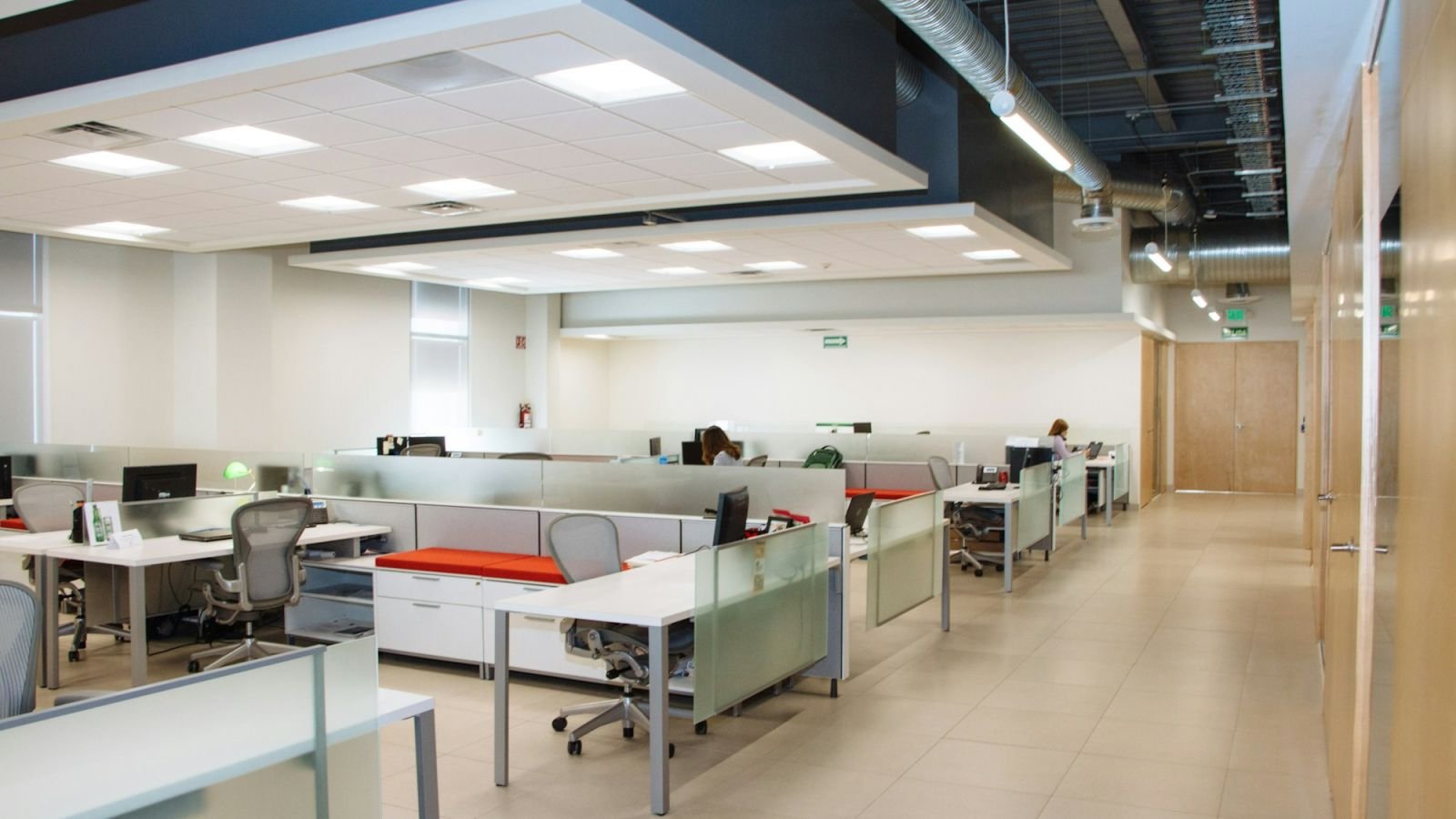
A coworking space is an office that changes occupants several times a day and never empties. Members arrive on day passes they bought this morning, book a meeting room for an hour, make a coffee, take a call in a booth, and leave without anyone knowing their name. There is no fixed tenant list to work from, and no single client walking the floor at 7am checking whether the previous night's work happened.
That is what makes coworking space cleaning a different discipline from ordinary office cleaning. The building is used longer, touched by more people, and judged on the impression of the shared areas rather than on any one company's suite.
Key takeaways
- Coworking behaves like a public building with an office inside it: shared areas carry the load, and they are cleaned by touchpoint frequency, not by desk count.
- The highest-risk surfaces are the shared kitchen, the coffee station, the washrooms and showers, and the meeting room AV and whiteboards.
- Common-area cleaning is usually the operator's scope; private offices and member equipment usually are not. Agree the line in writing.
- Flexibility is the operational problem: hot desks, event nights and shift patterns mean the schedule has to flex with occupancy.
- Items belonging to a trade or a specialist - plumbing, electrical, HVAC, pest treatment, IT hardware repair - are report-don't-act items.
- Coworking members complain about washrooms, kitchens and meeting room readiness long before they complain about dust.
What makes coworking different
Four characteristics drive the whole method.
Occupancy is high and continuous. A 2,000 square metre office tower floor might hold 150 people on a fixed schedule. The same floor as coworking can hold 250 members with access from early morning to late evening, seven days a week, plus event evenings. Fixture counts stay the same; usage multiplies.
Nobody owns the mess. In a single-tenant office, the person who spills the coffee reports it. In a coworking space, members assume someone else will. Cleaning has to be scheduled on the assumption that nothing will be reported.
The shared areas are the product. Members are not buying the desk - they are buying reliable wifi, a clean washroom, a working coffee machine and a room they can bring a client into. Cleaning is a direct input to retention, and the commercial case is the same one covered in cleaning contract retention.
The operator is the client, not the member. Your instructions come from the community or facilities manager. Members will ask you for things directly, and the answer is usually "I will pass that on", not "yes".
Frequency by area
Coworking spaces usually fail on the middle column of this table. Daily cleaning of visible areas is rarely the problem; the problem is that touchpoints are cleaned on a nightly cycle when the building is used fifteen hours a day.
| Area | Minimum frequency | Notes |
|---|---|---|
| Washrooms and showers | Multiple times daily, plus nightly deep clean | Highest complaint driver in every shared workspace |
| Shared kitchen and coffee stations | At least twice daily, plus nightly | Includes appliance exteriors and consumable restock |
| Entrances, lifts, stairs, corridors | Daily on high-touch points, nightly on floors | Handles and call buttons are continuous |
| Hot desks and shared tables | Nightly, plus mid-day touchpoint wipe | Never disturb personal items or cables |
| Meeting rooms | Between bookings where staffing allows, otherwise nightly | Table, chairs, glass, whiteboard, AV wipe-down |
| Phone booths and focus pods | Nightly, with spot checks | Glass, desk, seat, ventilation grille |
| Event and communal space | After every event | Reset to configuration, waste removed |
| Windows, high dusting, carpets | On a periodic cycle | See periodic cleaning schedules |
Entrances, circulation and communal areas
These set the first impression and take the most foot traffic.
- Clean and disinfect entrance door glass, handles, push plates and intercom panels — critical
- Keep entrance matting clean, flat and in place; it controls the dirt tracked onto every shared floor — critical
- Mop or scrub hard floors in lobbies and corridors; vacuum carpet edges and under seating
- Clean and disinfect lift call buttons, car panels and handrails — critical
- Clean stairs, handrails, balustrades and glass balustrades
- Dust ledges, skirtings, signage, screens and light fittings within reach
- Clean and restock print stations, reception counters and the community desk
- Empty, clean and reline all bins, and separate recycling and organics as the operator specifies
- Keep egress routes, accessible routes and fire equipment clear and unobstructed — critical
- Clean and arrange furniture, and report broken items rather than attempting repairs
Washrooms and showers
In a coworking space the washroom is a public washroom with a corporate brand attached, and it is used at a rate far above a normal office. Showers add wet-area risk on top.
- Clean and disinfect every fixture, seat, base and flush plate — critical
- Clean and dry floors fully; never leave standing water — critical (slip risk in a shared facility)
- Clean and disinfect door handles, locks, cubicle latches and sanitary bin lids — critical
- Clean mirrors, splashbacks, partitions and cubicle walls
- Restock soap, paper, liners and sanitary products on a monitored schedule, not on request — critical
- Clean and descale shower trays, screens, heads and floor gullies; squeegee screens
- Address odour at source through ventilation and cleanliness, never by masking it
- Report leaks, blockages, cracked fixtures, mould staining or failed extraction - do not attempt repairs
The full item list is in the restroom cleaning checklist.
Shared kitchens and coffee stations
Food and drink areas are the most heavily used and most hygienic part of a coworking space. They are also where members are most likely to help themselves to something that has run out.
- Clean and disinfect worktops, sink surrounds, taps and the fridge and dishwasher handles — critical
- Clean appliance exteriors - coffee machine, grinder, kettle, microwave, toaster, water dispenser
- Clean microwaves inside and out, and report units with burnt or damaged interiors rather than using them
- Clean sinks, remove food debris from strainers and keep drains clear and free-flowing
- Wipe cupboard and drawer fronts and high-touch panel edges
- Restock consumables - coffee, tea, sugar, stirrers, paper towels, dish soap - before they run out — critical
- Empty and clean bins, and handle organics and coffee grounds to the operator's procedure
- Follow the operator's instruction on whether fridges are emptied on a schedule; label and dispose only as directed
- Clean and disinfect shared tables, banquettes and high stools — critical
- Report failed refrigeration, leaks, wiring faults and equipment faults
Product selection matters in a shared space: leave no strong odour, and never mix products. Dilution, labelling and storage discipline is covered in chemical inventory and dilution control.
Meeting rooms, booths and hot desks
This is where cleaning meets other people's work, so the rule is clean around, never reorganise.
- Wipe and disinfect tables, chair arms, castors and shared peripherals such as keyboards and remotes — critical
- Clean whiteboards as instructed; use only the approved cleaner so the surface is not degraded
- Wipe AV controllers, conference phones and touch panels; never disconnect, re-cable or reposition equipment
- Clean glass walls, doors and interior partitions to a smudge-free finish — critical
- Reset chairs to the room's standard configuration and check consumables such as markers and pads
- In phone booths and focus pods, clean the glass, shelf, seat and ventilation grille
- At hot desks, clean the desk surface, cable aperture and any fixed power module; never move monitors, laptops, cables, plants or personal items — critical
- Report missing or damaged furniture, cracked glass and failed lighting rather than adjusting it
- Record anything unusual you saw and could not touch, using photos if site rules allow
Amenity and event spaces
Wellness rooms, mothers' rooms, prayer rooms, games areas, gyms, bar areas and event floors all appear in modern coworking buildings, and each has its own standard.
| Space | Cleaning priority | Watch for |
|---|---|---|
| Wellness or quiet room | Surfaces, seating, floor, air freshness | Personal use; clean quietly and do not move belongings |
| Gym or fitness studio | Equipment touchpoints, mats, mirrors, floor, odour | Product residue on rubber; report damaged equipment |
| Games or social area | Table surfaces, controls, seating, waste | Sanitise shared controls; report broken machines |
| Event floor | Post-event reset, glass, floors, waste, washrooms | Late-night coverage and alcohol-related waste handling |
| Terrace or balcony | Furniture, glass, drainage, cigarette waste | Weather events; check receptacles are not smouldering |
After an event, the reset is the product. Members who walk into a space still holding the previous evening's glasses and bins form a permanent opinion of the operator.
Scope boundaries and report-don't-act items
Coworking operators often ask cleaners to "just sort it out". Some of those requests sit outside a cleaning contractor's scope, competence or insurance.
- Confined spaces such as tanks, ducts, lift shafts and service voids - do not enter; report
- Electrical work, including changing lamps in fittings that require isolation or working at height on powered equipment
- Plumbing repairs, unblocking chemical drains and any work on the potable water system
- Pest treatment - report evidence, do not apply pesticides
- IT and AV hardware repair, resets or cable changes on member equipment
- Machinery and kitchen equipment repair, gas appliance work and refrigeration service
- Blood, vomit and other body-fluid incidents beyond the trained and equipped procedure
- Mould beyond surface cleaning, and any suspected asbestos-containing material
- Lift entrapment, fire panel alarms and security incidents - follow site procedure and report
Scope note: Trade work, pest treatment, confined space entry and member-owned equipment are normally outside a cleaning contractor's scope. Confirm in writing what is included, and report rather than act on anything outside it.
Inspecting a coworking space
Score these as critical, because in a shared workspace a member has no way to complain except by leaving.
- Washrooms and showers clean, dry, stocked and odour-free
- Kitchen and coffee stations clean, with consumables available
- High-touch points disinfected: handles, lift buttons, taps, appliance handles, shared controls
- Meeting rooms clean, reset and ready, with glass smudge-free
- Hot desks clean without any member belongings disturbed
- Floors clean and dry, with matting in place at entrances
- Waste, recycling and organics emptied and clean
- Egress, accessible routes and fire equipment clear
- Member equipment and personal items untouched
- Observations and defects reported with location and date
The scoring mechanics behind a checklist like this are set out in how to measure cleaning quality, and the general office item list is in the office cleaning checklist.
Where this fits in the quality system
This sits under our inspection checklist fundamentals, which sets out the standard these checks are measured against.
Frequently asked questions
How often should a coworking space be cleaned?
Shared areas such as washrooms, kitchens and touchpoints need attention several times a day, with nightly cleaning for floors, desks, meeting rooms and glass. Because members use the building from early morning into the evening, a single nightly clean cannot hold the standard on its own.
Should cleaners tidy members' desks in a coworking space?
No. Hot desks and private offices hold members' laptops, documents and personal items, and moving them creates both a privacy problem and a dispute. Clean around and under items, and report anything that blocks cleaning rather than relocating it.
What is the most common cleaning complaint in a coworking space?
Washroom condition, followed closely by the shared kitchen. Both are high-traffic, high-expectation areas where shortages of paper, soap or coffee register as a failure of the whole workspace, and neither can be managed on a nightly-only cycle.
Who cleans private offices in a coworking building?
Usually the member company, unless the operator sells a fully serviced package that includes it. The boundary should be written into the contract, because members frequently assume cleaning is included and cleaners frequently assume those rooms are off limits.
Can cleaning staff fix the coffee machine or unblock a drain?
No. Appliance repair, plumbing, electrical work and pest treatment are trade or specialist scope. Cleaning staff should clean around the equipment, make it safe if there is a hazard, and report the fault to the operator with the date and location recorded.
In a coworking building, the shared areas are the product. Washrooms, kitchens, meeting rooms and touchpoints decide whether members renew, and they are the areas least able to survive a diluted schedule. Get those right, agree the scope line in writing, and the desks and glass look after themselves.
NeatScore lets you build area-specific checklists for shared workspaces with critical items flagged, record completion with photos, and keep a dated branded report the operator can review. Try it free for 7 days, or see pricing.