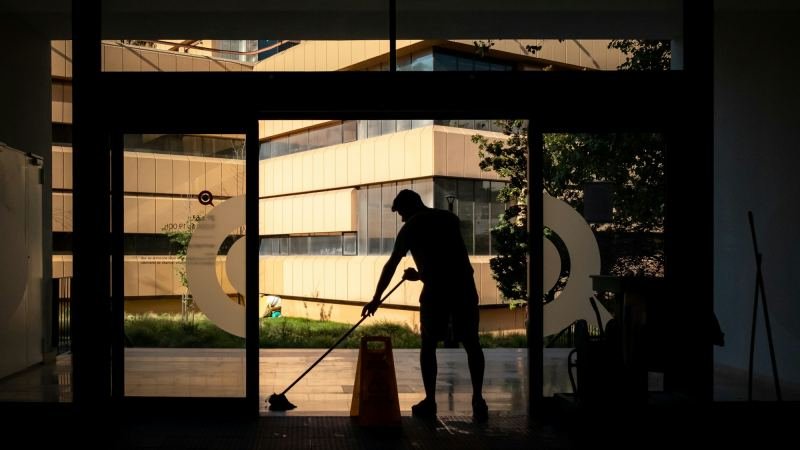
The Five-Minute Walkthrough: A Repeatable Supervisor Sequence
A fixed five-minute supervisor walkthrough sequence for cleaning teams, with timings per stop and the minimum written record it has to produce.
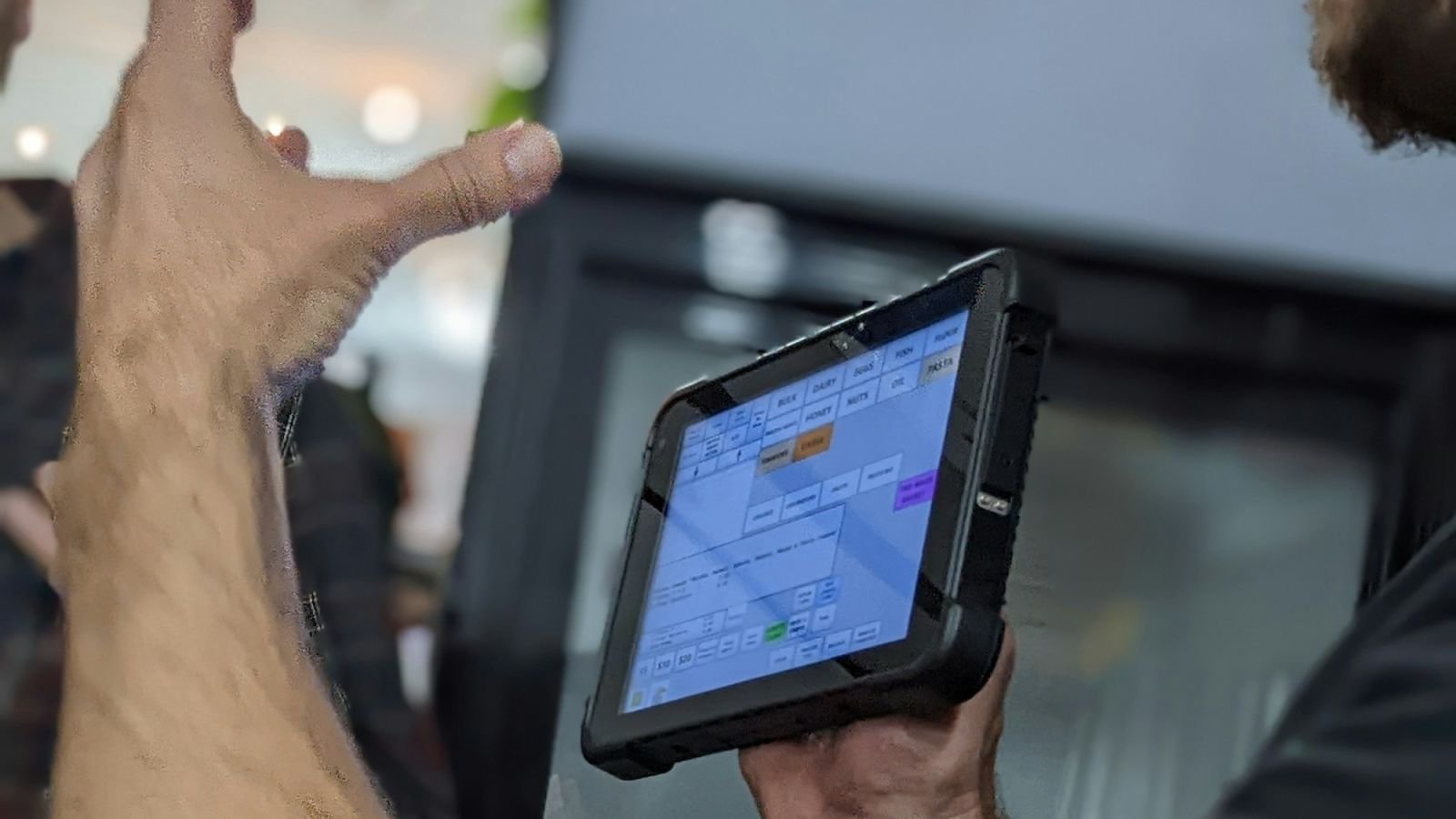
Five minutes is not a compromise. It is a designed format, and it works because it is short enough to actually happen on a busy shift and fixed enough that yesterday's result can be compared with today's. A supervisor who tries to inspect a whole building properly every night stops doing it within a month; one who runs a five-minute sequence four times a week never stops.
Five minute walkthrough is the operational tool between the daily routine and the formal scored inspection: same standard, same route, every time, and always with a written record at the end.
Key takeaways
- Fix the route and the order permanently; a walkthrough that changes shape cannot be compared week to week
- Spend the time on the areas that produce complaints: entrance, washrooms, waste and one back-of-house risk
- Score the worst observable condition, not the average, so two supervisors reach the same number
- Record four things per stop: score, photo, owner and due time
- Five minutes produces a record, not a survey; if nothing is written, nothing happened
- Walk it during the shift, not after, so corrections cost minutes instead of a return trip
What five minutes actually buys
The purpose is not to assess the whole site. It is to answer one question: is tonight's work on track, and what needs to change in the next hour? A short, frequent check finds problems while they are still cheap to fix.
Three things make the format work. A fixed route — same doors, same order, same stops — is what makes a Tuesday score comparable to a Friday score. A fixed time budget per stop means that when the allowance runs out you move on, even if the stop is not finished. A fixed output means every walkthrough ends with a dated record naming what was found, who owns it and when it is due. No record, no walkthrough.
The sequence, with timings
This is the core of the method. Adapt the stop list to the building type, then never change the order.
| # | Stop | Time | What you look at |
|---|---|---|---|
| 1 | Entrance and lobby | 45 sec | Glass at eye level, floor at the door line, mats, first impressions |
| 2 | Nearest public washroom | 90 sec | Fixtures, restock, floor water, odour, bins |
| 3 | Kitchen, break room or food point | 45 sec | Counters, sink, appliance exteriors, waste, floor edges |
| 4 | Waste and recycling point | 30 sec | Lids, overflow, liner condition, surrounding floor, odour |
| 5 | Circulation route | 30 sec | Corridor floor, stairwell edges, handrails, lift threshold |
| 6 | One rotating area or one rising risk | 60 sec | An area on rotation, or the defect that is currently repeating |
| 7 | Record the findings | 60 sec | Score, photo, owner and due time, written on the spot |
Two rules keep the timing honest. Use a timer or the phone clock for the first few weeks, because walkthroughs stretch without anyone noticing. And do not stop to clean; a supervisor who picks up a cloth loses the walkthrough, and the correction belongs with the crew.
Stop 1: the entrance, at eye level
The entrance is inspected because it is what everyone notices, and because a problem here is always visible.
- Interior glass at eye level, door stiles, push plates and handles
- The floor at the door line and the first two metres inside, including mat condition
- Fingerprints on glass at hand height, the single most common visible defect
- Reception or lobby furniture alignment, and litter on seating
- Stair nosings and floor edges where dust collects invisibly
Note the entrance score separately. If it scores low three walkthroughs running, that is a conversation about sequence and staffing, not about effort.
Stop 2: the washroom, in ninety seconds
Ninety seconds is enough if you are looking for the right things, so inspect the busiest cubicle and the fixtures nearest the door.
- Restock levels for soap, paper and sanitiser; a low dispenser is a failure even when the room is clean
- Fixture condition: bowl, seat, base, taps and the floor beneath
- Standing water at the urinal base, handwash area and door threshold - critical
- Odour assessed immediately on entry, before you have adjusted to the room
- Bins empty, liners fitted and dry, no overflow - critical
- Wet floor signage deployed where the floor is damp, and removed where it is dry - critical
- Any unlabelled bottle, decanted chemical or cloth left in the room - critical
Write the washroom score every time, even when it passes. A run of pass scores is the evidence that the block is stable; a run of failures in one cubicle is how a plumbing fault gets noticed before it becomes a complaint.
Stop 3 and 4: food points and waste
These two stops cover most of the hygiene risk outside the washroom, and they are the ones most often skipped because they are back-of-house.
- Counters, sink surrounds and appliance exteriors free of residue
- Wipe cloths and sanitiser bucket present and actually in use
- Floor edges, corners and beneath equipment where the mop does not reach
- Waste bins no more than three-quarters full, with dry liners and closed lids
- Bin surrounds and the floor beneath, which is where odour starts
- Any bin blocking a door, exit or egress route - critical
Waste is a twenty-second stop that prevents an hour of odour work. If the bin area smells on entry, the problem is almost never the bin itself; it is the floor beneath it or a wet liner left in place.
Stop 5 and 6: circulation and the rotating stop
The circulation leg is a sweep, not an inspection. Walk the corridor and stairwell looking only for three things: floor condition, handrail condition and obstacles.
- Corridor and stair floors free of debris, damp patches and trailing cords - critical
- Handrails clean at hand height, and the wall behind them free of scuff marks
- Lift thresholds, door tracks and entrance grilles clear
- No equipment, cart or bucket stored in a stairwell or against an exit door - critical
- Lighting working; report a failed fitting rather than cleaning around it
The final stop is the flexible one, and it earns its place. Rotate it deliberately: one week a stairwell, next week the loading dock, then the parkade, then the second-floor washroom. Or use it to look again at whichever deficiency is currently repeating, which is how a recurring finding becomes a root cause instead of another note.
What the record has to contain
A five-minute walkthrough produces a one-paragraph record with four fields per finding. Anything more elaborate does not get written on a loading dock at 10pm.
| Field | Example |
|---|---|
| Location | Level 2 washroom, end cubicle |
| Finding | Scale on the bowl and water on the floor |
| Score | 2 of 5, below target of 3 |
| Owner and due | A. Singh, by 22:00 tonight |
| Photo | Attached, taken in position |
A walkthrough with no findings still produces a record: date, route, time, areas seen, and a line noting that no deficiencies were raised. That single line is what turns a supervisor's presence into evidence. The cleaning inspection report template shows a fuller format for scheduled inspections, but the walkthrough record should be deliberately shorter. Speed is the feature.
Score the worst thing you can see
If your walkthrough feeds a scored system, use one rule consistently: score the worst observable condition in the area, not its average.
- It takes less deliberation, which is what keeps the walkthrough at five minutes
- It matches what a client or manager will conclude on their own walk
- It is reproducible between supervisors, which average scoring never is
- It is defendable, because the photo shows exactly what was scored
Use a published scale so the number means something across the portfolio. The APPA five-level cleanliness scale, published by APPA, is the common reference, and setting a target level per area type in advance removes the hesitation that eats walkthrough time.
When five minutes is the wrong tool
A short walkthrough is a spot check. It does not replace scheduled scored inspections, and it should not be asked to.
- A scheduled inspection covers the full area list against targets, produces trend data and feeds client reporting
- A follow-up verification checks only what failed last time, and can be even shorter
- A client audit or complaint response needs the full method, with the evidence pack behind it
- A new site or new crew needs more time for the first few weeks, until the sequence is habit
The relationship between the short check and the formal inspection is described in what a cleaning inspection is, and the cadence question is answered in how often you should inspect a building. Where this walkthrough fits against the wider daily pattern is set out in a cleaning supervisor's daily routine, which covers the pre-shift brief, the mid-shift round and the closing walk around it.
Making it survive a busy week
The method fails for predictable reasons, and removing them is mostly a matter of design.
- Do not inspect from the doorway. Step into the room; the floor beneath the fixtures is never visible from the door
- Do not walk it with the crew asking questions. Park the operational conversation and pick it up after the record is written
- Do not inspect the same easy area every time. The rotating stop exists to prevent that
- Do not skip the record when the shift runs late. An unwritten walkthrough cannot be defended or repeated
- Do not correct the work yourself. Your job in these five minutes is to see, score, assign and record
Supervisors who run the sequence consistently find that their formal inspections get faster and their scores get more stable, because small problems never accumulate into large ones. That is also the mechanism behind how to inspect a building faster without cutting corners: familiarity with a fixed route is what removes the deliberation.
Not regulatory advice. Workplace inspection obligations vary by province and are enforced by provincial labour ministries. CCOHS publishes general guidance on workplace inspection practice, but confirm specifics with your provincial regulator and follow the site's own procedures.
Frequently asked questions
What should a five-minute walkthrough cover?
Entrance and lobby, the busiest washroom, a kitchen or food point, the waste and recycling area, a circulation leg, and one rotating area. That is seven stops with a fixed time allowance each, ending with a written record.
How is a five-minute walkthrough different from a full inspection?
A walkthrough is a short spot check that finds and assigns corrections during the shift. A full inspection is a scheduled, scored assessment across the whole area list, used for trend data, client reporting and formal quality assurance.
What should the supervisor record?
Location, finding, score against target, an owner with a due time, and a photo taken in position. A walkthrough with no findings still gets a dated line recording the route, the time and the areas seen.
Should the supervisor clean anything found during the walkthrough?
No. Correcting the work personally removes the ability to verify it and destroys the walkthrough's timing. Show the standard to the crew member, assign the fix with a name and a time, and record it.
How often should a supervisor run the walkthrough?
Three to five times a week on a typical site, at different points in the shift so you are not always seeing the same stage of the work. Rotate the flexible stop so every area is seen over a month.
Five minutes, four times a week
That pattern produces more usable evidence than one heroic two-hour inspection a month. The building gets corrected while the crew is still on site, and the record grows into a trend that shows whether the site is improving.
NeatScore lets you build area-specific checklists with critical items flagged, record completion with photos, and keep a dated report your client can trust. A short walkthrough checklist runs on a phone in the building, offline if the site has no signal, and syncs when you are back in range. Try it free for 14 days, or see pricing.