Post-Construction Cleaning Checklist: From Rough Clean to Final Handover
A post-construction cleaning checklist covering rough clean, final clean and touch-up stages, with the sequencing, safety hazards and handover standards that matter.
Post-construction cleaning is not cleaning with more dirt. It is a different job: hazardous dust, protecting new finishes, working around trades, and hitting a handover date that does not move.
A post-construction cleaning checklist has to be organised by stage, because doing final clean work too early means doing it twice.
Key takeaways
- Work in three stages: rough clean, final clean, touch-up. Never compress them.
- Construction dust is a health hazard, not just a mess — especially silica and gypsum dust.
- Protect new finishes aggressively; damage costs far more than the cleaning.
- Sequence matters: always clean top-down, dry-then-wet, and after trades have finished.
- The handover date drives everything. Build in a buffer.
The three stages
| Stage | When | Purpose |
|---|---|---|
| Rough clean | During and immediately after construction | Remove bulk debris and dust so trades can finish |
| Final clean | After all trades have left | Bring the space to a presentable, handover-ready state |
| Touch-up / detail | Immediately before handover or occupancy | Catch what other trades disturbed after final clean |
The critical mistake is treating this as one job. If you final-clean before the painters, electricians and floor layers have finished, you will do it again — and you will be blamed for damage you did not cause.
Get written confirmation that all trades are complete before starting final clean.
Safety first
Construction sites are genuinely hazardous, and cleaning staff are often the least briefed people present.
- Dust is the main risk. Silica, gypsum, cement and insulation dust are respiratory hazards. Use appropriate respiratory protection, not a dust mask bought at a hardware store.
- PPE: eye protection, gloves, appropriate footwear, and hearing protection where trades are still working nearby.
- Live services. Assume electrical circuits may be live, water may be pressurised, and temporary supplies may exist. Do not probe or connect anything.
- Unstable surfaces. Open floor penetrations, incomplete stairs, unsecured hoarding, missing balustrades. Never assume a floor or barrier is permanent.
- Sharps and debris. Screws, blades, wire, broken glass and metal offcuts are common in bulk waste. Never handle with bare hands.
- Chemicals on site. Other trades' products may be present and unlabelled. Do not use anything that is not yours.
- Lone working should be avoided in incomplete buildings.
- Report hazards rather than working around them. The CCOHS guidance on slips, trips and falls is relevant, and your wider obligations are covered in our health and safety guide for cleaners.
Stage 1: rough clean
The purpose is to clear the way, not to make things shine.
- Remove all bulk construction debris, offcuts and packaging
- Sweep or vacuum all floors, including under and behind installed items where accessible
- Remove protective films where instructed — confirm first, some must stay until handover
- Vacuum dust from surfaces, ledges, frames and openings
- Wipe down walls and ceilings to remove heavy dust where required
- Clean windows and frames of heavy soiling, leaving final detailing for later
- Clean and clear stairwells and circulation routes
- Remove any temporary protection that is no longer needed — only as directed
- Empty and manage waste containers; arrange removal
- Report damage, defects and incomplete work observed — this protects you commercially
That last point matters. Documenting defects before your final clean is how you avoid being blamed for them afterwards.
Stage 2: final clean
All trades finished, site reasonably secure. Work top-down and dry-then-wet throughout.
Ceilings and high level
- Dust and wipe ceiling surfaces, bulkheads and coffers
- Clean light fittings, diffusers, vents and grilles
- Clean exposed ducting, beams and structure within scope
- Remove dust and marks from high walls and glazing
Walls and vertical surfaces
- Wipe walls, removing dust, marks, adhesive residue and fingerprints
- Clean skirting, architraves and door surrounds
- Clean and polish door faces, edges and frames
- Clean glazed partitions, internal windows and mirrors
- Remove stickers, labels and protective film residue
- Clean columns, feature walls and cladding within scope
Fixtures and fittings
- Clean and polish all sanitary fixtures, taps and fittings
- Clean sinks, vanities, counters and splashbacks
- Clean and polish metalwork, handrails and rails
- Clean built-in joinery, shelving and cupboards inside and out
- Clean appliance exteriors; interiors if in scope
- Clean switches, sockets, data plates and access panels
- Clean and detail stair nosings, balustrades and glass
Floors
- Vacuum all carpet thoroughly, including edges and under furniture
- Remove adhesive, paint and plaster residue from hard floors — using products appropriate to the finish
- Machine clean hard floors
- Remove protective coverings only when instructed
- Detail edges, corners, thresholds and floor tracks
- Do not apply finish or sealant unless specified. New floors usually have their own curing and protection requirements.
Exterior and glazing within scope
- Clean external glazing where contracted, following safe access requirements
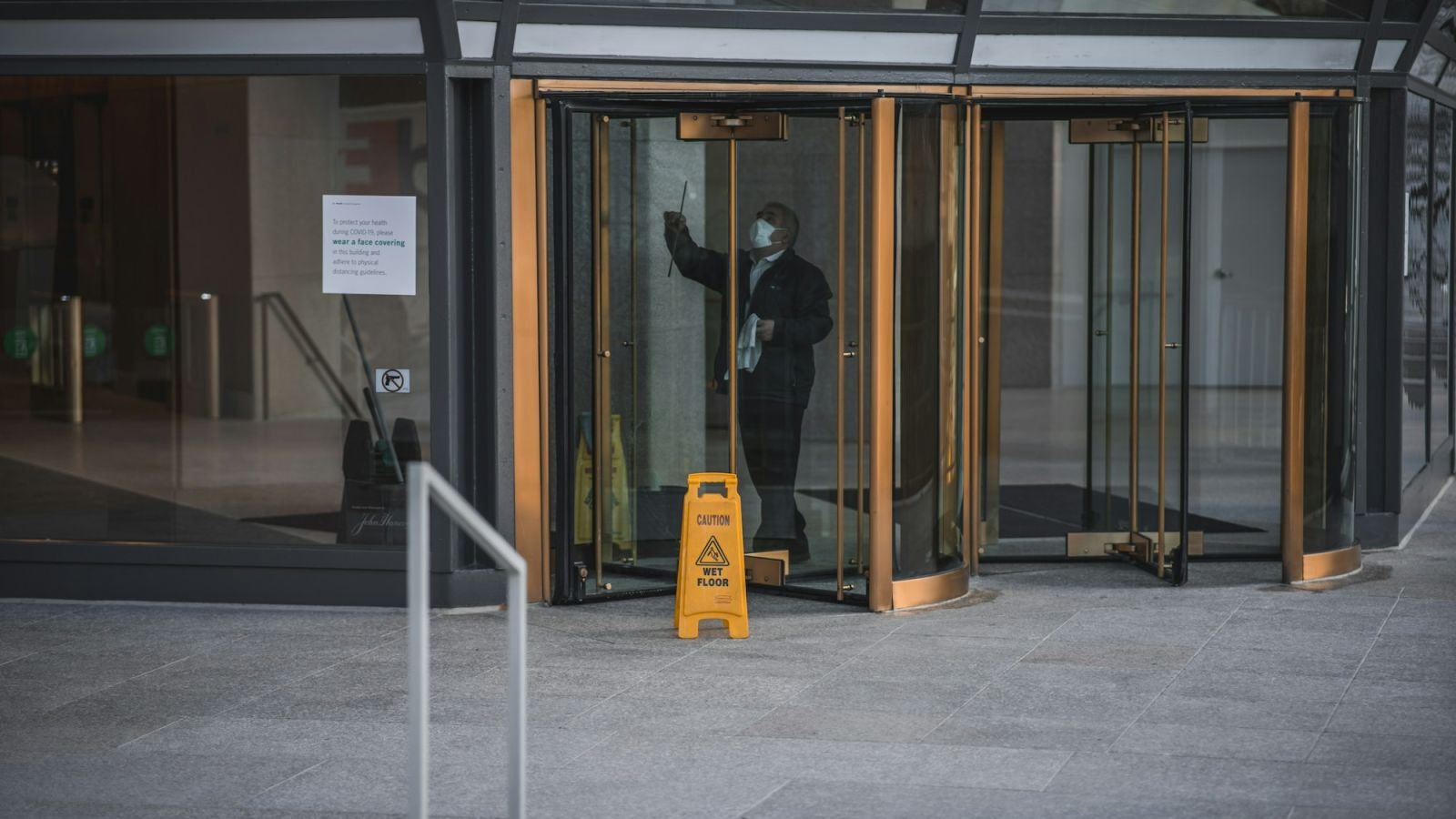
- Clean entrance areas, canopies and signage
- Sweep and wash external hard landscaping
Stage 3: touch-up and handover
- Final dust pass on all surfaces, particularly horizontal
- Clean glass and mirrors last — they attract everything
- Clean floors as the final step in each area
- Wipe fingerprints from doors, handles, glass and dark surfaces
- Check corners, ceilings and under fixtures with a torch
- Remove all cleaning equipment, chemicals and waste from site
- Verify no protective coverings, tape or labels remain
- Photograph the completed condition — this is your handover evidence
The sequencing rules
These are non-negotiable in practice:
- Top to bottom. Dust falls. Clean ceilings before floors, always.
- Dry before wet. Dust and vacuum before any wet cleaning, or you create mud.
- Back to front. Work toward the exit so you do not walk over finished work.
- Wet areas before dry. Washrooms and kitchens before carpets.
- Glass last. It shows everything and gets touched by everyone passing.
- After all trades. Confirm completion in writing before final clean begins.
Protect new finishes
Damaged finishes are the most expensive post-construction cleaning failure.
- Protect floors and corners with appropriate coverings while working
- Do not drag equipment across new floors
- Use products compatible with the finish — some new floors are damaged by water, solvents or alkaline cleaners
- Never use abrasive pads on new fixtures, glass or polished surfaces
- Test any unfamiliar product in an inconspicuous area
- Report any pre-existing damage immediately and photograph it
Documenting defects and condition
On a construction site, cleaning is often the last trade in, which means everything wrong gets attributed to you. Protect yourself systematically.
- Walk the site with the site supervisor before starting and record existing damage
- Photograph everything you flag, with location
- Report incomplete or defective work in writing as you find it
- Keep a log of anything you were asked to work around
- Photograph the finished condition at handover, area by area
This is the same discipline as deficiency tracking, applied in reverse: here you are recording what was already wrong, rather than what you failed to fix.
Inspecting post-construction work
The handover standard is effectively APPA Level 1 — an unused, freshly finished space. That means the tolerance is near zero.
The handover standard is close to APPA Level 1 under the APPA cleanliness levels. Critical items on a final inspection:
- No visible dust on any surface, including high level and behind fixtures
- No adhesive, paint, plaster or residue on any finish
- Glass and mirrors completely clean
- Floors clean, undamaged and with edges detailed
- All protective coverings, labels and tape removed
- No construction debris or packaging anywhere, including cupboards
- Fixtures clean and undamaged
- Site clear of all cleaning equipment and waste
Because the standard is Level 1 across the board, a janitorial inspection checklist is a useful base — but expect every item to be scored strictly, and use photos as the handover record. The general scoring approach is in what a cleaning inspection involves.
Frequently asked questions
What is the difference between rough clean and final clean?
Rough clean happens during or straight after construction to remove bulk debris and dust so trades can finish. Final clean happens after all trades have left, and brings the space to handover standard. A third touch-up stage catches what was disturbed after final clean.
How long does post-construction cleaning take?
It depends heavily on size, finish level and how much dust-generating work remains. The key factor is sequencing: final clean cannot start until all trades are complete, so compress the rough and final stages and build in a buffer before handover.
Is post-construction cleaning dangerous?
Yes. The main risks are respiratory exposure to silica, gypsum and cement dust, live services, unstable surfaces and incomplete edges, sharps in debris, and other trades' chemicals on site. Appropriate PPE and respiratory protection are essential, not optional.
What should a post-construction cleaning checklist include?
Three stages — rough clean, final clean, touch-up — covering debris removal, dusting at all heights, wall and fixture cleaning, floor care appropriate to the finish, glass cleaning last, protection of new finishes, and photographic documentation of condition at handover.
Does post-construction cleaning include window cleaning?
Internal glazing is typically included in final clean. External glazing depends on the contract and often requires access equipment and specialist operators, so confirm the scope and do not attempt high-level external work without the right equipment and training.
Document the handover
On a construction project, the cleaning contractor is usually the last one in and the first one blamed. Photographic evidence of condition, before and after, is the only real protection.
NeatScore lets you record condition with photos area by area, log defects and deficiencies as you find them, and produce a handover report showing the standard achieved. Try it free for 7 days, or see pricing.