Airport Terminal Cleaning: Standards, Zones and Constraints
How airport terminal cleaning works in practice: zone priorities, restroom frequency, security-restricted access, winter ops and what stays out of scope.
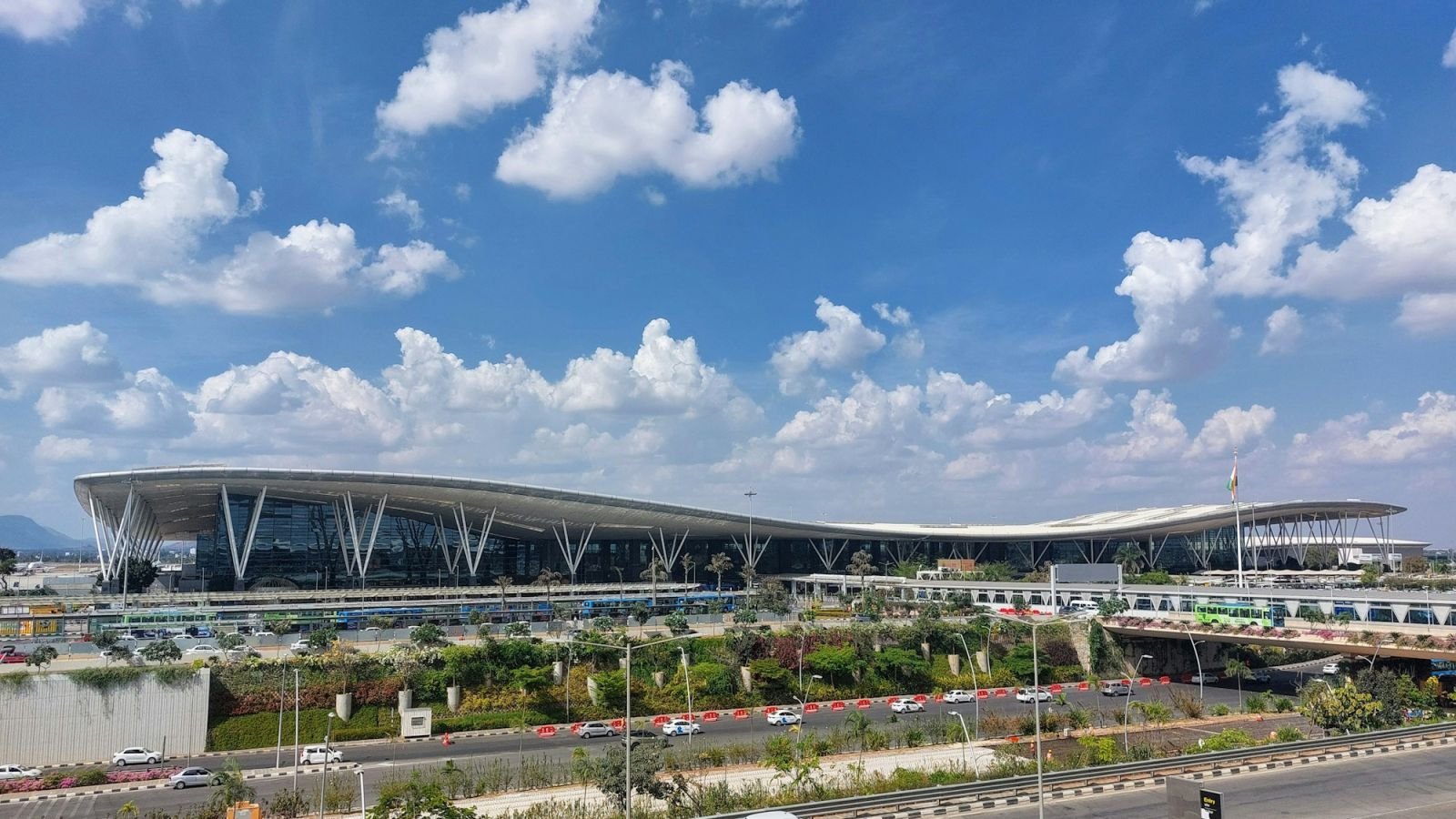
An airport terminal is a building that never closes, never fully empties, and contains areas that most cleaning contractors will never be allowed to enter. It combines the traffic of a shopping centre, the hygiene expectations of a clinic in places, the floor area of a warehouse, and an access-control regime closer to a secure facility than an office tower.
Airport terminal cleaning is therefore organized around zones and access levels rather than around a single schedule. This article sets out the zone model, the frequencies that hold up against passenger throughput, the constraints that come with restricted areas, and the tasks that belong to the airport authority rather than the cleaning contractor.
Key takeaways
- Zone the terminal by access level first, because the cleaning plan follows the security boundary, not the floor plan
- Restrooms and high-touch surfaces drive passenger perception and need a frequency set by throughput, not by square footage
- Public-area work is done in front of passengers, so equipment placement is both a safety and a customer-experience decision
- Restricted and sterile areas require authority-issued clearance, and uncleared staff simply do not work there
- Winter operations are a distinct mode with different soil, different chemistry and different safety exposure
- Ground support equipment, aircraft interiors and baggage systems are out of scope, and should be reported rather than touched
The zone model: how to organize a terminal contract
A terminal contract that is written as one long task list will fail in the field, because the crew's access rights differ from one end of the building to the other. Zoning the work by access level and by passenger-facing intensity makes the schedule, the staffing and the inspection plan fall into place.
| Zone | Typical areas | Access requirement | Cleaning priority |
|---|---|---|---|
| Landside public | Curbside, arrivals hall, taxi and bus interface | Open to contractor | High, weather-dependent |
| Terminal public | Check-in, security queues, retail concourse, washrooms | Open with authority induction | Very high |
| Airside public | Departure lounges, gates, boarding bridges (public side) | Restricted area clearance | High |
| Airside restricted | Apron-facing corridors, baggage halls, service roads | Restricted clearance plus escort | Medium, schedule-driven |
| Back of house | Staff rooms, offices, plant corridors | Building access | Standard |
| Out of scope | Aircraft interiors, GSE, fuel systems, baggage machinery | Not contractor work | None |
The practical consequence of this table is that staffing must be planned per zone. A crew cleared for the public concourse cannot be redeployed into the baggage hall to cover an absence, so the roster needs depth in each cleared group rather than an interchangeable pool.
Concourse, gate and seating area work
The public concourse is where the visible standard is set. Three things drive the work: seating turnover, food and beverage spillage, and the constant movement of wheeled baggage.
- Seating areas are cleaned on a loop rather than by area, because a gate lounge that is spotless at 09:00 can be a mess by 09:40 after a delayed flight
- Tables and armrests in gate seating are high-contact surfaces and are cleaned and disinfected on the same loop — critical
- Floor care in the concourse is mostly dry soil removal during operating hours, with wet work confined to windows and to overnight programs
- Escalators, travelators and stairs need handrail disinfection as a distinct task, not as a by-product of floor cleaning — critical
- Wayfinding glass, screens and signage are cleaned with the right cloth to avoid smearing and static
Boarding areas need particular care about what is cleaned. Gate podiums, boarding pass scanners, door controls and airline equipment belong to the airline or the authority. Clean around them, do not move them, and do not clean screens or panels that may be live.
Restrooms and high-touch surfaces
Restrooms in a terminal are the single most scrutinised area in the building, and they are also where the highest concentration of cleaning labour usually belongs. Frequency should be set from passenger throughput rather than floor area, with peak periods recleaned more often than the baseline.
A restroom service visit should follow the same sequence every time so nothing depends on memory:
- Restock consumables before wet work begins
- Clean and disinfect toilets, seats and bases — critical
- Clean and disinfect urinals and flush controls — critical
- Clean sinks, taps, counters and soap dispensers, then dry mirrors and bright metal
- Disinfect door handles, push plates, rails and changing table surfaces — critical
- Empty and reline waste, and check sanitary disposal units
- Mop from the far corner to the door with clean solution, then leave the area dry and signed as needed
Luggage carts, water fountains, queue rails and security tray areas are the other high-contact categories that pass through hundreds of hands an hour. They belong on the same disinfection loop as the restroom rather than on a nightly task list.
Security, access and working around passengers
Access control is the defining constraint of terminal work. Induction, background checks, badge issue, escort requirements and prohibited-item rules are set by the airport authority and by regulation, and they are not negotiable in the way that a client preference is.
- Every crew member working airside must hold the clearance the authority requires, and carry it — critical
- Never cross a security boundary without authorisation, even to reach a restroom — critical
- Never accept, carry or move an unattended bag or item; report it to the authority immediately — critical
- Do not obstruct boarding flows, queue lines, security screening exits or emergency egress routes — critical
- Never prop open a security door or leave a restricted door unsecured for convenience — critical
- Follow the authority's photography and recording rules inside restricted areas
There is also a customer-service dimension that contractors underestimate. Passengers under stress ask cleaning staff questions constantly. Crews should know the building well enough to point someone toward a gate, a washroom or a help desk, and should be briefed on how to escalate a distressed or unwell passenger rather than handling it themselves.
Winter operations and weather-driven soil
Terminals in Canada face a soil pattern that changes with the season. De-icing fluid, salt, grit and meltwater are tracked in from the apron and the curb, and snow-melt puddles create slip hazards at every entrance and on every hard floor along the arrivals route.
- Rotate and clean entrance matting aggressively, and extend matting runs during winter — critical
- Increase wet-floor signage and monitoring at entrances, and treat puddles as an urgent response rather than a scheduled task — critical
- Use neutral pH floor cleaner when salt is present, since salt residue and some floor finishes interact badly
- Protect stone and terrazzo from salt damage with an appropriate sealer and a winter-specific interim program
- Coordinate with the authority's own snow and ice contractor, and never take on exterior ice control yourself
The seasonal program is covered in more detail in winter cleaning operations, and the injury-prevention side is set out in slips trips falls prevention.
Floor care across a very large footprint
Terminal floor area is the reason floor care is usually the largest cost line in the contract. The mix is typically terrazzo, porcelain tile, stone, some carpet at gate seating, and large expanses of corridor.
| Surface | Routine method | Periodic method | Risk to manage |
|---|---|---|---|
| Terrazzo | Auto-scrub daily with neutral cleaner | Burnish or polish on a set cycle | Slip resistance, finish build-up |
| Porcelain tile and grout | Auto-scrub, grout detail in restrooms | Deep clean grout, occasional seal | Grout discolouration |
| Stone | pH-appropriate cleaner only | Honing or polishing by a stone specialist | Acid damage |
| Carpet at seating | Vacuum daily | Extraction on a cycle | Over-wetting, odour |
| Entrance matting | Vacuum and clean daily | Rotate and extract | Track-off into the building |
| Metal trim and rails | Damp wipe daily | Polish on a cycle | Abrasive product damage |
Two rules keep this manageable: match product to substrate, and never guess at an unknown stone. If the finish is unidentified, test in an inconspicuous area first, and treat anything unknown as acid-sensitive.
What is out of scope in an airport
This is a contract where scope discipline carries insurance implications, not just commercial ones.
- Aircraft interiors are cleaned under the airline's own arrangements and standards, not a terminal contract
- Ground support equipment, tugs, loaders and belt machinery are not cleaning tasks and involve mechanical guarding risks
- Baggage handling systems are accessed by trained and authorized staff only
- Airside apron and de-icing operations involve vehicle traffic, glycol management and specialised equipment
- Pest control is a licensed technician's work, and any sighting is a report
- Confined space work, including some plant rooms and tanks, requires a formal program that most cleaning contractors do not hold
- Blood and body fluid cleanup in a clinical or quarantine context follows the authority's own procedure
Scope note: Aircraft servicing, ground support equipment, baggage systems, pest treatment, confined space entry and clinical waste handling are normally outside a cleaning contractor's scope. Confirm in writing what is included, and report rather than act on anything outside it.
Not regulatory advice. Aviation security and airport access requirements vary by site and are enforced by the airport authority and Transport Canada. Confirm specifics with the authority and follow the airport's own procedures. General guidance on aviation security in Canada is published by Transport Canada.
Inspection and evidence in a live building
You cannot inspect a terminal the way you inspect an empty office. Sampling has to be planned around passenger flows and around the areas the authority and the airlines care about most.
A workable routine is a scored inspection of a defined sample each visit — restrooms, gate seating, one concourse segment, one entrance, one back-of-house corridor — with photographs attached to findings and a deficiency log that carries owner and due date. Trends across visits are more useful than any single score, because in a building with this much traffic a single bad score usually means a delayed flight or a burst of weather rather than a change in effort. The sampling method is set out in how often should you inspect a building and the reporting discipline in deficiency tracking cleaning.
Staffing and supervision in a 24-hour environment
Terminal cleaning runs on shift patterns that mirror flight schedules, with peaks in the early morning and late evening. Two supervisory points matter more here than in most buildings.
First, the supervisor must be able to enter the areas their crew enters. A working supervisor without airside clearance cannot supervise airside, so clearance planning is a scheduling problem, not an HR afterthought.
Second, handover has to be explicit. In a building that never stops, the difference between a restroom at an acceptable standard at shift change and one that is not is a written handover with outstanding items named. That routine is described in cleaning supervisor daily routine.
Where this fits in the quality system
This sits under our transit station cleaning guide, which sets out the standard these checks are measured against.
Where this fits in the quality system
This sits under our the janitorial inspection checklist, which sets out the standard these checks are measured against.
Frequently asked questions
How often should airport terminal restrooms be cleaned?
Frequency should be driven by passenger throughput rather than by floor area, with peak periods served more often than the baseline. In practice this means a high-frequency loop during departure banks and a slower schedule overnight, with the visit recorded each time so the frequency can be evidenced.
Can cleaning staff work in security-restricted areas?
Only with the clearance the airport authority issues, and only within the areas that clearance covers. Uncleared staff do not enter restricted areas at all, even briefly. Clearance requirements, escort rules and prohibited items are set by the authority and by federal regulation.
Who cleans aircraft interiors?
Not the terminal cleaning contractor. Aircraft cabin cleaning is arranged by the airline or its ground handler under its own standards and access rules. A terminal contract should exclude it explicitly.
How do you manage slip risk at terminal entrances in winter?
By treating entrances as a priority zone rather than a scheduled task: extended matting, frequent mat rotation, rapid response to meltwater, extra wet-floor signage, and a neutral cleaner that copes with salt residue. Exterior snow and ice control belongs to the airport's own contractor.
What should a terminal cleaning crew never handle?
Unattended bags or items, any pest treatment, confined space entry, blood and body fluid cleanup governed by the authority's procedures, and anything inside baggage or ground support machinery. In each case the correct action is to stop, secure the area if needed, and report.
NeatScore lets you build area-specific checklists with critical items flagged, record completion with photos, and keep a dated report your client can trust. Try it free for 7 days, or see pricing.