Cleaning Equipment Standards: What a Contractor Should Provide
What cleaning equipment your contractor should supply, how to check it on site, and the equipment standards worth writing into your janitorial contract.
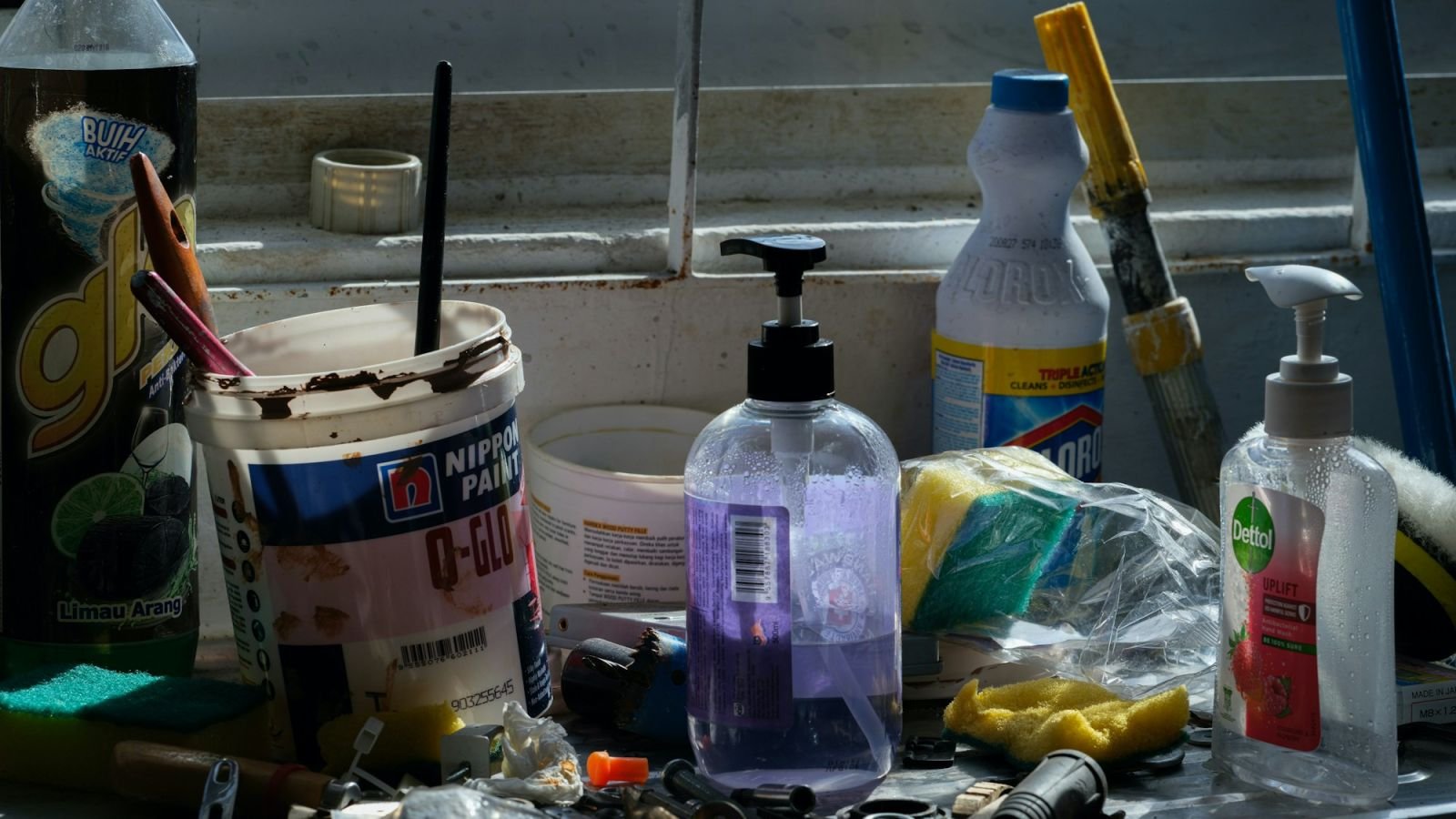
Equipment is the part of a janitorial contract that nobody reads until something breaks. A contractor can promise daily washroom service in a service level agreement and still arrive with a worn mop, a bucket mixed by eye and a vacuum that blows dust back into the air. Setting cleaning equipment standards is one of the few contract levers that changes what actually happens on your floors rather than what happens on paper.
You are paying for outcomes, but equipment is the input you can see, touch and photograph — and the cheapest thing to audit, because it sits in a closet you already hold keys to.
Key takeaways
- A janitorial contract should name the equipment classes the contractor brings, not just tasks and frequencies.
- Match the machine to the floor: an upright vacuum on bare tile and an auto-scrubber on sealed concrete are both wrong choices.
- Microfibre and colour-coded cloths are equipment decisions that directly change cross-contamination risk between washrooms and kitchens.
- Ask for the maintenance and filter-change log with the cleaning schedule; a broken machine is usually an unlogged one.
- Record equipment condition with photos, so a mid-term downgrade becomes a documented conversation instead of an argument.
Why equipment belongs in the contract, not just the janitor closet
Equipment decides how long a task takes, which decides whether the crew cuts corners. One bucket of mop water carried across three washrooms is not a training failure; it is what happens when only one bucket is on site. The same is true of a vacuum with a full bag.
Control sits in the specification. Contractors price what you ask for, and equipment lists are easy to insert into the scope of work document with a sentence per line: what, how many, condition standard, who services it, who stores it. If the list is not there, you are relying on the vendor's own purchasing decisions for the length of the term — which is the same weak position as managing a cleaning contractor without a documented standard.
What cleaning equipment standards should a contractor meet?
At minimum, expect a defined set of equipment classes per site, sized to the area and traffic, with a written maintenance routine behind each one. The table below is a practical starting point for a multi-tenant office, a mixed-use building or a small portfolio. If a proposal cites a standard you do not recognise, ISSA is the industry association to check it against.
| Equipment class | What to expect on site | How a manager verifies it |
|---|---|---|
| Janitor cart | Enclosed or bagged cart, labelled chemical bottles, separate waste and recycling bags, mop handled correctly | Walk the cart mid-shift; count bags and check labels |
| Upright vacuum | Commercial grade with HEPA or high-filtration exhaust | Ask for filter change dates; look for visible dust trails behind the pass |
| Carpet extractor | Hot-water unit for periodic extraction, not daily spot work | Confirm machine present on extraction weeks |
| Auto-scrubber | Battery or corded unit matched to floor area; squeegee intact | Inspect squeegee blades; look for streaks and standing water |
| Mop system | Flat mop with interchangeable heads or separate mops per area; two-bucket setup | Count heads; check whether washroom and kitchen mops are separated |
| Microfibre cloths | Colour-coded by area, laundered, not stored damp | Check colour discipline and whether cloths smell sour |
| Spray bottles | Labeled, diluted correctly, never decanted into unmarked containers | Read the label; spot-check dilution against the chart |
| Waste handling | Trolley or bag system that does not carry waste through food areas | Observe a full round, not a staged one |
| Personal protective equipment | Gloves, eye protection and aprons available and worn where required | Observe, then compare against the SDS requirements |
The minimum equipment list for a commercial building
Write the list per area, not per site. A lobby, four washrooms, two elevator cabs and a 12,000 sq ft office floor do not need the same kit, and a generic list hides that. Where the list is thin, the crew improvises.
For a typical mid-size commercial building, expect at least: one fully stocked janitor cart per crew, one upright vacuum per 10,000 sq ft of carpet, one auto-scrubber per 15,000 sq ft of hard floor, a wet vacuum or extractor for upholstery and spills, mops and buckets sized to the washrooms, and a stocked consumables kit (soap, paper, liners, sanitiser) that the contractor replenishes on a stated schedule.
Counts matter more than brands. If the numbers are wrong, the schedule is missed on the busiest day of the week, and the miss looks like laziness rather than arithmetic.
Floor care equipment: match the machine to the floor type
Floor care is where mismatches show up first, because the damage is expensive. A rotary scrubber used on sealed concrete dulls the finish over months; an abrasive pad on vinyl composite tile lifts the polish and leaves a grey patch no amount of mopping recovers. Ask what pads, brushes and chemicals go with each machine and floor type.
Different surfaces need different tools and intervals, usually documented in hard floor cleaning methods — a useful cross-check when a contractor proposes one monthly "floor care" line for six floor types.
- Burnishing or buffing on high-traffic hard floors is a periodic task, not a daily one, and it needs a machine rated for continuous use.
- Carpet extraction should be a scheduled event with a visible before-and-after, not an invisible yearly claim.
- Entry matting is equipment too. If matting is undersized for the traffic, no amount of mopping keeps a lobby dry in a Canadian winter.
Washroom and high-touch equipment: the small stuff that carries risk
Washrooms are where cheap equipment gets people sick. Colour-coded cloths, separate mops, a dedicated washroom bucket and a working dilution station are not frills; they are the mechanical barrier between a toilet rim and a breakroom counter. Expect the contractor to supply them, and to use them consistently.
- Washroom cloths and mops are stored and laundered separately from kitchen and breakroom tools — critical
- Spray bottles carry the product name and dilution ratio; unlabelled bottles are removed from site — critical
- PPE appropriate to the product is available on the cart, not in a truck — critical
- Wet floor signs are deployed during mopping and retrieved afterwards — critical
How do you verify equipment during an inspection?
Verify during a working shift, not on a scheduled tour with the supervisor beside you. Arrive at a random time, open the janitor closet, then walk the floor and look for what the machine leaves behind: vacuum lines on carpet, squeegee streaks on tile, a dry lobby floor after a wet morning.
Three checks take under ten minutes and tell you most of what you need:
- Open the closet. Is the cart stocked, are bottles labelled, are mops hung to dry?
- Look at the machines. Filters clear, bags empty, cords intact, blades sharp.
- Look at the results. Edges, corners, under furniture, behind doors — the places a tired machine and a rushed pass both show.
Whatever you find, photograph it. A dated photo of a clogged filter is worth more in a vendor meeting than a paragraph of complaint, and it is the same evidence standard used in photo evidence for building issues.
What records should come with the equipment?
Ask for three records and keep them: an equipment list per site, a maintenance log, and a purchase-or-lease note for major machines. The maintenance log matters most, because it is the only evidence that filters were changed, batteries were serviced and squeegees were replaced before they started streaking.
Set the expectation at onboarding: a monthly equipment sign-off filed with the same report package as the inspection results. If the contractor has no log, ask them to start one this month.
Storage, security and building rules
Your building rules apply to the contractor's equipment. Carts should not block egress routes, machines do not belong in electrical or mechanical rooms, and charging leads in a corridor are a trip hazard. Chemical storage belongs in a locked, ventilated, signed space with secondary containment.
- Carts and machines are stored out of exit paths and stair landings — critical
- Charging of batteries happens in a designated area, not in a corridor — critical
- Chemicals are stored in a locked space with access limited to trained staff — critical
Red flags that equipment standards have slipped
Some signals are visible from the lobby: sour-smelling cloths, a mop bucket that travels from washroom to lobby without a rinse, streaks on glass at eye height, and a vacuum that leaves grit behind it. Others live in the closet: mismatched mop heads, unlabelled bottles, empty soap dispensers, and a cart carrying three bags of waste because the trolley run was skipped.
Two or more of those in one visit points to an equipment decision problem before it points to a staffing problem. Then check whether the maintenance routine exists at all, since equipment maintenance habits usually correlate with every other part of the service.
Frequently asked questions
Should the contract specify equipment brands?
Rarely. Specify equipment classes, capacity and condition standard, and let the contractor choose brands. Brand-level specification invites inflated pricing and makes the contract brittle to supply chain changes.
How much equipment is reasonable for a 100,000 sq ft building?
Expect two auto-scrubbers or one high-capacity unit with a recharge window, two to three commercial vacuums, a carpet extractor, two stocked carts per shift and dedicated washroom kits per core. Confirm the plan against the cleaning schedule rather than a total count, because distribution across floors matters as much as the total.
Who pays for replacement when equipment fails?
The contractor, in almost every standard janitorial contract, because equipment is their cost of delivering the service. Read the renewal and escalation language closely: if a rate increase is justified by equipment investment, ask which machines are being added and whether the scope changes with them.
Can I require HEPA filtration in vacuums?
Yes, and you should for buildings with carpet, allergy-sensitive tenants or renovation dust. State the requirement in the specification and ask for filter change records; filtration is one of the few equipment details that measurably changes indoor air quality.
Should I inspect equipment or just the results?
Both, and in that order on a new contract. Results tell you whether the service works today; equipment tells you whether it still will in six months. Once the vendor is stable, shift most inspection weight to results and spot-check the closet quarterly.
Making equipment checks part of your inspection routine
Equipment expectations survive only if someone records them. Build a short equipment section into your regular inspection — cart condition, machine condition, storage compliance, photo per item — and score it alongside the cleaning results. Two or three visits will show whether the standard is holding or quietly eroding.
NeatScore is built for that: area-specific checklists with critical items flagged, a photo attached to each finding, and a dated report you can put in front of a vendor or an owner. Try it free for 14 days, or see pricing for multi-site portfolios.