Fatigue and Shift Patterns in Cleaning Work
Why fatigue is a safety and quality risk in commercial cleaning, the shift patterns that make it worse, and the practical scheduling choices that reduce it.
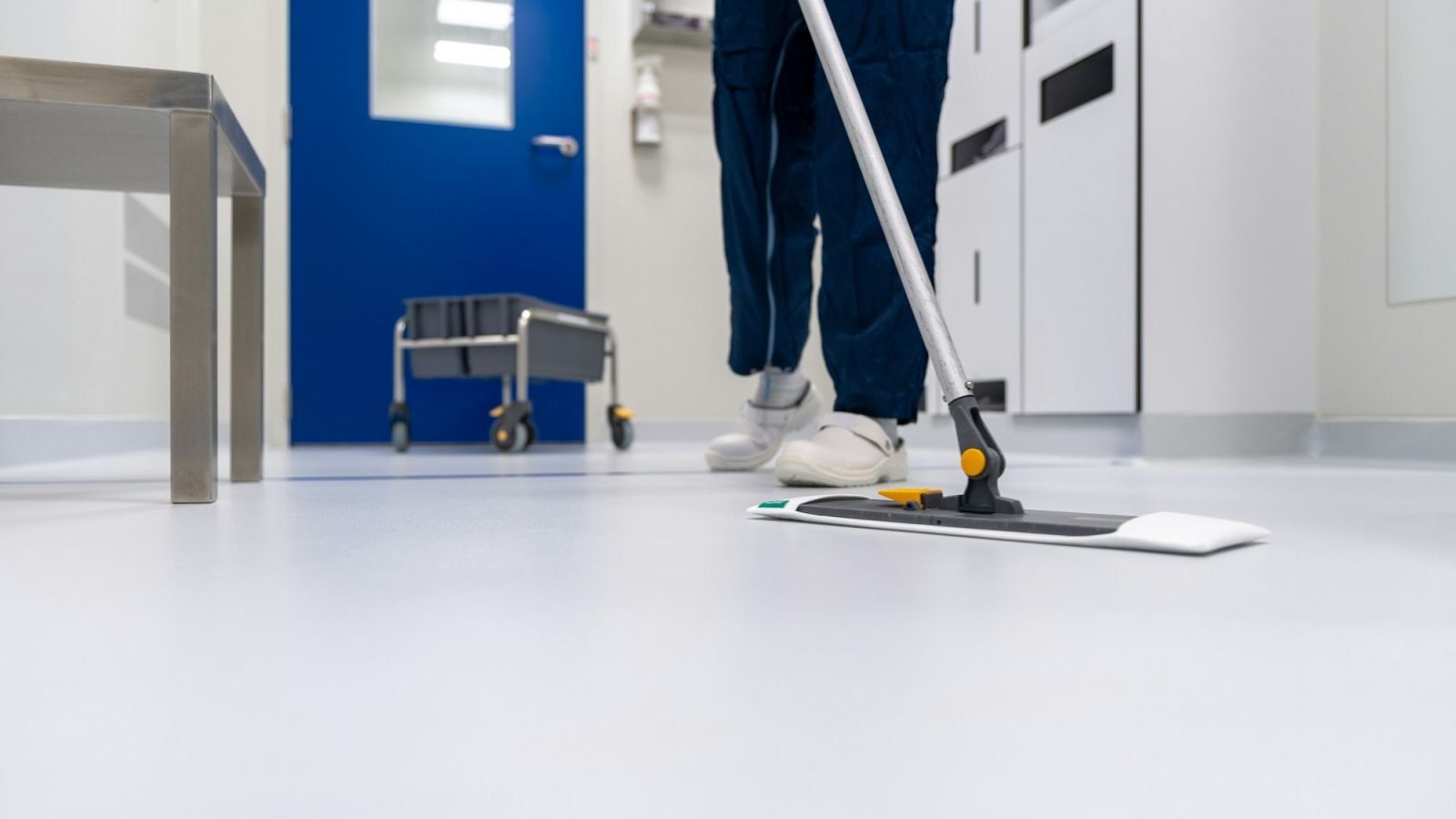
Fatigue does not announce itself in a cleaning operation. Nobody files an incident report that says the crew was tired. What shows up instead is a missed washroom, a scuffed corridor that should have been buffed, a slip on a wet floor that had a sign three metres away, and a supervisor who cannot explain why the same area has failed three inspections running.
Fatigue is impairment. CCOHS treats it that way, and works through the practical consequences: reduced concentration, impaired judgement, slower reaction time, more risk-taking and more errors. In cleaning, those effects land squarely on chemical handling, wet-floor work, equipment use and quality.
Key takeaways
- Fatigue is a workplace hazard and a form of impairment, not a personal shortcoming — critical.
- Split shifts, quick turnarounds between closing and opening shifts, and long stretches of overtime are the three biggest drivers in cleaning — critical.
- Most people need seven to nine hours of sleep, and night shift workers typically get less than day workers over a week.
- Match the heaviest and most hazardous tasks to the hours when people are most alert, not to the end of a long shift.
- Build breaks, rotation and task variety into the schedule rather than treating them as rewards.
- Track fatigue as a possible contributor when you investigate an incident or a failed inspection.
Why cleaning schedules create fatigue
Cleaning is physically repetitive, often performed alone, frequently scheduled after hours, and usually delivered against a fixed time budget. That combination is almost purpose-built for fatigue.
Work through a typical night shift. The cleaner arrives at 10 p.m. after a day that may have included a second job or family responsibilities. The first two hours are productive. Somewhere around 1 a.m. the natural dip arrives. By 4 a.m. the person is finishing the last floors because the building opens at 6 a.m. and there is no room in the schedule to do it earlier.
Layer split shifts on top of that — a two-hour early morning clean, a break, then a four-hour evening clean — and the person never gets a proper rest period, never gets a block of deep sleep, and drives between sites in between.
CCOHS notes that most incidents cluster when people are most likely to want sleep: between midnight and 6 a.m., and between 1 and 3 p.m. That overlaps almost exactly with the cleaning industry's peak working hours.
What fatigue does to cleaning work
The safety effects get the attention, but the quality effects are what clients notice first.
| Effect of fatigue | How it shows up in cleaning |
|---|---|
| Reduced concentration | Skipped areas, missed touchpoints, incomplete room sequences |
| Slower reaction time | Late response to a spill, a wet floor, a moving cart or a member of the public |
| Impaired judgement | Dilution errors, mixing incompatible products, skipping PPE — critical |
| Reduced physical capacity | Poor lifting mechanics, dragging rather than carrying, falls on stairs |
| Increased risk-taking | Ladders used badly, blocked exits, wet floors left unsigned — critical |
| Reduced communication | Handover notes not written, defects not reported, hazards not passed on |
| Higher error rate generally | Rework, callbacks, complaints and failed inspections |
Two of those deserve to be called out. Fatigue is one of the recognised contributors to incidents involving vehicles and mobile equipment, which matters for crews who drive between multiple sites in a shift. And fatigue degrades the exact judgement calls that keep chemical handling safe: reading a label, checking a dilution, putting gloves on. Those are decisions a tired person skips.
The quality link is also a client-facing risk. APPA 1–5 inspection scores are unforgiving of incomplete work. If your cleaning quality assurance programme is producing clusters of failures in the last hour of a shift, look at the schedule before you look at the crew. Recording near misses is where the early signal normally shows up.
The shift patterns that make it worse
Four patterns account for most of the fatigue problems in contract cleaning.
Quick turnarounds. A cleaner finishes a closing shift at 11 p.m. and starts an opening shift at 6 a.m. There is no way to get adequate sleep in that window, and no schedule efficiency justifies it.
Split shifts with unpaid gaps. A morning clean from 6 to 9 a.m., then a gap, then an evening clean from 5 to 9 p.m. is eight hours of work spread across fifteen hours of the day. The worker is never fully off, never properly rested, and often cannot use the gap productively.
Permanent nights with no rotation plan. Some people genuinely prefer nights and do well on them. But permanent nights combined with a second job, childcare, or no support for daytime sleep accumulates a debt that shows up as absences and errors rather than dramatic incidents.
Overtime as the standard fix. Covering every absence with the same two willing people works until it does not. Extended hours increase fatigue, and CCOHS lists insufficient break time between shifts and long work hours among the work-related factors that raise it.
Scheduling choices that reduce fatigue
None of this requires a heroic redesign. It requires a few rules built into how you build the roster.
Protect the gap between shifts
Set a minimum rest period between the end of one shift and the start of the next, and treat it as a scheduling constraint rather than a preference. A common floor is ten to twelve hours, though the legal minimum varies by jurisdiction and by whether the workplace is federally or provincially regulated. Check your obligation through Canada Labour Program guidance on hours of work or your provincial employment standards, and then set a company rule that is at least as strict.
Rotate forward, not backward
Where rotation is needed, a forward rotation — days, then afternoons, then nights — is generally easier on circadian rhythm than jumping backward. Give people enough consecutive days on a rotation to adapt, and avoid one-off shift swaps that reset the clock.
Put hazardous tasks in the alert window
Schedule the tasks that depend on sharp judgement — chemical dilution, floor stripping, ladder and height work, equipment set-up — in the earlier part of a shift. Leave the low-judgement, high-repetition work such as vacuuming open areas for the tail end.
Build real breaks and vary the task mix
A break is not a pause between tasks. It is a scheduled stop, somewhere to sit, away from the work area, with water available. On night shifts, allow a longer meal break in the middle of the shift rather than a short one near the end. Monotony deepens fatigue, so rotate a cleaner between restrooms, floors and common areas within a shift to reduce both the sustained repetitive load and the boredom that comes with it.
Cap consecutive nights and total hours
Set a company maximum on consecutive night shifts and on weekly hours including overtime, and hold to it even when a site is short-staffed. The short-term saving is usually smaller than the cost of the incident or the failed inspection. Plan cover before you need it too: if absence always falls on the same two people, the roster is under-designed. Cross-train so cover can come from a wider pool, and keep a casual or part-time list.
Signs a crew is fatigued
Supervisors should be able to spot this before it becomes an incident.
- Repeated lateness or a pattern of short-notice absences
- Work that starts well and deteriorates through the shift
- Careless chemical handling: unlabelled bottles, wrong dilution, missing PPE — critical
- Wet-floor signs not deployed at the right moment — critical
- Irritability, withdrawn behaviour or unusual conflict in the crew
- Complaints about being unable to sleep between shifts
- Increased near-miss reports in the last hour of a shift
- Vehicles and equipment returned damaged or left unsecured
Treat these as findings, not as attitude problems. A supervisor who responds to a fatigue pattern with discipline rather than a schedule fix will get the same problem back in a month, hidden.
What supervisors can do on shift
- Ask a direct question about sleep at the start of a night shift if the pattern looks wrong. Keep it short and matter-of-fact.
- Reassign the highest-risk task if someone is clearly impaired. That is a safety decision, not a punishment.
- Escalate staffing gaps rather than absorbing them into unpaid overtime — critical.
- Log the schedule change and the reason, so patterns emerge across weeks.
- Rotate the crew between areas within the shift, and give the person on the most repetitive task the first break.
- Keep water available and check that breaks are actually being taken.
- Report fatigue as a contributing factor in any incident investigation, without blame language.
What the company should document
Fatigue management only holds up when it is written down and reviewed.
- A short fatigue policy that names the maximum shift length, minimum rest between shifts, and the process for reporting fatigue in yourself or a colleague
- Rosters held on record with actual hours worked, not just planned hours
- A process for staff to decline work when fatigued without penalty — critical
- A review of incident and inspection data against shift patterns each quarter
- Training for supervisors on recognising fatigue, delivered as part of supervisor training
- Screening for whether illness, medication or a sleep disorder could be contributing, handled with confidentiality and referred appropriately
You may also want to link the fatigue policy to your cleaning labour standards and scheduling rules so the two documents do not contradict each other on rest periods and overtime.
Not regulatory advice. Minimum rest periods, maximum hours and overtime rules vary by province and by whether the workplace is federally regulated. Confirm the specifics with your provincial employment standards regulator and follow the client facility's own procedures.
Where this fits in the quality system
This sits under our Canadian cleaning health and safety rules, which sets out the standard these checks are measured against.
Frequently asked questions
How many hours between shifts should a cleaner have?
Many organisations set a minimum of ten to twelve hours between the end of one shift and the start of the next. That gives a realistic window for travel, a meal and a full sleep period. Legal minimums vary by jurisdiction, so confirm your obligation and then set a company standard that is at least as strict.
Are split shifts bad for cleaners?
Split shifts are harder on workers than a single block of the same length because the rest period in between is rarely enough for real recovery. Where split shifts are unavoidable, keep the gap as short as practical, avoid scheduling them on consecutive days, and avoid putting safety-critical tasks at the end of the second block.
Can I refuse to work a night shift if I am too tired?
Report the situation to your supervisor before the shift starts, using whatever process the company has for reporting fatigue. Most employers have an obligation to take fatigue seriously as a hazard. If no reporting process exists, that is a gap worth raising with management.
How do I know if fatigue is affecting cleaning quality?
Look for a pattern, not a single instance. Repeated failures in the same area, failures clustered at the end of shifts, and a rise in near misses late in a shift are all signals. Comparing inspection results against shift times and staff rotation will usually make the pattern obvious.
Should cleaners work alone on night shifts?
Lone working on nights is common in cleaning and can be managed with check-in systems, clear emergency procedures and defined limits on what can be attempted alone. Fatigue makes lone work riskier, which is why minimum rest periods and capped consecutive nights matter more on solo shifts.
Treat fatigue as a design problem
Fatigue is rarely fixed by telling people to sleep more. It is fixed by designing rosters that leave room for sleep, placing risky tasks where judgement is sharpest, and making it safe to report being tired. The quality improvements usually follow the safety ones within a couple of inspection cycles.
NeatScore lets you build area-specific checklists with critical items flagged, record completion with photos, and keep a dated report your client can trust. When you compare inspection results by shift and by site, fatigue patterns show up as data instead of a suspicion. Try it free for 14 days, or see pricing.