Infection Control Cleaning: Beyond Routine Cleaning in Sensitive Buildings
What infection control cleaning actually requires, how it differs from routine cleaning and disinfecting, and where it applies in healthcare, childcare, gyms and shared workplaces.
"Infection control cleaning" gets used loosely to mean "cleaning more thoroughly". In buildings where it actually matters — clinics, childcare, care homes, gyms — it means something specific: a defined process, with defined products, applied to defined surfaces, to break a chain of transmission.
That is a different job from routine cleaning, and treating it as "the same but more often" is how buildings end up looking clean while failing the standard that mattered.
Key takeaways
- Infection control is about interrupting transmission, not achieving shine.
- The chain has to be broken at the right point: usually high-touch surfaces and shared equipment.
- Clean first, then disinfect, at the correct dilution and contact time. Rushing this wastes the product.
- Risk is assessed per area, so effort follows risk rather than floor area.
- Documented process matters as much as effort — especially if anyone audits you.
Routine cleaning vs infection control cleaning
| Routine cleaning | Infection control cleaning | |
|---|---|---|
| Purpose | Appearance, hygiene, soil removal | Interrupt transmission of pathogens |
| Standard | Appearance-based (APPA levels) | Process and outcome based |
| Focus | All surfaces, priority by visibility | High-touch and risk-critical surfaces |
| Product choice | General purpose | Approved disinfectants at specified dilution |
| Evidence | Inspection scores and photos | Process records, contact times, training |
| Who sets it | The cleaning contract | Often a health authority or the client's IPC policy |
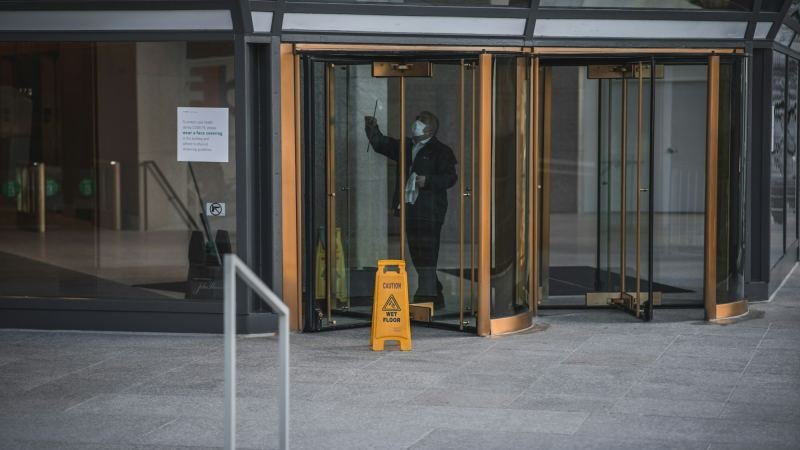
You need both. A building can be visually immaculate and fail infection control, because the things that transmit infection — door handles, shared equipment, taps, keyboards — are small and easy to overlook.
The relationship between the three core terms is covered in cleaning vs sanitizing vs disinfecting.
The chain of transmission, and where cleaning breaks it
Infection spreads through contact, droplets, airborne particles and contaminated surfaces. Cleaning and disinfection intervene at the environmental reservoir — the surfaces that hold pathogens until someone touches them.
The chain matters because it tells you where to spend effort:
- An infected person contaminates a surface by touch, cough or bodily fluid.
- The pathogen survives on that surface for a period — minutes to months depending on the organism and the surface.
- A susceptible person touches it, then touches their face, food or a wound.
- Infection follows.
Break step 2 or step 3 and transmission stops. Which is why high-touch surfaces and shared objects matter more than floors and walls, even though floors are far more visible.
Where infection control cleaning applies
Risk-based, not building-wide. These areas justify the highest attention:
| Setting | Priority areas |
|---|---|
| Medical and dental | Exam rooms, treatment surfaces, waiting areas, washrooms |
| Childcare | Change areas, toys, tables, child-height surfaces |
| Senior living | Common areas, dining, handrails, nurse call points, washrooms |
| Gyms and fitness | Equipment grips, mats, change rooms, water stations |
| Schools | Desks, shared equipment, washrooms, food areas |
| Offices | Shared desks, meeting rooms, kitchens, washrooms, lift buttons |
| Hospitality | Guest rooms, bathrooms, remotes, door handles, lift buttons |
| Public transport hubs | Handrails, seating, ticket machines, washrooms |
For the sector-specific item lists, see the medical office cleaning checklist, the childcare centre cleaning checklist and the gym cleaning checklist.
The method, step by step
Getting the sequence and the timing right is the whole discipline.
- Assess the area and identify high-touch and risk-critical surfaces. Do this before you start, not while working.
- Put on the right PPE. Gloves at minimum; apron, eye protection or respiratory protection depending on the product and the task.
- Remove visible soil first. Cleaning is a prerequisite for disinfection — organic matter inactivates many disinfectants.
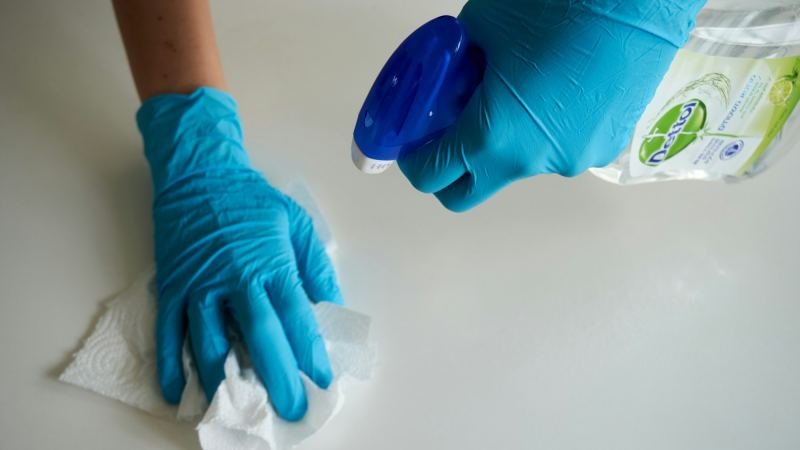
- Apply the disinfectant to a clean surface, at the correct dilution, using the correct method (spray, wipe, flood).
- Respect the contact time. The surface must stay wet for the full dwell time stated on the label. This is the step most often skipped, and skipping it means the disinfection did not happen.
- Allow to air dry where the product requires it, rather than towel-drying immediately.
- Change cloths and mop heads between risk zones. Never carry a cloth from a washroom into a food or clinical area.
- Remove PPE in the correct order and wash hands.
- Record it, where the client's policy requires evidence.
Colour coding matters. Use separate, colour-coded equipment per zone and never mix them. It is one of the cheapest and most effective controls available.
The contact time problem
If you take one thing from this article, take this: contact time is where infection control cleaning usually fails.
- A disinfectant sprayed and immediately wiped has done almost nothing.
- Diluting "by eye" rather than measuring changes the kill time unpredictably.
- Using an expired or incorrectly stored product is common and invisible.
- Some products need pre-cleaning with a different product first.
Practical fixes:
- Read the label with the team, out loud, once. Then post the dilution and dwell time in the chemical store and on the cart.
- Use pre-measured dosing dispensers where available.
- Train on the difference between "wiped" and "disinfected".
- Audit it — a contact-time check is a legitimate inspection item.
Training and competence
Infection control cleaning is a trained activity, not an instinctive one.
- Staff should be able to explain why a surface is cleaned before it is disinfected.
- They should know which products are approved for which surfaces, and why others are not.
- They should understand PPE use and removal.
- They should know what to do with a body-fluid spill, and what is out of scope.
- New starters should be supervised until competence is confirmed.
Our guide to training and onboarding cleaning staff covers how to build that in, and quality assurance vs quality control explains the verification side.
What is usually out of scope
Be explicit in the contract, because assumptions here create real risk.
- Body-fluid and blood spills usually require a specific spill kit and procedure, and often specialist response.
- Clinical waste, sharps and regulated medical waste are normally the client's responsibility.
- Sterilisation and instrument reprocessing are never a cleaning function.
- Outbreak or terminal cleaning after an infectious incident often requires enhanced protocols and sometimes specialist contractors.
- Mould remediation beyond minor surface cleaning is a specialist job.
- Sewage or flood water requires specialist response.
Our health and safety guide for Canadian cleaners covers the wider regulatory and PPE picture, and WHMIS for cleaners explains the labelling and safety-data-sheet obligations that apply to the chemicals involved.
Inspecting infection control cleaning
This needs to be verified differently from appearance, because a clean-looking surface can fail.
Score these as critical on every inspection:
- High-touch surfaces across all areas, cleaned and disinfected
- Washroom fixtures and taps, cleaned and dried
- Shared equipment and equipment grips
- Food-contact surfaces, cleaned and sanitised
- Dispensers stocked: soap, towel, sanitiser
- Chemical dilution and labelling correct
- Contact times being observed (process check)
- Cloths and mops correctly colour-coded and stored
- No cross-contamination between zones
- PPE available and used
For the general method see what a cleaning inspection is, and for tracking whether it holds over time, how to measure cleaning quality.
Frequently asked questions
What is infection control cleaning?
A defined cleaning and disinfection process intended to interrupt the transmission of infectious agents, focused on high-touch and risk-critical surfaces, using approved products at correct dilution and contact time, with documented process and trained staff.
What is the difference between infection control cleaning and routine cleaning?
Routine cleaning targets appearance and general hygiene across all surfaces. Infection control cleaning targets transmission risk specifically, prioritising high-touch and shared surfaces, and is judged on process and outcome rather than how the building looks.
How long must a disinfectant stay wet to work?
That depends entirely on the product — typically between 30 seconds and 10 minutes as stated on the label. The surface must remain visibly wet for the full contact time. Applying and immediately wiping does not disinfect.
Do you need to clean before disinfecting?
Yes. Organic matter and soil inactivate many disinfectants and prevent them reaching the surface. Cleaning first, then disinfecting, is the required sequence.
Is infection control cleaning the same as deep cleaning?
No. Deep cleaning is about thoroughness and reaching accumulated soil. Infection control cleaning is about interrupting transmission, and may involve frequent disinfection of a small number of surfaces rather than deep cleaning of everything.
Prove the process, not just the appearance
Infection control fails quietly: the building looks clean while the process was not followed. Documentation is what shows the difference.
NeatScore lets you build infection-control checklists with process items flagged critical, record photos and completion per area, and produce a dated report showing the standard was held. Try it free for 7 days, or see pricing.