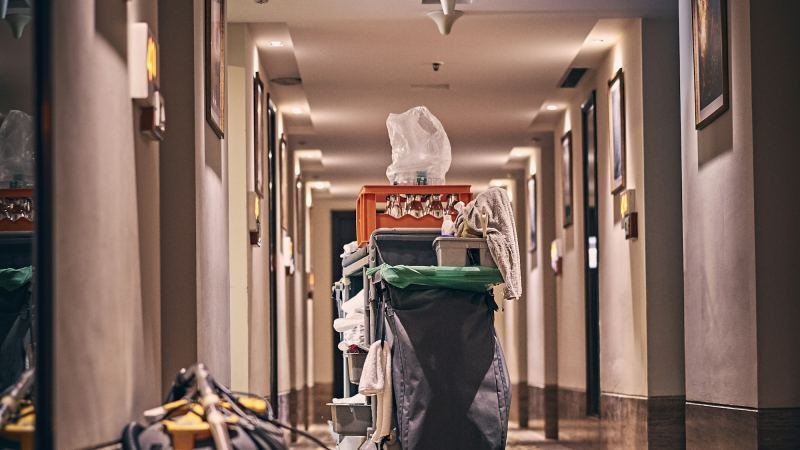
Janitorial Supervisor Duties: Responsibilities, Skills and a Daily Routine
Janitorial supervisor duties explained: scheduling, training, inspections, safety, supplies and client reporting, with a daily routine and key skills.
Janitorial supervisor duties include scheduling cleaners, training them, inspecting the quality of their work, keeping the team safe, managing supplies and equipment, and acting as the main contact for the client. A good supervisor is the difference between a contract that renews and one that is lost.
Key takeaways
- The core janitorial supervisor duties are people, quality, safety, supplies and client communication.
- Inspections are the most important quality tool: score areas, photograph problems and follow up.
- Clear routines and checklists make training faster and results more consistent.
- Supervisors who report proactively to clients prevent complaints before they happen.
What does a janitorial supervisor do?
A janitorial supervisor (also called a cleaning supervisor or custodial supervisor) runs the cleaning team for one or more buildings. They make sure the right people are in the right place, the work meets the contract standard, and problems are fixed quickly. In smaller companies, the supervisor may also clean, while in larger ones they manage several sites and team leads.
8 core janitorial supervisor duties
1. Scheduling and coverage
Build shift schedules, assign areas, and arrange cover for sick days and vacations. Coverage gaps are the fastest way to lose quality, so keep a list of trained backup staff.
2. Hiring and training
Interview candidates, train new cleaners on tasks and products, and refresh training for existing staff. Use area checklists such as the office cleaning checklist and restroom cleaning checklist as training tools.
3. Quality inspections
Inspecting the work is one of the most important janitorial supervisor duties. Walk the building on a schedule, score each area against the agreed standard, photograph problems, and make sure every issue is fixed and re-checked. For example, many teams score on the APPA cleaning standards, which are described on APPA's cleaning operations page; our guide on how to do a cleaning audit explains the process.
4. Health and safety
Make sure staff are trained on WHMIS, that chemicals are labelled and stored correctly, that safety data sheets are on site, and that PPE is available. Also investigate incidents and near misses. The CCOHS guidance on slips, trips and falls is a good training reference, and our article on health and safety for commercial cleaners covers the essentials.
5. Supplies and equipment
Order chemicals, liners and paper before they run out, control usage and costs, and keep vacuums and floor machines maintained. A missing supply often shows up as a failed inspection.
6. Client communication
Be the client's first contact. Share inspection results, respond to requests quickly, and flag issues such as damaged flooring or leaks before the client notices them. A short monthly report with scores and photos builds trust.
7. Performance management
Give feedback using specific inspection results rather than general impressions, recognize good work, and handle attendance or quality problems fairly and consistently.
8. Records and reporting
Keep records of inspections, training, incidents, supply orders and client requests. These records protect the company in disputes and support contract renewals. In addition, simple numbers such as average inspection score, failed items fixed within 48 hours, and complaints per month help you show the client, and your own manager, that quality is improving over time.
Weekly janitorial supervisor duties checklist
Beyond the daily routine, set aside time each week for the tasks that keep a contract healthy:
- Inspect at least 10 to 20 areas across your buildings, focusing on washrooms, entrances and kitchens.
- Re-inspect every failed item within 2 to 3 days of the fix.
- Hold one 15-minute team huddle on a quality or safety topic, such as colour-coded cloths or wet floor signs.
- Review supply usage against budget and order for the next 2 weeks.
- Send each client a short update: inspection scores, photos of fixes, and anything they should know.
- Check training records, so every new cleaner completes WHMIS training within their first week.
- Plan periodic work such as carpet extraction and floor refinishing 4 to 6 weeks ahead.
For estimating how long tasks should take, many supervisors use the ISSA cleaning times as a benchmark, then compare with their own team's actual times.
A janitorial supervisor's daily routine
| Time | Task |
|---|---|
| Start of shift | Check attendance, cover gaps, review client requests and yesterday's failed items |
| First hour | Brief the team: priorities, special requests, safety reminders |
| Mid-shift | Inspect a planned set of areas; score, photograph and assign fixes |
| Mid-shift | Check supplies and equipment; place orders |
| Late shift | Re-inspect fixed items; spot-check washrooms and entrances |
| End of shift | Log results and incidents; send updates to the client if needed |
Skills that make janitorial supervisor duties easier
- Attention to detail: seeing what clients will see
- Clear communication: with cleaners from many backgrounds and with clients
- Organization: schedules, supplies and inspections all run on time
- Fairness and coaching: turning inspection results into better performance
- Safety knowledge: WHMIS, safe lifting and chemical handling
- Comfort with simple technology: digital checklists, photos and reports
Frequently asked questions
What are the main janitorial supervisor duties?
Scheduling and coverage, hiring and training, quality inspections, health and safety, supplies and equipment, client communication, performance management and record keeping.
How often should a janitorial supervisor inspect?
High-traffic areas such as washrooms and entrances are usually inspected weekly, and the whole building at least monthly, with re-inspections after any failed item.
What qualifications does a cleaning supervisor need?
Usually cleaning experience, leadership skills and health and safety training such as WHMIS. Many employers value first aid training and experience with inspection or scheduling software.
What is the difference between a janitorial supervisor and a manager?
A supervisor usually runs day-to-day work at one or a few sites, while a manager oversees several supervisors, budgets, hiring and client contracts.
Give your supervisors better tools
The most time-consuming janitorial supervisor duties, inspections and reporting, are also the easiest to improve. NeatScore lets supervisors score areas on their phone, attach photos, and send clients branded reports in a tap. Try it free for 7 days.