University and Campus Cleaning: Standards Across Many Buildings
How university and campus cleaning works: building types, term-time versus break schedules, lecture halls, labs, residences and scope limits.
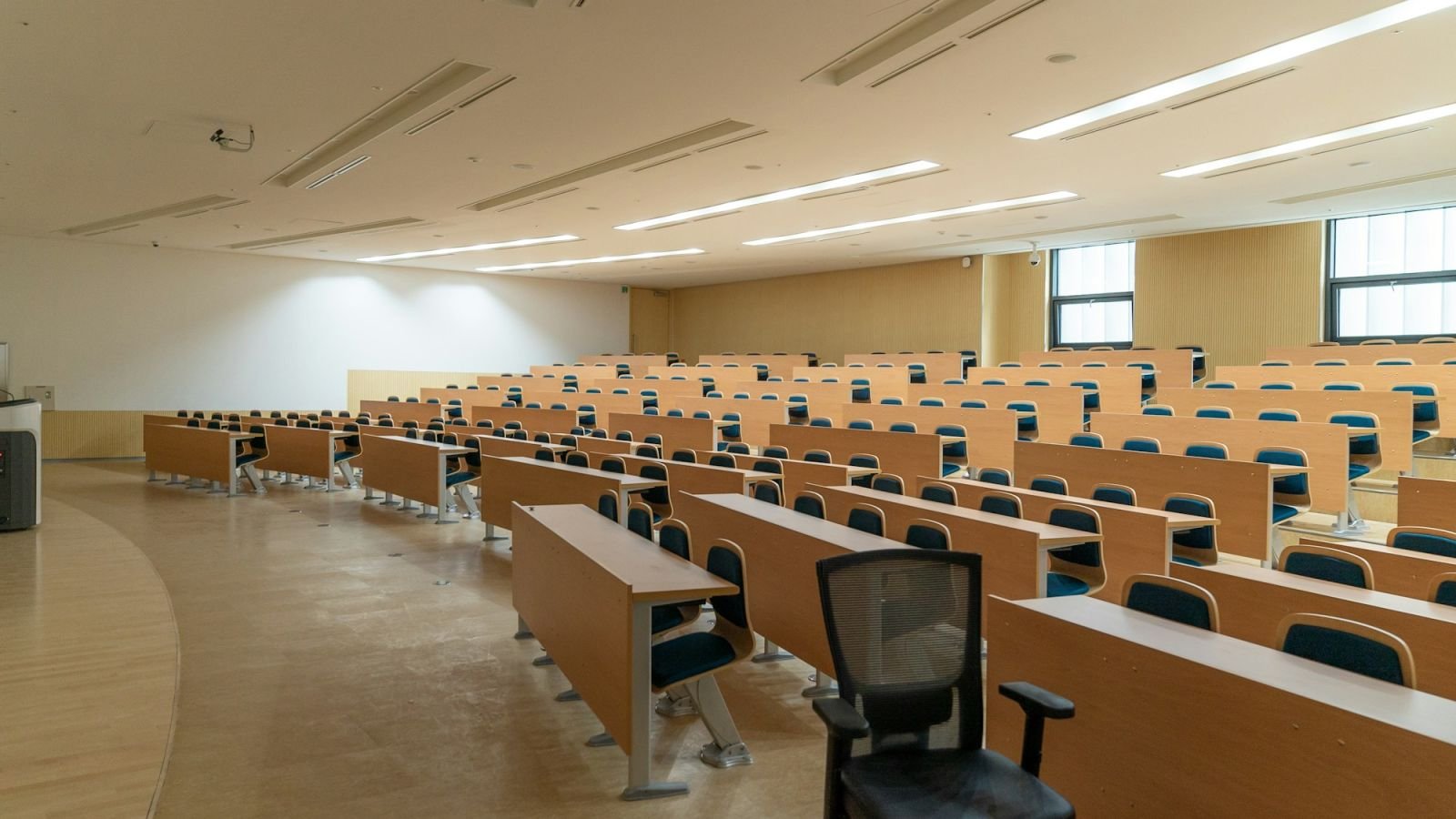
A campus is not one building with a large floor area. It is a portfolio of buildings with incompatible cleaning requirements: lecture halls that empty in ten minutes and refill in fifteen, laboratories with controlled substances inside, residences with private rooms and shared washrooms, food service outlets, libraries, athletic facilities, and administration offices. Each has a different standard, a different schedule and a different set of hazards.
University and campus cleaning is a portfolio management problem before it is a cleaning problem. The contractor who wins on a single blended square-foot rate usually discovers in the first term that the laboratory building and the lecture hall wing cannot be resourced on the same assumptions. This article sets out how to structure the work.
Key takeaways
- Categorise buildings by function first, because frequency, specification and hazard all follow the category rather than the floor area
- The academic calendar is the schedule driver, with term time, exam periods, reading breaks and summer shutdowns each requiring a different plan
- Lecture halls and washrooms carry the visible standard, and both need a turnaround mentality rather than a task list
- Laboratories, clinical areas and research spaces have rules that cleaning staff must be trained on before entry, and some rooms are simply out of scope
- Residences behave like hotels with tenants, including privacy and access requirements
- Scored inspection with photo evidence is how a multi-building portfolio is managed consistently
Categorising buildings and setting a standard for each
The most useful first step on a campus contract is to sort every building into a category and write a distinct specification for each. Six categories cover most campuses.
| Building category | Examples | Cleaning frequency | Specification notes |
|---|---|---|---|
| High-traffic academic | Lecture halls, general teaching rooms, main library | Daily plus multiple restroom services | Fast turnaround, seating and floor focus |
| General academic and admin | Offices, seminar rooms, department corridors | Daily | Standard office specification |
| Technical and research | Teaching labs, research labs, workshops | Daily with controlled access | Trained staff only, defined boundaries |
| Residential | Dormitories, shared washrooms, common rooms | Daily common areas, scheduled room service | Privacy, access windows, break periods |
| Food service and retail | Cafeterias, food courts, campus retail | Daily, high frequency during service | Food-safety discipline, floor care |
| Athletic and recreation | Gyms, pools, change rooms, arenas | Daily plus event response | Change rooms, wet areas, event surge |
Two consequences follow from this table. First, pricing has to be built per category, because labour minutes per square metre differ by a factor that no blended average captures. Second, staffing must be organized per category as well, since a lab-trained cleaner should not be redeployed to a lecture hall without checking that the trade-off makes sense in both directions.
The academic calendar drives the schedule
A campus cleaning contract that assumes uniform demand through the year will be overstaffed in July and understaffed in October. The calendar has at least five distinct modes.
- Term time: full schedule, highest restroom and lecture hall frequency, evening academic work
- Exam periods: long building hours, extended library service, intense classroom turnaround, quiet-please conventions in force
- Reading breaks: reduced occupancy in teaching buildings, opportunity for periodic work
- Summer: reduced teaching load, heavy project work, conference and camp lettings, residence turnarounds
- Shutdown and move-in: deep cleaning, floor programs, and the residence turnover window
Periodic work — carpet extraction, floor stripping and refinishing, high-level dusting, grout and tile work, window cleaning — should be planned into the low-occupancy windows, not treated as reactive. That planning discipline is described in periodic cleaning schedules.
Lecture halls, classrooms and teaching spaces
A lecture hall that empties at ten past the hour and refills at quarter past is a cleaning environment with a hard constraint: whatever you do, you have minutes, and you must not leave the room unusable.
- Between-class pickup is a loop: litter, abandoned cups, obvious spills, and a check of the seating rows
- Seating and tablet arms are high-contact and get disinfected on a defined cycle, not only overnight
- Aisle floors and stairs are swept and checked for spills each loop, because trip and slip incidents concentrate here
- Whiteboards, lecterns and AV podiums are cleaned without touching equipment controls or cables
- Chalk dust and marker residue need dry methods first; wet-wiping a dusty board ledge creates paste
- Full floor and upholstery work happens overnight or in the break windows
Classroom and hall standards for a smaller institution are set out in school cleaning checklist.
Washrooms, change rooms and other high-contact areas
Campus washrooms are judged harshly and used heavily, and change rooms in athletic buildings add a wet-area dimension that many contractors underprice.
Washroom service follows the standard sequence: restock first; clean and disinfect toilets, seats and bases — critical; clean and disinfect urinals and flush controls — critical; clean sinks, taps and counters then dry mirrors and metal; disinfect door handles, push plates and cubicle latches — critical; empty and reline waste and check sanitary units; mop from the far corner to the door and leave the floor dry.
Change rooms and wet areas need their own method:
- Floors in showers and change areas get a dedicated disinfectant with the label dwell time observed
- Benches, lockers and hooks are high-contact and belong on the disinfection cycle
- Drains are cleaned and checked, but any drainage problem, backup or odour is reported, not treated
- Pool and spa water chemistry, filtration and treatment are not cleaning tasks and must not be adjusted by cleaning staff — critical
The full detail is in gym cleaning checklist and locker room and change room cleaning.
Laboratories, workshops and technical spaces
Laboratories are where a campus contract most often goes wrong, because the cleaning crew is asked to work in a space governed by rules they have not been trained on.
Non-negotiables:
- No entry without the department's authorization and the required induction — critical
- Never move, open, cover or clean chemical containers, samples, cultures or equipment — critical
- Do not use a vacuum or any equipment in a lab without confirming it is acceptable for the space — critical
- Never clean a spill you cannot identify. Report it and leave the area — critical
- Follow the lab's own waste segregation rules exactly, and never place lab waste in general waste
- Treat any sharps container as untouchable; when full, it is the lab's responsibility, not the cleaner's — critical
The cleaning standard for general laboratory space is described in laboratory cleaning, and the wider boundaries for regulated environments are set out in cleaning quality assurance program.
Residences, food service and event spaces
Residences behave more like a hotel or an apartment building than a classroom. Common areas, corridors, stairwells, laundry rooms and shared washrooms are daily work. Private rooms are entered only on the schedule the housing office sets, with notice, and cleaners should be instructed never to move personal property.
Three practical rules make residence work manageable:
- Access windows are contractual. Entering outside them is a complaint and, potentially, a privacy issue — critical
- Report damage, infestation signs and prohibited items, rather than cleaning around them — critical
- Treat the move-out period as a project, with a documented checklist per room and a defined order of work
Food service and campus retail add food-safety discipline to the cleaning scope. Grease, floor safety in kitchens, drain care and pest-sighting reporting are the recurrent themes, and the kitchen routine is set out in restaurant cleaning checklist.
Event spaces, including arenas, theatres and convocation halls, follow a surge pattern: a scheduled baseline plus a defined post-event recovery that must be priced and resourced.
Safety, chemicals and scope boundaries on campus
Campuses concentrate a wide range of hazards in a small area, and cleaning staff move between them daily.
- WhMIS training and site-specific chemical awareness are prerequisites, not optional extras — critical
- Never mix products, and never decant into unlabelled containers — critical
- Report sharps immediately and never pick up a needle by hand. Where the institution has a sharps procedure, follow it — critical
- Biological and clinical waste, controlled substances and research materials are handled by the department or a licensed contractor
- Confined space entry, including some tunnels, vaults, tanks and service spaces, requires a formal program and permits
- Pest control is a licensed technician's work; sightings and evidence are reported
- Ladders, high-level work and rooftop access must follow the site's fall-protection rules and be within the contract's stated scope
Scope note: Laboratory waste, controlled substances, clinical and biological waste, pest treatment, confined space entry, pool water chemistry, electrical and mechanical work, and exterior grounds machinery are normally outside a cleaning contractor's scope. Confirm in writing what is included, and report rather than act on anything outside it.
General workplace guidance relevant to this environment is published by the Canadian Centre for Occupational Health and Safety, and provincial requirements apply as well.
Not regulatory advice. Requirements vary by province and institution. Confirm specifics with your provincial regulator and follow the institution's own safety procedures.
Managing quality across a portfolio
Consistency is the hard part of a campus contract. A single building can be excellent while another drifts, and the client's experience is the portfolio average.
Three practices keep a portfolio aligned:
- One checklist per building category, not one generic checklist used everywhere, so the standard is stated in terms the crew can act on
- Sampling that rotates, so every building is inspected on a known cycle rather than the ones with the loudest complaints
- Shared deficiency tracking, so a recurring finding in three buildings is treated as a system problem rather than three unrelated misses
Inspection method and the audit routine are covered in how to do a cleaning audit. In a portfolio, the value of a scoring system is comparability: two buildings measured the same way can be ranked and managed.
Where this fits in the quality system
This sits under our school cleaning checklist guide, which sets out the standard these checks are measured against.
Where this fits in the quality system
This sits under our inspection checklist structure, which sets out the standard these checks are measured against.
Frequently asked questions
How is campus cleaning scheduled around the academic year?
By treating the calendar as several operating modes rather than one. Term time runs the full schedule, exam periods extend building hours and classroom turnaround, reading breaks and summer are used for periodic work, and the move-in and move-out windows are run as projects with their own checklists and staffing.
Can cleaning staff enter research laboratories?
Only with the department's authorization and the induction the institution requires, and only within the boundaries set for cleaning work. Staff should never move or open samples, cultures, chemicals or equipment, and any spill they cannot positively identify should be reported rather than cleaned.
How often should campus washrooms be cleaned?
Much more often than the rest of the building, with frequency set by footfall and by the academic timetable rather than by floor area. Class changeovers create sharp peaks, so a washroom that is acceptable mid-morning may need a service within the hour during a changeover.
Who cleans student residences?
Common areas, corridors, stairwells, laundry rooms and shared washrooms are normally within the cleaning contract. Private rooms are entered only inside the access windows the housing office sets, with the notice the institution requires, and cleaners should not move personal property.
What campus tasks are outside a cleaning contractor's scope?
Laboratory and biological waste, controlled substances, pest treatment, confined space entry, pool and spa water chemistry, electrical and mechanical work, and grounds machinery. Each should be excluded in the contract and covered by a report-don't-act instruction.
NeatScore lets you build area-specific checklists with critical items flagged, record completion with photos, and keep a dated report your client can trust. Try it free for 7 days, or see pricing.