Casino and Gaming Venue Cleaning: A Practical Standard
How to clean and inspect a casino or gaming venue: gaming floor sequence, restroom frequency, smoke residue control, chip handling limits and scope rules.
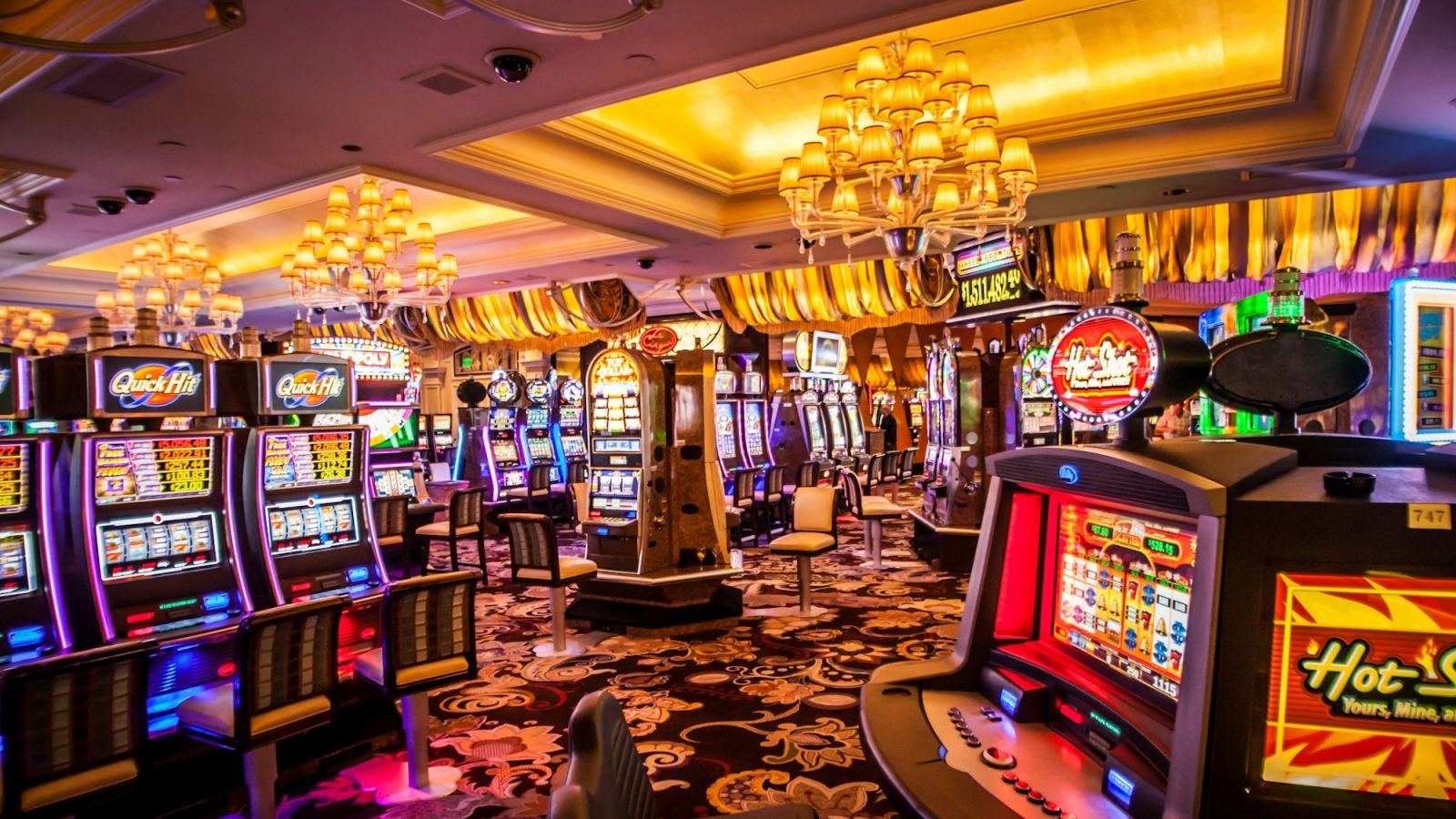
A casino is one of the few commercial buildings that never really empties. Gaming floors run around the clock, guests sit in the same seat for hours, drinks get knocked over at 2 a.m. as often as at 2 p.m., and the carpet is under continuous load from chairs, trolleys and foot traffic. Cleaning has to happen in front of customers, without blocking aisles that regulators treat as life-safety routes.
Casino and gaming venue cleaning is therefore a scheduling and sequencing discipline as much as a cleaning one. This article sets out the areas that matter, the frequencies that hold up in practice, the sequence for the gaming floor itself, and the work that a cleaning contractor should hand back to the venue.
Key takeaways
- The gaming floor is the priority area, but it can only be wet-cleaned in defined windows; dry soil removal runs continuously
- Restrooms and high-touch surfaces set the guest's impression, and need more frequent attention than a standard office schedule
- Smoke residue and odour control is a separate problem from visible soil, and is solved by source removal and ventilation coordination, not masking
- Chips, tokens, currency and gaming equipment are venue-controlled assets and never become part of the cleaning scope
- Aisles, exits and accessible routes must stay clear throughout the shift, which constrains where equipment can be staged
- Scored inspections with photos are the only practical way to defend quality in a venue that is never closed for a deep clean
What makes a gaming venue different
Three characteristics shape everything else.
The first is continuous occupancy. An office can be cleaned from 6 p.m. and inspected at 8 p.m. A casino cannot. Cleaning is interleaved with trading hours, which means the crew works around guests, and the venue's own security and surveillance rules apply to every person on the floor.
The second is material density. A gaming floor contains a large amount of upholstered seating, carpet under chairs that move constantly, felt and laminate surfaces, glass, brass and stainless trim, and a high proportion of hand-contact surfaces per square metre. Soil load is high and it is distributed rather than concentrated in a few rooms.
The third is regulated floor space. Exits, aisles and wheelchair routes are life-safety and accessibility matters. A floor machine, a trolley or a wet-floor sign left in the wrong place creates a real liability, not just an inconvenience.
Area-by-area overview and frequencies
The table below is a starting schedule for a mid-size gaming venue. Frequencies should be adjusted to traffic counts and to what the venue's own licence conditions require.
| Area | Frequency | Primary method | Typical verification |
|---|---|---|---|
| Gaming floor carpet | Daily dry soil removal, periodic extraction | Vacuum with HEPA filtration, hot water extraction in closure windows | Nightly walkthrough plus monthly scored inspection |
| Slot machine exteriors | 2–4 times per shift | Manufacturer-approved cleaner on cloth, screens dry-wiped | Per-shift sign-off, spot checks |
| Table game surfaces | Between sessions, daily detail | Non-abrasive cleaner, felt-safe products only | Pit supervisor confirmation |
| Restrooms | Every 45–90 minutes during peak | Full clean and disinfect, restock, floor dry-mopped | Hourly log, scored inspection |
| Bars and lounges | After each service period | Glass, bar top, floor, seating | Per-service sign-off |
| Entrances and vestibules | Continuously during peak | Mat rotation, track-off control, glass | Walkthrough |
| Service corridors and back of house | Daily | Standard janitorial | Weekly inspection |
| Stairwells and elevators | Daily, high-touch surfaces more often | Damp wipe, floor care | Weekly inspection |
| Smoking areas and adjacent zones | Per shift | Surface cleaning, ash and residue removal | Per-shift sign-off |
The gaming floor sequence
The sequence matters more than the products. On the floor, the rule is dry before wet, and top before bottom.
- Clear and stage. Confirm with the pit or floor supervisor which banks are available in the current window. Never start work at a machine or table without that confirmation.
- Dry soil removal. Vacuum open carpet and under seating with a vacuum fitted with HEPA filtration. Loose soil removed first is soil that will not become mud when a spill is wiped.
- Surface cleaning. Wipe machine exteriors, buttons, armrests and rails with a cleaner approved for the specific equipment. Screens get a dry microfibre wipe unless the manufacturer states otherwise.
- Spot treatment. Treat spills immediately, from the outside of the stain inward, with the product matched to the carpet or upholstery type.
- High-touch disinfection. Door handles, rails, elevator buttons, ATM and cashier surfaces are disinfected after cleaning, with the dwell time the product label requires — critical.
- Floor finish work. Periodic extraction, bonneting or stone care runs in the closure window agreed in the schedule, with machine cords routed so they do not cross a walking route.
Upholstery, carpet and stone under heavy load
Gaming floor carpet is usually a dense, patterned, glue-down or heavily seamed product chosen for appearance retention. Pattern hides soil, which is exactly why cleaning has to be scheduled rather than triggered by appearance.
- Vacuum daily, including under and around seating, because chair legs grind loose soil into the pile
- Extract periodically on a defined cycle rather than after the carpet looks soiled
- Treat drink spills the same shift, since sugar and alcohol residues attract soil and set stains
- Guard against over-wetting, because moisture trapped in a glue-down carpet in a building with limited drying capacity invites odour and delamination
- Use the right pad for stone and terrazzo in high-traffic lobbies, and never acid products on acid-sensitive stone — critical
Upholstered seating at bars, lounges and waiting areas takes body oils and food soil. Extract or encapsulate on a schedule matched to the fabric's cleaning code, and treat any unknown fabric as wet-clean-sensitive until the code is checked.
Restrooms, entrances and the guest impression
A guest's judgement of cleanliness is formed in the restroom and at the door. Both need a frequency that reflects guest counts, not floor area.
Restroom work in a gaming venue should follow a fixed sequence so nothing is skipped under time pressure:
- Restock first so you are not restocking around wet floors
- Clean and disinfect toilets, seats and bases — critical
- Clean and disinfect urinals and flush controls — critical
- Clean sinks, taps and counters, then the mirrors
- Disinfect door handles, push plates and sanitary disposal lids — critical
- Empty and clean waste bins, then replace liners
- Mop the floor last, from the far corner back to the door, with a clean solution and a clean mop head
The hourly log matters here. Frequency is invisible to the guest; the record is the only evidence the schedule was followed. That is the same principle described in restroom cleaning checklist.
Entrances carry the heaviest soil load per square metre in the building. Rotate matting in dry weather, and in winter accept that salt and grit will be tracked deep into the floor unless matting and interim cleaning are managed together. The seasonal pattern is covered in winter cleaning operations.
Smoke residue, odour and air quality
Where smoking is permitted, or where it was permitted in a building's recent past, smoke residue is a surface problem before it is an air problem. Nicotine and tar films build on hard surfaces, glass, ceiling diffusers and soft furnishings, and they re-release odour over time.
What actually works:
- Clean the surfaces, repeatedly, on a schedule, using an alkaline cleaner appropriate to the substrate
- Clean or replace filters and diffusers as part of the maintenance schedule, coordinated with the venue's HVAC contractor
- Replace soft furnishings and carpet when residue has penetrated the material, rather than trying to extract it indefinitely
- Ventilation and air handling are not a cleaning task. Report air quality complaints and adjust nothing yourself — critical
Masking odour with fragrance is not cleaning and it does not survive a complaint. Source removal does.
Chips, cages, currency and equipment: where the scope ends
Several areas inside a gaming venue look adjacent to cleaning but are not. Getting this boundary into the contract in writing protects both parties.
- Gaming chips and tokens are controlled instruments. Cleaning staff do not handle, sort, transport or clean them.
- Cash cages, count rooms and vaults are controlled areas with their own procedures and access lists.
- Gaming machine internals, bill acceptors and hoppers are serviced by the manufacturer or a licensed technician, never by cleaning staff — critical
- Slot machine glass, screens and decals are cleaned only with products and methods the manufacturer approves, because the wrong solvent damages them — critical
- Surveillance and security equipment is not touched, moved or obstructed.
- Signage, cameras and extinguishers are not relocated to make cleaning easier.
Scope note: Gaming equipment servicing, air handling, electrical work, pest treatment, biohazard and needle cleanup, and confined space work are normally outside a cleaning contractor's scope. Confirm in writing what is included, and report rather than act on anything outside it.
The last two items in that list are the ones crews get wrong most often: a wet-floor sign moved to cover a camera view, or a blocked exit for twenty minutes during extraction. Both are reportable incidents, not judgement calls.
Not regulatory advice. Gaming venues in Ontario operate under requirements set by the Alcohol and Gaming Commission of Ontario, and requirements vary by province. Confirm specifics with your provincial regulator and follow the venue's own procedures.
Chemicals and dilution control
Gaming venues use a lot of chemistry across a lot of surface types: neutral floor cleaner, carpet pre-spray and extraction detergent, glass cleaner, alkaline surface cleaner, disinfectant, and metal polish for trim and rails. Every one of them should be decanted and diluted under control.
- Keep concentrates locked and secondary containers labelled with product name and dilution — critical
- Keep safety data sheets accessible to the crew at the point of use
- Never mix products, and never transfer a chemical into an unlabelled bottle — critical
- Match the disinfectant to the surface and respect dwell time; a wiped-and-dried surface was not disinfected
The record-keeping side of this is set out in chemical inventory and dilution control, and the general Canada context is in cleaning health and safety Canada.
Staffing, supervision and inspection
Because the work is continuous, supervision has to be present rather than periodic. A practical structure for a gaming venue is a working supervisor on the floor for each shift, a defined periodic-work calendar for extraction, stone and metal care, and an inspection routine that samples every area type on every visit.
Scored inspection is what makes this defensible. A five-level scale gives the venue a number and the contractor a trend line, and photographs attached to each scored item remove most of the arguments about what a complaint actually referred to. The mechanics of sampling and scoring are covered in how to measure cleaning quality and the wider framework in cleaning quality assurance program.
Safety rules for crews on a gaming floor
- Sign in and out under the venue's access procedure, and stay within the areas you are cleared for — critical
- Never obstruct an exit, aisle or accessible route, at any time, for any duration — critical
- Keep cords, hoses and wet-floor signs clear of guest walking lines and never across a route unsupervised
- Use gloves for all chemical handling and for any waste contact — critical
- Treat any needle or sharps find as a report-and-stop event: do not pick it up by hand, do not place it in general waste — critical
- Report anything that looks like a hazard outside your scope, including damaged flooring, exposed wiring and blocked vents
Where this fits in the quality system
This sits under our commercial floor care guide, which sets out the standard these checks are measured against.
Where this fits in the quality system
This sits under our inspection checklist fundamentals, which sets out the standard these checks are measured against.
Frequently asked questions
How often should a casino gaming floor carpet be extracted?
Most venues with continuous trading extract on a defined periodic cycle rather than waiting for visible soiling, with daily dry soil removal in between. The right interval depends on guest counts, spill frequency and whether smoking is permitted, so it is better set from inspection results than from a fixed industry number.
Can cleaning staff clean slot machines?
Cleaning staff can clean machine exteriors, buttons, rails and armrests using products and methods the manufacturer approves. Anything inside the machine, including bill acceptors, hoppers and electronics, is a technician's work and must be reported rather than attempted.
Who handles chips and cash areas in a gaming venue?
The venue does. Chips, tokens, currency, cages and count rooms are controlled assets and areas with their own procedures and access lists. Cleaning contracts should exclude them explicitly so there is no ambiguity on either side.
How do you deal with smoke odour in a gaming venue?
By removing the residue from surfaces, filters and soft furnishings rather than masking the smell. Surface cleaning on a schedule, coordinated filter and diffuser maintenance, and replacement of saturated soft materials address the source. Ventilation adjustments belong to the venue's HVAC contractor.
What should a cleaning contractor refuse to do in a casino?
Anything requiring gaming equipment access, electrical or mechanical work, pest treatment, confined space entry, clinical or sharps waste handling, or work in controlled cash and security areas. These should be excluded in the contract and covered by a report-don't-act instruction to the crew.
NeatScore lets you build area-specific checklists with critical items flagged, record completion with photos, and keep a dated report your client can trust. Try it free for 7 days, or see pricing.