Emergency Lighting Inspection and Exit Sign Checks
An emergency lighting inspection is a monthly habit and an annual contractor test. What managers should check, what to record, and where the work must stop.
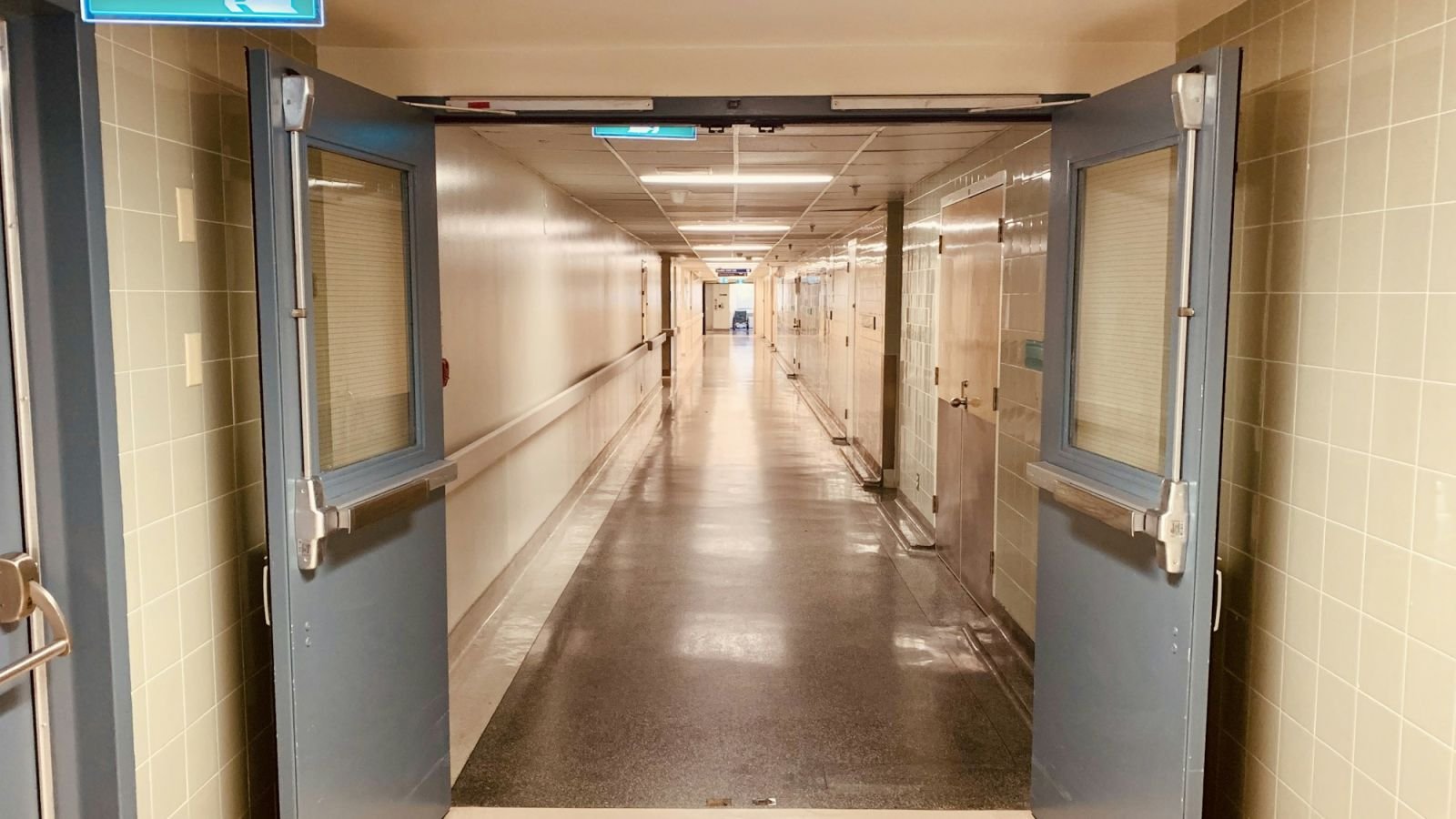
An emergency lighting inspection answers one question: if the power failed in this corridor tonight, would people still be able to find the way out? Everything else — the log, the tags, the contractor report — exists to prove that answer was checked rather than assumed.
The work splits cleanly. Trained building staff run the monthly function test and the visual checks. A qualified contractor performs the annual discharge test, replaces batteries and heads, and certifies the system. Managers verify that both happened and keep the record.
Key takeaways
- An emergency lighting inspection is two things: a short monthly function test and a longer annual discharge test, both recorded.
- The usual benchmark is a monthly function test of at least 30 seconds and an annual test of 90 minutes on battery — critical
- Exit signs must be illuminated, unobstructed, visible along the whole path of egress, and consistent with the direction people actually need to go.
- Never remove a unit, bypass a circuit, disconnect a battery or open a fittings enclosure to "see why" it failed — critical
- A failed unit is a same-day escalation, not a next-month item, because one dark section of corridor can make the route unusable — critical
- The record must name the unit, the test type, the duration, the result and the corrective action.
What does an emergency lighting inspection actually test?
It tests the ability of the unit to produce light from its own power source for a defined period after normal supply is lost, and the ability of the exit signage to remain legible and correctly placed during that time. A function test proves the lamp and the transfer to battery work. A discharge test proves the battery can carry the load for the full rated duration.
Those two things fail independently. A unit can light instantly on test and collapse after 12 minutes because the battery is at the end of its life, which is why the short monthly test cannot replace the annual one.
What it does not do is assess whether the building has enough units, correctly spaced. That is a design question answered by the life safety code the building was built to. A building can pass every monthly test with a layout that no longer matches its use — a corridor split by a new partition is the classic case — and testing will not reveal it.
How often should emergency lights and exit signs be tested?
Answer first: monthly for the function test, annually for the full-duration discharge test, with the exact intervals set by your fire safety plan and the code your building falls under. Table 1 shows the routine that fits most commercial buildings.
| Test or check | Frequency | Who performs it | Record produced |
|---|---|---|---|
| Visual check of units and signs on rounds | Daily to weekly | Building operator | Exception noted in the log |
| Function test of battery units, 30 seconds minimum | Monthly | Trained building staff | Unit ID, date, result — critical |
| Full-duration discharge test, 90 minutes | Annually | Qualified contractor | Contractor report with pass or fail per unit |
| Battery replacement | Per manufacturer's rated life or on failure | Qualified contractor | Replacement date per unit |
| Exit sign lamp and illumination check | Monthly, with the function test | Trained building staff or contractor | Sign location and result |
| Fire code compliance review of egress layout | On renovation, change of use or as directed | Code consultant or contractor | Design confirmation |
The 30-second and 90-minute figures are the widely used North American benchmark, set out in the NFPA 101 Life Safety Code treatment of means of egress illumination. Your provincial fire code and fire safety plan govern what applies, and any additional testing.
What can a manager check on a normal walkthrough?
Answer first: everything you can see without a ladder and without opening anything. Table 2 covers what a corridor round should catch.
| Observation | What it tells you | Action |
|---|---|---|
| Exit sign dark, dim or partly failed | Sign will not mark the route in a blackout | Report same day — critical |
| Sign obscured by a banner, decal, plant or stock | Legible sign is not the same as a visible one | Clear it immediately — critical |
| Arrow pointing the wrong way after a layout change | Directs people into a dead end | Log for the contractor and code review — critical |
| Exit door area used for storage | Path to the door is blocked when it matters | Clear it the same shift — critical |
| Battery unit indicator showing fault or unlit | Unit may not transfer to battery | Report same day |
| Unit head painted over, lens dirty, diffuser missing | Output reduced below design intent | Add to the deficiency list |
| New tenant fit-out creating a dark stretch of corridor | Coverage may no longer match the layout | Raise for design review, not a test item |
The walkthrough is exception reporting, not proof of compliance: the sign that is out, the one behind a display, the corridor designed for a use that no longer exists.
Where does the manager's role end?
It ends at the test switch, the battery compartment and the circuit. Removing a unit head, disconnecting a battery, opening a fitting, isolating a lighting circuit or adding a unit are all electrical and life safety work for a qualified contractor — critical
Two specific temptations are worth naming. The first is climbing a ladder to look at a unit; working at height needs equipment and training, and a fall in a stairwell has injured more building staff than failed exit signs have. The second is "borrowing" a battery from a failed unit, which leaves two non-compliant units instead of one.
Scope note: Emergency lighting and exit sign systems are life safety equipment, and installation, repair and discharge testing sit outside a property or facilities manager's remit. Managers may perform the visual checks and the simple function test their training covers, then record, report and commission a qualified contractor for everything else.
How should a failed unit be handled?
Treat it as a same-day escalation with an interim control. Write down the unit, the location, the failure mode, the time and who was told, and make sure the path of egress does not depend on the failed unit alone. If a corridor or stairwell has no working illumination at all, that is a life safety deficiency that needs a temporary measure or restriction until it is repaired — critical
Failure modes are usually obvious once you look for them: the lamp is dark during the test, the unit runs seconds and dies, the charge indicator never recovers, or a sign shows a black segment where a letter should be. Report the mode rather than "unit not working" — it shortens the contractor's diagnosis and stops the same part being replaced twice.
Close the loop the same way you would for any deficiency: attach the contractor's repair note and a photograph of the working unit to the original finding. A failed unit logged in March with a repair in April and nothing attached is a file that proves only that someone noticed.
What must the record show?
A usable emergency lighting inspection record has six fields per unit: identifier, exact location, test type, duration, result, and corrective action with a date. The identifier matters most and is the one most often missing, because "stair B unit 3" is meaningless in a building with three stairwells.
Keep the records with the rest of the life safety file, since an inspector will ask for them alongside the fire and life safety checks and extinguisher documentation. Our notes on inspection records and retention cover how long to keep them and how to structure the file.
Digital records help in one specific way: the timestamp and photo are created at the unit, in the stairwell, even without signal. A paper tag on the unit and a photograph of it, taken at the same moment, is a strong combination — the tag stays on the equipment, the photo stays in the file.
Do exit signs and emergency lighting fail in predictable ways?
Yes, and the patterns are worth knowing because they tell you where to look first. Battery units fail at the end of battery life, which is usually a slow cluster rather than one unit at a time — if three units on one floor fail within a year, the rest are close behind. Lamp-based exit signs fail at lamp end of life, often dimming before they go dark, which is why a monthly look catches more than a monthly press of the test button.
Signage failures are human rather than electrical. They follow refurbishments, seasonal displays and busy retail periods, when a banner covers a sign. Those failures are invisible in a test log and obvious on a walk, just as with the lighting defects covered in slips, trips and falls prevention.
Frequently asked questions
Can a building operator press the test button instead of hiring a contractor?
Yes for the monthly function test, provided the operator is trained on that equipment and knows what a pass looks like. The press proves the unit transfers to battery for the test period. It does not prove the battery will carry 90 minutes, which is the contractor's annual job.
How long should the monthly test last?
The common benchmark is at least 30 seconds of operation on battery, with results recorded for each unit. Some fire safety plans specify a longer monthly duration. Follow the plan for the building, and record the time rather than a tick.
What if the exit sign lights but is dirty or dim?
Dirty lenses and yellowed diffusers reduce output below what the route needs, and they are the cheapest deficiency to fix. Clean the lens where the fitting permits it, and put a dim or discoloured sign on the contractor's list rather than waiting for it to fail outright.
Does an exit sign need to be visible from everywhere in the corridor?
It needs to be visible along the path of egress, which is not the same thing. At any point in the route a person should see a sign or be directed by one, and turns should be marked. If you cannot see a sign from a bed or the far end of a corridor, raise it with the contractor.
Who is responsible for emergency lighting in a leased space?
Responsibility follows the lease and the fire safety plan. Base building systems are normally the landlord's, and a demised space may have its own units. Know which units your maintenance contract covers before a failure makes the question urgent.
Put exit and lighting checks on a route you already walk
Emergency lighting work rewards consistency rather than effort. A short round, the same route each week, a monthly press of every test switch, and an annual contractor report filed with the fire alarm and extinguisher paperwork will keep the building in better shape than an ambitious programme that runs twice a year. The frequency itself belongs in your preventive maintenance programme for property managers.
NeatScore lets you build that round as a checklist with each unit as a scored item, flag critical items, attach a photo per unit, run the inspection offline in a stairwell, and export a dated PDF report you can file or send to the owner. Try it free for 14 days, or see pricing.