Shopping Centre Cleaning Checklist: Mall Common Areas and Facilities
A shopping centre and mall cleaning checklist for common areas, washrooms, food courts, entries, parkades and service corridors, with the frequency and safety items that matter.
A shopping centre is the hardest retail cleaning environment there is: very high footfall, long operating hours, food on site, a public washroom load that dwarfs any office building, and a landlord who answers to both tenants and shoppers.
A shopping centre cleaning checklist has to be built around washrooms, food courts and entrances — those three areas generate the overwhelming majority of complaints — and around frequency rather than intensity, because the building never empties.
Key takeaways
- Washrooms are the number one complaint source and need continuous rather than daily attention.
- Food court seating, tray areas and waste are the second. Waste stations need emptying long before they look full.
- Entrances and mall flooring are judged continuously; entrance matting is the highest-return control.
- Common area safety — wet floors, escalators, glass balustrades — carries real liability.
- Tenant mix changes the risks. A mall with a gym or a cinema has different problems from one with a grocery anchor.
Public washrooms
The single highest-priority area. In a busy centre these need attendant-level service, not a daily clean.
Continuous or high-frequency
- Restock soap, paper towel and toilet paper — critical
- Wipe and disinfect sinks, taps and counters — critical
- Clean and disinfect toilet seats, hinges and bases — critical
- Check and clean mirrors
- Remove litter and paper from floors
- Spot mop spills immediately — critical (slip risk)
- Empty and reline waste and sanitary bins, well before full
- Check for and address odour
- Wipe door handles, push plates and partition latches — critical
Daily deep
- Clean and disinfect all fixtures thoroughly
- Machine mop floors with appropriate product and dry promptly
- Clean partitions, doors and walls
- Clean and descale taps, aerators and fixtures
- Clean vents and dryers
- Check baby change facilities and clean and disinfect — critical
- Check accessible stalls for function and cleanliness
- Inspect for damage and report
Weekly and periodic
- Deep clean grout and tile
- Machine scrub floors and dry
- Descale fixtures and remove mineral build-up
- Clean light fittings and ceilings
- Clean and treat floor drains — critical (odour source)
- Review dispenser function and stock levels
Our restroom cleaning checklist has the underlying detail.
Food court
Second only to washrooms as a complaint driver, and it closes later than the rest of the centre.
- Wipe tables, chairs, benches and high chairs — critical
- Clean tray return areas and trolleys
- Empty and clean waste and recycling stations frequently — critical
- Clean and disinfect condiment and cutlery stations — critical
- Sweep and mop floors continuously during trading; deep clean after close — critical
- Degrease floors rather than only mopping — critical (slip and hygiene risk)
- Clean under and behind seating
- Clean glass, partitions and balustrades
- Clean and sanitise handwash and sanitiser stations — critical
- Empty and clean grease and food waste receptacles; address odour
- Clean and flush floor drains — critical
- Report pest evidence immediately — critical
The method detail is in our food safety cleaning guide, and the venue-level list in the restaurant cleaning checklist.
Concourse and common area floors
The largest visible surface and continuously judged.
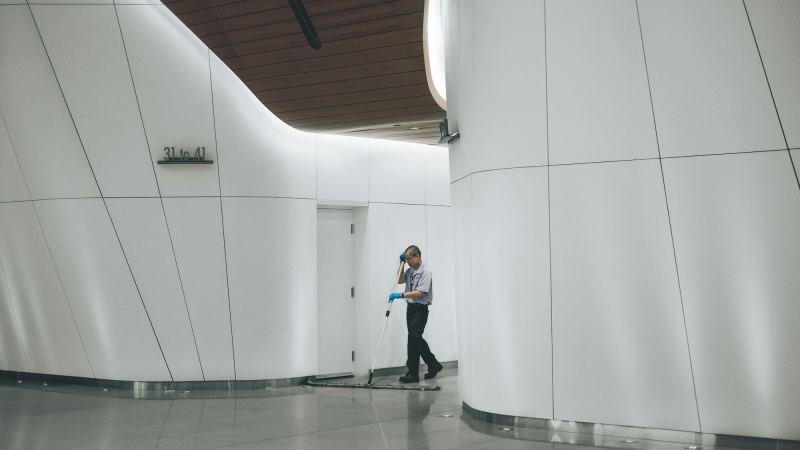
- Sweep or machine scrub all walkways throughout trading — critical (grit and slip risk)
- Spot clean spills, gum and sticky marks as they occur — critical
- Clean edges, corners, column bases and around planters
- Clean under seating and benches
- Clean and polish stone and finished floors on a schedule
- Clean and straighten entrance matting; replace when saturated — critical
- Monitor transitions between flooring types for lifting or trip hazards — critical
- Treat and remove salt and slush in winter — critical
For the method side, see hard floor cleaning methods, and for the entrance regime, front of house cleaning.
Entrances and exits
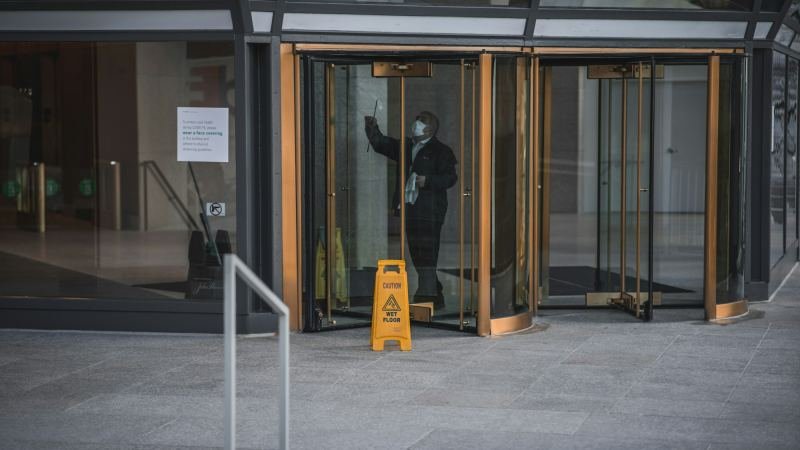
- Clean entrance glass and doors — critical
- Clean and disinfect door handles, push plates and automatic door frames — critical
- Sweep, mop or machine scrub entrance flooring continuously in wet weather
- Keep matting clean, flat and adequate for the footfall — critical
- Empty and clean external waste and cigarette bins
- Remove litter from the immediate exterior and transit connections
- Clean external signage, bollards and handrails
- Check lighting — critical
Vertical transportation and structures
- Escalators and travelators: clean steps, treads, side panels, handrails and comb plates — critical (handrails and comb plates are inspection-relevant)
- Elevators: clean cabs, tracks, panels, buttons and mirrors — critical
- Clean glass balustrades and guard rails on all levels — critical (safety and appearance)
- Clean stairwells: treads, landings, handrails, glazing — critical
- Clean atrium glass and high-level structures where contracted, or report
- Clean and check structural columns, cladding and feature walls
Our elevator and stairwell cleaning checklist covers the vertical transport and stair detail.
Amenity and back-of-house areas
- Parent and family rooms: clean and disinfect all surfaces and equipment — critical
- Prayer or quiet rooms
- Customer service desks, information kiosks and touchscreens — critical
- Management offices and staff facilities
- Service corridors and loading docks: sweep, remove debris, keep routes clear — critical
- Waste and recycling compounds: keep tidy, lidded, and pest-free — critical
- Stairwells and service stairs
- Signage and directories: clean and report failures
Waste management
In a mall, waste is a continuous operation rather than a task.
- Empty internal waste and recycling stations frequently, not when full — overflowing bins are a visible failure
- Separate waste streams as the centre's policy requires
- Clean and disinfect bin exteriors and surrounds — critical (odour and pests)
- Clean and deodorise bin chambers and compactor rooms
- Keep the loading dock and waste compound clear, lidded and clean
- Report pest evidence and damage — critical
- In summer, increase frequency for food waste
Safety and liability
A shopping centre has public liability exposure greater than almost any other building type.
- Wet floors: signage before wetting, physical barriers for large areas, dry before sign removal — critical. See slips, trips and falls prevention.
- Spills: respond immediately and treat as urgent, because the public is walking through.
- Spill response equipment should be staged where food and beverages are sold.
- Cleaning equipment must never be left unattended in public areas — critical.
- Escalator handrails and comb plates must be clean; soiled handrails are both a hygiene and a grip issue.
- Balustrades and void edges: report any damage or insecure glazing — critical.
- Lighting failures in any public area — critical.
- Report damaged flooring, loose tiles, broken handrails and damaged seating in writing.
Inspecting a shopping centre
Inspect during trading hours, because that is the condition the public experiences. Score these as critical every time:
- Washrooms clean, stocked, dry and odour-free
- Food court tables and floors clean and degreased
- Waste stations not overflowing
- Entrance glass and matting clean and safe
- Concourse floors clean, dry and free of gum and spills
- Escalator and elevator handrails and tracks clean
- No obstructions in any egress route
- No wet floor left unsigned
- No pest evidence
For the method, see what a cleaning inspection is, and for the reporting a landlord expects, cleaning client reporting.
The general item lists covering offices and back-of-house areas are in the janitorial inspection checklist.
Frequently asked questions
How often should shopping centre washrooms be cleaned?
Continuously in a busy centre — typically attendant service throughout trading hours rather than a single daily clean, with restocking checked on a frequent cycle. Washrooms are the largest single source of shopper complaints.
What are the biggest cleaning challenges in a shopping centre?
Public washroom volume, food court grease and waste, continuous footfall on concourse floors, winter salt and slush at entrances, and the public liability exposure from wet floors.
How do you clean mall floors during trading hours?
Machine scrub or sweep continuously in sections, using signage and barriers, working around shoppers, and spot cleaning spills immediately. Deep cleaning and floor finishing happen after close.
How often should food court waste be emptied?
Frequently and proactively — before bins are full. Overflowing waste stations in a food court are one of the most visible failures in a shopping centre and attract pests.
What safety issues matter most in a shopping centre?
Wet floor management, spill response, unattended cleaning equipment in public areas, escalator handrails and comb plates, balustrade integrity, and lighting failures.
Evidence for the landlord
A shopping centre landlord reports to owners and answers to tenants. Documented inspections across washrooms, food court and concourse are what turn "we clean it" into a managed asset.
NeatScore lets you run high-frequency checks across many areas, flag safety and hygiene items as critical, and produce a landlord-ready report with scores and photos. Try it free for 7 days, or see pricing.